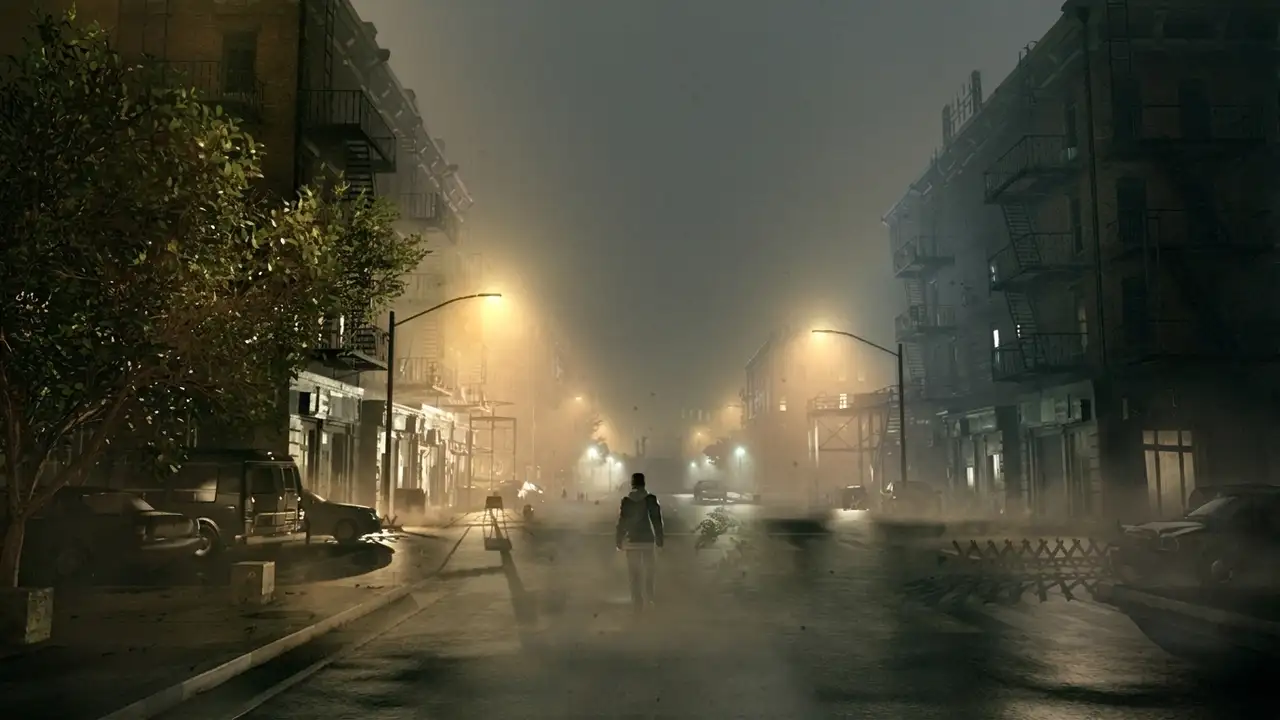
The robot apocalypse retold from the other side: where the first chapter of this series cast its viewpoint inside a machine convinced humanity was extinct, this one follows Emily, a young woman in a ragtag survivor group scavenging a silent city policed by robots that believe nobody remains. The perspective flip is the structural signature, and the bleak, human-scale tone lands through squatted pharmacies, abandoned aerocars, in-world news broadcasts and campfire conversations rather than exposition.
The reference density is the game’s soul. A Pip-Boy-style watch, a Linux penguin enshrined on a hacker’s shelf, homages to Steins;Gate, Mass Effect’s Normandy, Doom and Halo, and a Mudcrab figurine all hide in the environment, and the density never reads as clutter because each find is staged as a discovery. Fake consumer media rounds out the satire: TV segments on VR addiction, 3D printing and subway capsules build a retro-future daily life that makes the apocalypse feel lived-in before it ever feels dangerous.
Puzzles carry the gameplay with genuine variety. A Sudoku-style pixel colour grid, number-sum triangles, cable-routing, wire-colour work and boiler repair each appear across the chapters, and a surprise vending-machine VR shooter delivers the campaign’s strangest detour. Item-driven progression (flashlight, keycards, the flare gun, a taser, a plasma lance) replaces stats, and the puzzle rooms stay short and fair throughout, never overstaying their welcome.
Stealth is forgiving to a fault. Checkpoints are generous, detection carries little consequence, and evading police robots becomes trivially easy, yet erratic guard patrol loops stretch each sequence far beyond its challenge. The mismatch of effortless mechanics and glacial pacing defines the middle chapters, and the trek through the sewers exemplifies it: no real threat, but an hour of careful walking.
Movement itself is deliberately slow. There is no sprint, and the walk pace makes every corridor feel longer than it is, while the flashlight hard-locks to the character’s facing, forcing full turns to glance at anything off-axis. Combined with stealth’s low stakes, the game asks patience as its primary skill, and the pacing only sometimes rewards it. The TV-studio broadcast mission and the depot push justify the walk; the connective tissue between them less so.
Small presentation slips accumulate. Subtitles drift out of sync with voice lines, one cutscene jumps disjointedly between shots with dialogue that fails to cohere, one character line never plays at all, and the credits appear to freeze on arrival. None is individually serious, but together they undercut the polish the worldbuilding works so hard to project, and a pre-release version number reinforces the sense of a project released slightly soft.
The parallel-narrative structure is the campaign’s most divisive choice. This chapter runs alongside the first game and ends precisely where that one began, with the survivor group’s plan collapsing at the train depot and the overarching mystery untouched. As a companion piece it recontextualises its predecessor elegantly; as a standalone story it deliberately withholds resolution. Whether that reads as structural elegance or stalling depends entirely on appetite for serialised withholding.
Overall, this is a charming, reference-laden companion chapter whose puzzle variety, satirical worldbuilding and human-scale perspective flip deliver real enjoyment despite a deliberately unresolved plot, glacial movement and small presentation slips. The title proves apt in more ways than intended, and the affectionate geek soul beneath the bleakness makes the journey worthwhile even without answers.