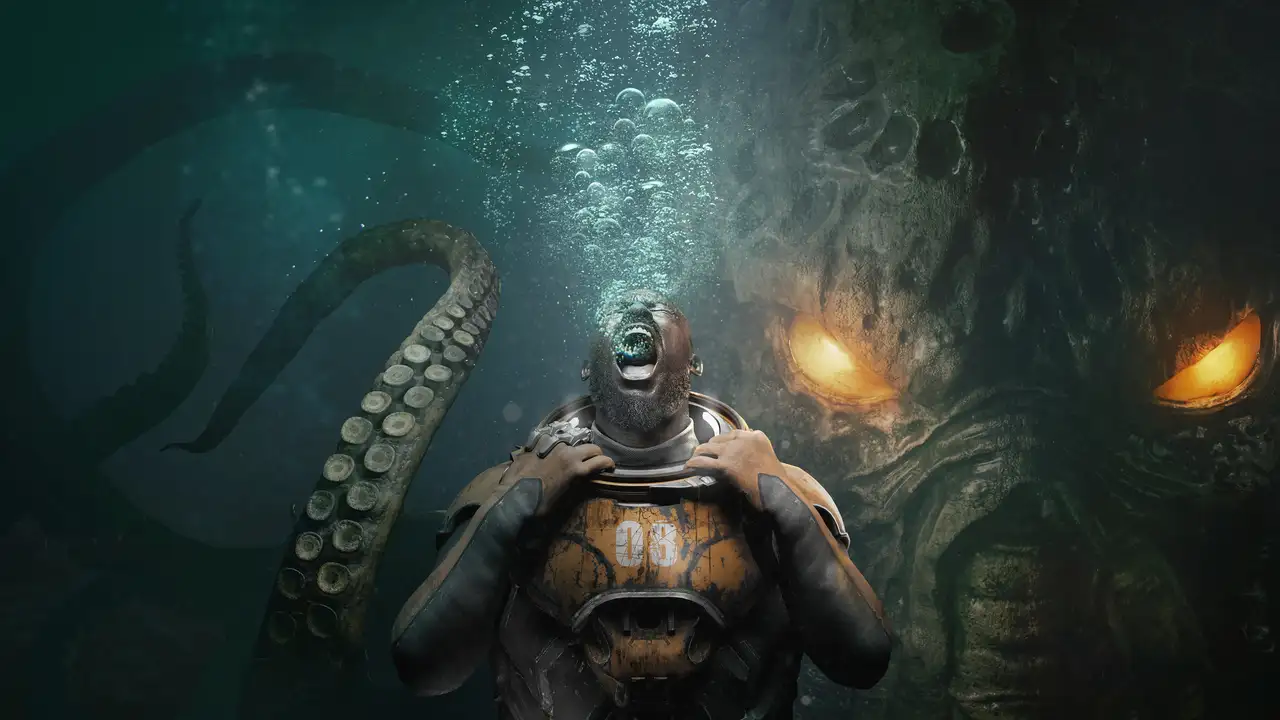
Drowned Arkham, three months after the flood: a man returns to a city going under, chasing dreamland rituals to reach his comatose fiancée. The tone runs bleaker and more overtly horrific than its predecessor, and the Lovecraftian writing lands through the world’s own media: Mushroom Jack’s radio tales, the hospital’s grisly experiments, and fish market cult lore delivered in documents worth pausing to read. The narrative stakes build without ceremony, and the city itself remains the star, rendered with real weight in Unreal Engine 5.
The genre pivot from open-world detective casework to focused, linear survival horror is the design’s smartest decision. Chapter-based structure with lock-and-key corridors, face-mask keys, mirror doors, prism-charging stations, laden-jar shortcuts, safe rooms and a suitcase stash gives each area a Resident Evil-shaped rhythm of exploration, unlocking and backtracking. An optional investigation mode that symbol-matches clues softens the casework deliberately, and the area-by-area clearing loop rewards thoroughness without dragging.
Combat is dodge-first, kill-last. On default difficulty everything dies in three hits, running past enemies is the smarter play, and the dodge itself is generous enough to reshape encounters entirely once learned. The Akaronian and Nightmare fights, the fish market’s bear-trap gauntlets, and the anticherra time-jump memory sequences stand out as the campaign’s best set pieces, and respawning boss crates remove the stress of wasting ammunition.
Presentation is a genuine strength. The wet, drowned city looks remarkable, though a wetness-rendering quirk that leaves hat brims dry carries over from the remaster, and the engine’s cost shows in the performance load. Post-game unlockables, weapons, costumes, concept art and eldritch rewards, are all earned by playing, a player-respecting economy with no microtransactions that more games should imitate.
Forced-combat arenas are the persistent sore point. Scenarios that lock the player in against far too many enemies at once turn the carefully balanced avoidance loop into a mess, with corpses revived by worms mid-fight and bullets arriving from off-screen. Enemy respawns ambush regular backtracking with dull predictability, and inventory limits annoy rather than challenge, tightening nothing while punishing collection habits.
Two smaller design decisions grate. Discarded items vanish forever rather than dropping to the floor, a sharp break from the genre’s norms that a chapter-based structure may have forced, and a brief walk-in-control segment before the finale adds a pointless mechanical detour. Neither damages the core loop, but both feel like unresolved ideas left in the build.
Overall, the tightly authored corridor design, the dodge-driven combat, the document-delivered Lovecraftian lore and the striking visuals make this a very good survival horror on its own terms, and the forced arenas, worm-revival chaos and inventory nagging are real but contained costs. Judged as its own game rather than a sequel to a detective sandbox, it stands confidently.