A mercenary slave ship harvests prisoners and converts them into ghost drones, and the premise is as grim as the stealth it hosts. The story opens on a dream sequence mirroring its predecessor’s structure, resolves quickly, and spends its runtime across ship interiors, beaches, islands and a refinery. The setting variety outclasses its predecessor’s single-facility design, and the visual leap from the earlier game is immediately apparent despite only three years between them.
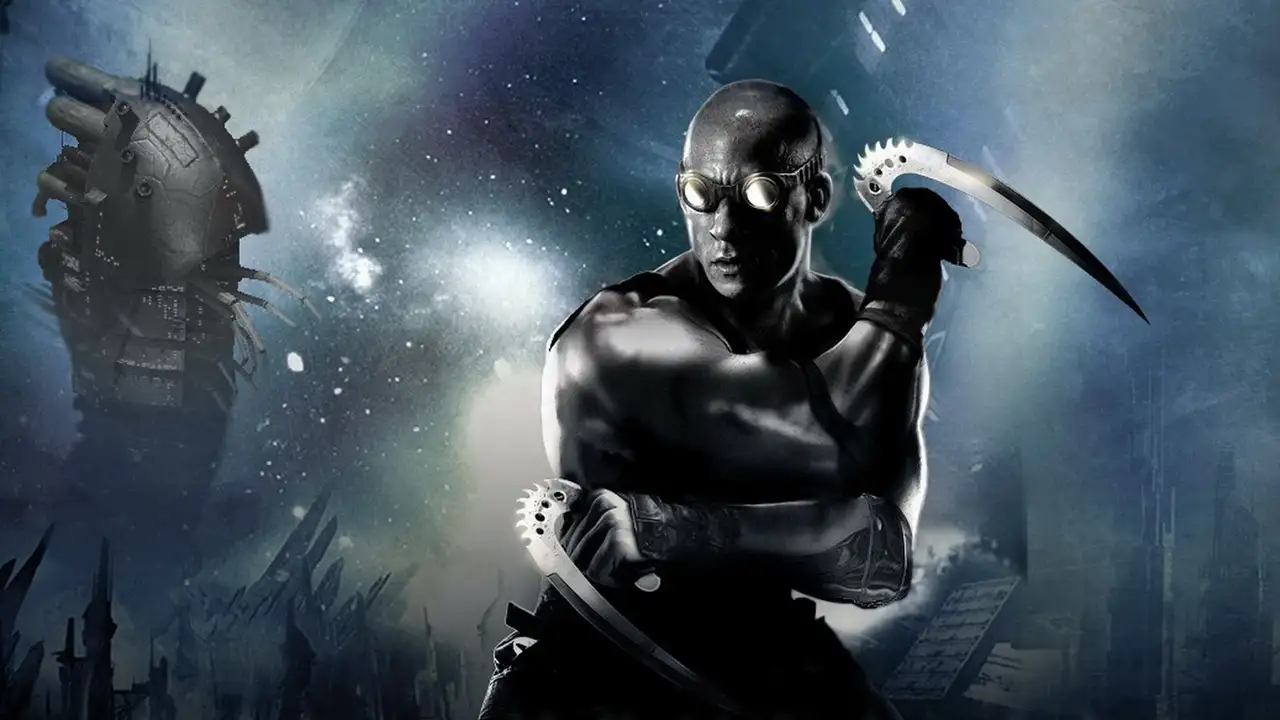
Darkness remains the core resource. Hiding bodies, shooting out lights and hoarding the tranquiliser gun over firearms builds a stealth loop that rewards patience, and the tranq gun arrives early enough to reshape the entire run. Silently snuffing lights without alerting anyone becomes the preferred tool for most of the campaign, and non-lethal takedowns stay satisfying throughout. The Ulaks blades carry an iconic design all their own, and silent melee takedowns pair beautifully with the shadow work.
The drone system is the signature. Capturing drones grants a free gun, and the remote-controlled drone havoc sequences turn enemies into puppets for their own side’s destruction. The drone-control-room defence stands as the campaign’s most memorable stretch, and the lore that the drones are converted prisoners gives every puppeteered corpse a genuinely disturbing undertone. Few licensed games build a mechanic this distinctive on their film’s menace.
Set-pieces keep the middle chapters varied. Hijacking a mech to turn it against its makers lands as gleeful reversal, zero-gravity corridors break the traversal rhythm, and the bounty-card collectibles hide absurd flavour text (one wanted poster charges a fried-chicken namesake with murder, arson and tax evasion) worth reading aloud. The Silverman family subplot and a depraved prisoner’s comic relief round out a supporting cast that punches above its screen time, and the protagonist’s blunt menace (“I could help, but you’ll probably die”) never wears thin. The villain’s stolen captaincy gives the conflict a personal edge that the predecessor’s more diffuse antagonist structure lacked.
Combat shows its age in the late chapters. Auto-aim locks onto points just outside enemy models, Alpha drones absorb excessive punishment, and enemies spawn mid-section behind the player’s back. The mech battle sequence causes the most repeated failures, and the final gauntlet stacks two Alphas plus a duel boss back-to-back with no heals between, the campaign’s roughest stretch by a clear margin. What should be the crescendo plays as attrition.
The finale itself anticlimaxes. The scripted elevator confrontation with the captain resolves far more simply than the gauntlet preceding it, a structural inversion that spends the difficulty budget in the wrong place. Thin side content compounds the lean feel: a gold tooth, a vent tool and a beacon quest amount to a fraction of the predecessor’s hub-based density, and the short runtime amplifies the sense of a campaign that ends before its ideas do.
Presentation quirks round out the friction. PC players get no controller glyphs and may need a colour-depth workaround under Wine, and the end credits bundle the predecessor’s roll into an interminable combined sequence. None of these touch the design itself, but the credits bundling in particular reads as carelessness in a package that is otherwise confident.
Overall, this is a confident licensed stealth-action package whose drone puppeteering, environmental variety and darkness-as-resource design still hold up remarkably well. The late combat gauntlets, thin side content and bundled credits are real blemishes, but the tranq-gun stealth loop and the drone-control-room havoc deliver a campaign whose best moments remain genuinely unique in the genre.