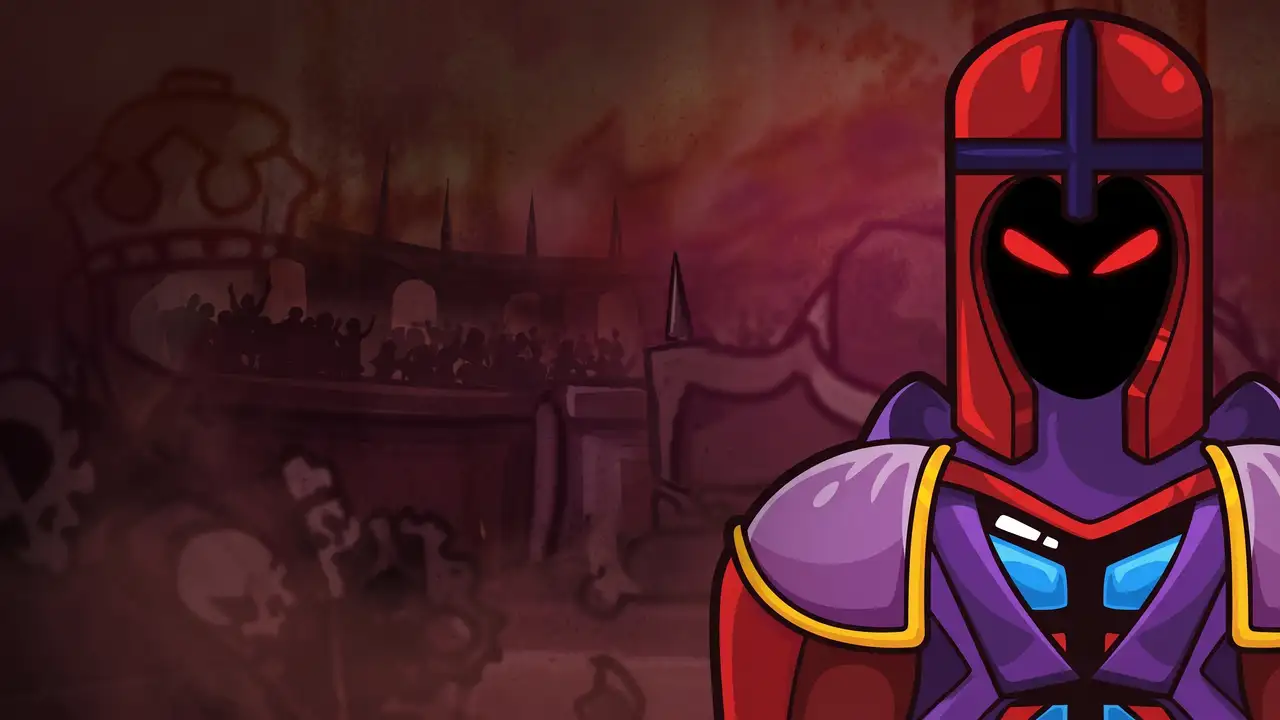
Shipwrecked pirates wash into the Arena of Doom, and the realm of Brandor offers exactly one career path: turn-based duels to the death in front of a counting crowd. The premise is bare-bones and unapologetic about it. Champions deliver hammy dialogue, flavour text quotes proverbs between fights, and champions demand combat or the mines. Crowd counts tally spectators by the hundreds, trivia questions probe the favourite food of horses, and every bout carries the register of a toy-box theatre. Pure Flash-era silliness is the design brief, and the game meets it without a shred of embarrassment.
Turn-based duels run on quick attacks, power attacks, charges and taunts, and the loop clicks immediately. Ten levels carry a gladiator from decapitating beginners to the arena championship, armour shops gate progression behind gold, and victory loots champion weapons. The loop is transparent, readable, and over quickly enough that each duel plays like a snack rather than a commitment.
Taunting is the signature mechanic, and it is semi-broken in the best way. Shouts push enemies back, drain their energy, and with enough investment deal damage outright, making verbal abuse a legitimate and at high levels dominant strategy. Chasing a scream-only kill becomes its own comedy, and the mechanic’s brokenness is part of the charm rather than a defect.
Every strength point physically enlarges the gladiator, and the growth curve ends in absurdity: a ten-foot giant looming almost as large as the church. The power fantasy is visual as well as numerical, and watching a scrawny recruit swell into a colossus across ten levels supplies the game’s best joke. Character growth as literal character growth is a gag the game commits to completely.
Combat swings wildly on dice rolls. Fights that go swimmingly one attempt go terribly the next, and the RNG dependence is the game’s central flaw, felt most sharply in the finale. He-Chaos’s eighteen agility lets him cross the arena instantly and one-shot, and winning demands landing two power attacks in succession, a luck-based wall that costs reload after reload. The Slave Driver earlier in the run punishes overconfidence similarly, killing repeatedly on first acquaintance.
The post-champion economy freezes silently. Endless defence fights remain available after the championship, but the hard-save quirk means every victory reloads the post-victory state without awarding gold, bricking progression toward maxing gear. There is no warning and no workaround; the game simply stops rewarding. For a game built entirely on levelling, that is a real structural miss, even in something this brief.
Enemy AI adds its own mystery, stepping back and forth without obvious logic in a pattern that never explains itself. The behaviour is more baffling than harmful, and its inexplicability suits the game’s overall looseness, but it does underline how little simulation sits beneath the numbers. Wins and losses come from rolls, and the AI’s shuffling merely frames them. That looseness extends to the structure itself: nothing gates the championship beyond the level climb, side detours are limited to shop purchases, and the whole campaign fits comfortably inside a single afternoon. What could feel thin in a larger game instead reads as honesty about its own scope.
Overall, this is a very silly, very brief slice of Flash-era charm whose taunt build, growing-giant gag and transparent duel loop deliver exactly the nostalgia they promise. The RNG dependence and the silent post-champion economy freeze are real flaws, but neither dims the comedy of winning a duel to the death through the power of shouting.