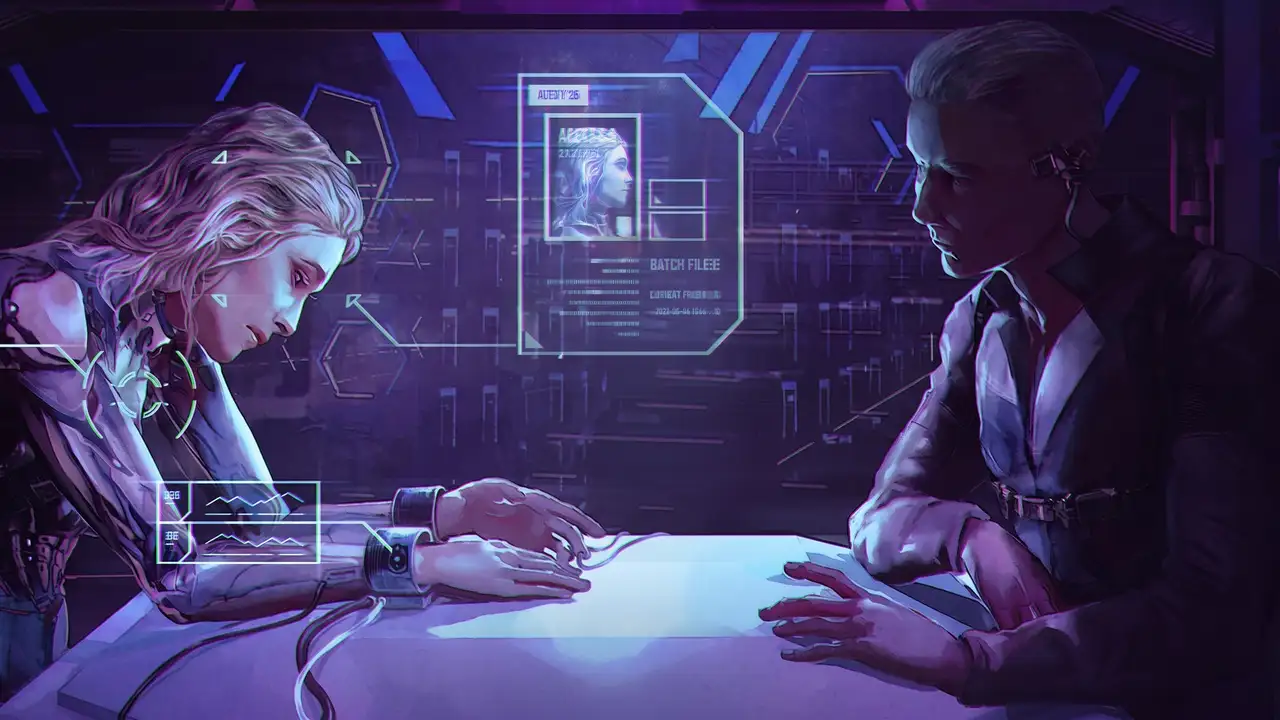
Androids are leased, never owned, and deviancy is a crime against property: the premise sets a corporate dystopia that the campaign interrogates literally. Playing an android diagnosing other androids with a machine that measures fear, anger, sadness, joy, disgust and surprise in real time, the game casts interrogation rather than action as its engine, and the emotion graph doubles as a lie detector that turns every dialogue choice into evidence gathering. Few games commit this hard to making conversation the whole grammar.
The writing gives nearly every subject an inner life. An android lying about anger, a social worker running an escape network, a hacker broadcasting mass-memory, and subjects whose sympathies escalate as the cases proceed: the campaign builds from routine diagnostics to a full rights movement, and the interrogator’s complicity becomes the real subject. Decommissioning orders arrive regardless of evidence in several cases, and the moral pressure lands precisely because the game makes refusal impossible.
Satire runs through everything. Corporate legal language (rental agreements, articles of corporate protection, job placement summaries) doubles as worldbuilding, PR damage control frames the recall unit’s press conference, and the Chronos hierarchy rules the interrogator as tightly as the subjects. The finale turns the same machinery inward: a self-review interrogation judging the player character for socialising and trusting nobody, with the deck visibly stacked. The Blade Runner name-check and Detroit-style branching sit honestly beside their inspirations.
The branching structure rewards thoroughness. Outcomes flow across a flowchart of fates, choices echo through the epilogue, and five-plus endings (deviant execution, loyal promotion, prevented broadcast, EMP massacre, released suspect) each reframe the campaign’s loyalties. Cross-case conspiracies thread the human interrogations into the android ones, and the DLC cases integrate seamlessly once found. Reaching full company rank twice demonstrates how differently loyalty and dissent both pay out.
Interrogation systems stay varied. General questions evoke specific emotions, restraint removal builds trust, a light-and-sound toolkit manipulates subjects, and testimony cross-references against reports make each case a genuine deduction puzzle rather than a dialogue tree. The report-filling ritual (Release, Maintenance, Decommission) forces a verdict with weight every time, and the emotion graph’s spikes betray lies that testimony alone would hide. The named cases stay with the player afterwards: the first decommissioning establishes the game’s cruelty, a social-media android’s execution lands as the campaign’s moral nadir, and a recall-unit case punished by press conference shows the corporation’s indifference to its own evidence. Interrogating humans in later cases widens the frame without diluting the focus.
Friction lives mostly in convenience. The rewind function erases all progress rather than allowing single-chapter replay, forcing full re-runs to see alternate branches, a cost that compounds across seven finale replays. Menu and interface characters vibrate constantly, a small visual choice that genuinely hurts the eyes over long sessions. DLC cases hide behind an initially confusing discovery path. None of these dent the writing, but the rewind design in particular fights the replayability the branching structure earns.
The emotional weight is the campaign’s real achievement. Making the interrogator complicit in atrocities, then judging that complicity in the finale, gives the moral choices consequences beyond branching outcomes, and subjects whose fates the player decides linger after the credits. The satire bites because the machinery of it is played straight, and the game trusts its audience to feel the discomfort it engineers.
Overall, this is a sharp, affecting interrogation drama whose emotion-graph lie detection, branching consequences and corporate satire deliver a near-essential narrative experience despite rewind friction and forced outcomes. The premise alone is unique; the execution, which makes the player complicit and then holds them accountable, elevates it well beyond its inspirations.