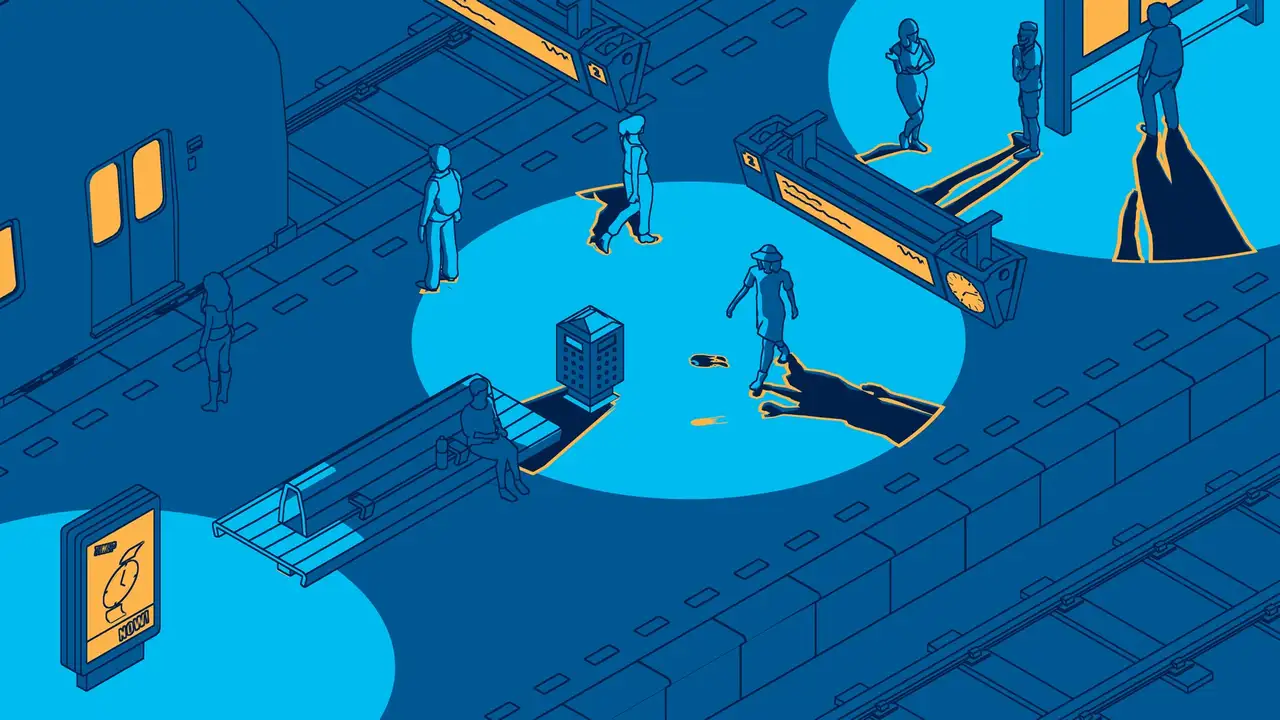
A little shadow creature is separated from its human, and chasing them across a stylised city means travelling the way shadows do: from shade to shade, never touching sunlight. The premise is genuinely unlike anything else in the genre. The entire world becomes a puzzle of light and shade, where people, bikes, dogs, buses and cranes all cast usable footholds, and the day-night cycles, weather and per-level palettes make the visual identity part of the mechanics themselves. Pastel colour schemes define every district, and the world reads as illustration brought to life.
Shadow-hopping is the whole grammar. Jumping between cast shadows, manipulating lights and traffic to create new ones, and hitching rides on moving shadows turn street corners into puzzles, and the traffic-heavy stretches play like a gentle shadow frogger. Hijacking a bus’s shadow to cross an intersection, or riding a crane’s swing across a construction site, produces chains that reward observation over reflex. The puzzle frame stays light throughout: nothing demands head-scratching, and the mood never breaks for a difficulty spike.
Forgiveness is engineered into the landing. Touching down outside a shadow grants a second chance rather than failure, a design mercy that keeps the game enjoyable rather than punishing, and the landing-prediction dot telegraphs each trajectory before commitment. Checkpoint shadows with dashed edges and a persistent objective pointer round out the guidance, and the title screen hides a full accessibility suite: an extra jump, level checkpoints and a risky mode for the confident. Toggling the extra jump off post-credits transforms familiar early levels into something closer to precision platforming.
The wordless storytelling rewards attention. Job loss, moving out, a hotel stay, a fishing trip and a zoo visit unfold through the human’s circumstances rather than dialogue, each level a chapter in a life quietly unravelling, and the shadow’s pursuit gives every mishap a gentle dramatic anchor. Nothing is explained and nothing needs to be; the environment, signage and passing citizens carry the narrative, and the comedy of the human’s obliviousness plays out in the background of every puzzle. It is a story told entirely in stage dressing, and the staging never falters.
Level variety keeps the two dozen-plus stages surprising. Some run fifteen seconds and end on a blink, while the storage-unit marathon stretches into a genuine test of chained transfers, and the supermarket, museum and zoo sequence crystallises the game’s charm into one continuous run. The firefighter finale closes on a callback with real warmth. Weather and time-of-day complicate everything: night strips away most usable shade, rain reshapes puddle-shadows, and lightning spawns footholds that last only a split second.
Readability is the main friction. Nothing visually distinguishes some usable shadows from decorative ones, people’s shadows lack the pink outline that marks objects, and misjudging a valid target becomes the most common failure. Collectibles swing between obvious and invisible until a bouncing shadow hints at their presence, and tall-building levels produce camera angles that hide the blob entirely, turning fair jumps into blind ones. Occasional odd hitboxes and getting visually stuck in the ground add small irritations the forgiving design mostly absorbs.
The soundtrack deserves billing as a co-protagonist. Gentle, Animal Crossing-adjacent arrangements carry every level, and the supermarket theme in particular stands as a standalone listen. Sound and pastel visuals combine into an atmosphere that makes failure itself inconsequential: the game is less about reaching the human than about the pleasant traversal between mishaps, and the wordless storytelling (job loss, moving out, hotels, fishing trips) lands through environment rather than text.
Overall, this is a soothing, mood-first puzzle-platformer whose shadow-grammar gameplay, forgiving landings and superb soundtrack deliver a genuinely singular experience. Inconsistent landing readability, hidden collectibles and awkward camera angles in the tallest stages are small costs against an atmosphere this carefully composed, and the wordless journey closes with more warmth than its modest length suggests possible.