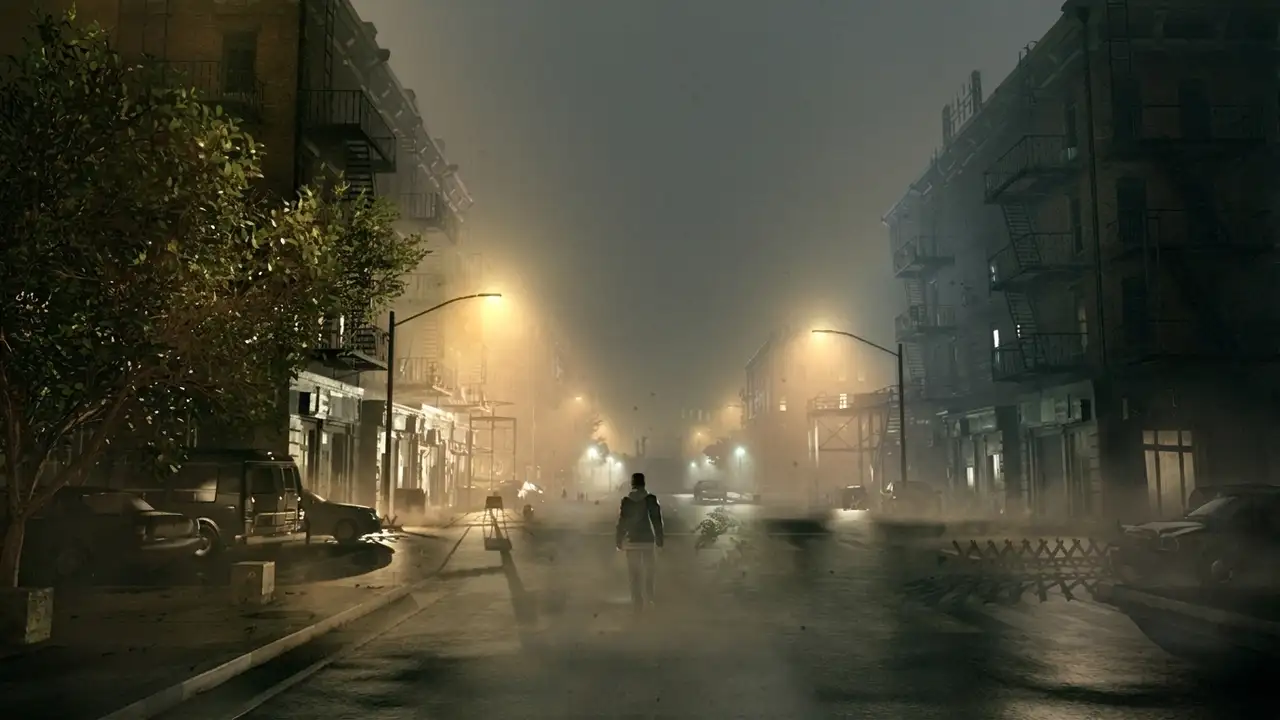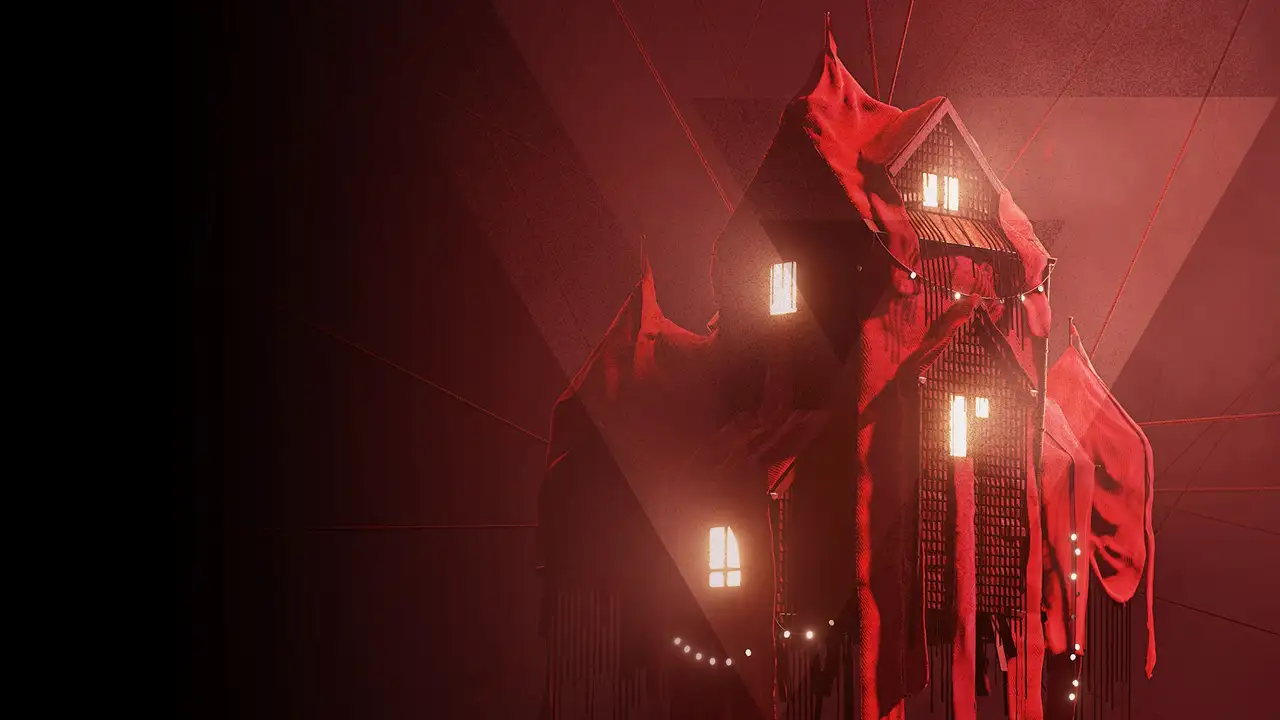
A circus father wakes into a looping, shifting nightmare, searching a distorted family home for a wife and daughter who never stay where they were left. Bedrooms open into forest paths, hallways repeat with P.T.-flavoured insistence, and each waking cycle grows progressively messier than the last. The environmental detail is dense from the first minutes, every surface carrying narrative weight, and the game wears the trappings of classic haunted-house horror convincingly.
The stagecraft conceit is the design’s central trick. Every environment is literally a set, and the transitions between them play seamlessly: a living-room wall swings open onto a woodland walk that dead-ends at a circus, with no loading seam to break the illusion. The constant off-balance quality those transitions produce is the game’s best atmosphere, and the backstage reveal late in the campaign recontextualises the entire haunted house as purpose-built scenery, a metaphor that gives the genre furniture genuine narrative purpose.
Puzzles lean tactile and varied. A music-box key, a marble maze, a mannequin-arm laser cipher, fuse-box wiring, a motorcycle token arcade game and a Rubik’s-style puzzle cube each appear across the acts, and the finale assembles a multi-stage machine sequence demanding several simultaneous considerations. None of the puzzles stall momentum for long, and the variety keeps the walking-sim frame from ever feeling inert. Collectible documents, particularly facility logs, carry much of the lore, though finding them unaided is genuinely difficult; the interactable highlight trigger exists but the game never advertises it.
Two stealth chases break the puzzle rhythm. A blindfolded figure stalks the mirrored red room while three hidden items must be located, and a lengthy forest hunt pits a blind creature against careful footwork. The forest stretch is the campaign’s clear low point, slower than any other sequence and stripped of the tension the mirrored room manages. Both chases also inherit the stand-still door mechanic: doors refuse to open while moving, forcing a planted pause mid-pursuit that reads as dated rather than tense.
Held items Amnesia-style compound that datedness. Carrying objects in hand rather than pocketing them felt old a decade ago, and here it mostly produces awkward inventory juggling during the sequences least suited to it. A menu navigation bug surfaced before the campaign proper even began, with cursor movement unable to wrap back up from a lower option, a small but genuinely silly flaw to leave on the table.
Whether the game is even horror wavers as it proceeds. The opening loops genuinely unsettle, but scares fade steadily across the back half, with later sequences (the train, the facility) playing as psychological thriller rather than dread. The ambiguity is arguably deliberate, since the story is less about threat than about false memory, but the pacing leaves the middle stretched and the finale leaning on narrative rather than atmosphere.
The twist reframes everything positively. The haunted-family premise is revealed as fabricated implanted memory inside a clandestine memory-modification facility, the purpose-built stagecraft snapping into narrative focus, and the final machine sequence lands as both puzzle and story beat. The reveal recontextualises without invalidating: every earlier environment reads differently, and the ending restarts the cycle in a way that closes the loop thematically rather than mechanically.
Overall, this is a psychologically clever, highly detailed horror whose seamless transitions and memory-implant reveal justify the journey despite sluggish stealth, a dated door mechanic and a fading scare curve. The stagecraft conceit elevates familiar haunted-house furniture into genuine metaphor, and the twist lands as one of the year’s more satisfying narrative pivots.