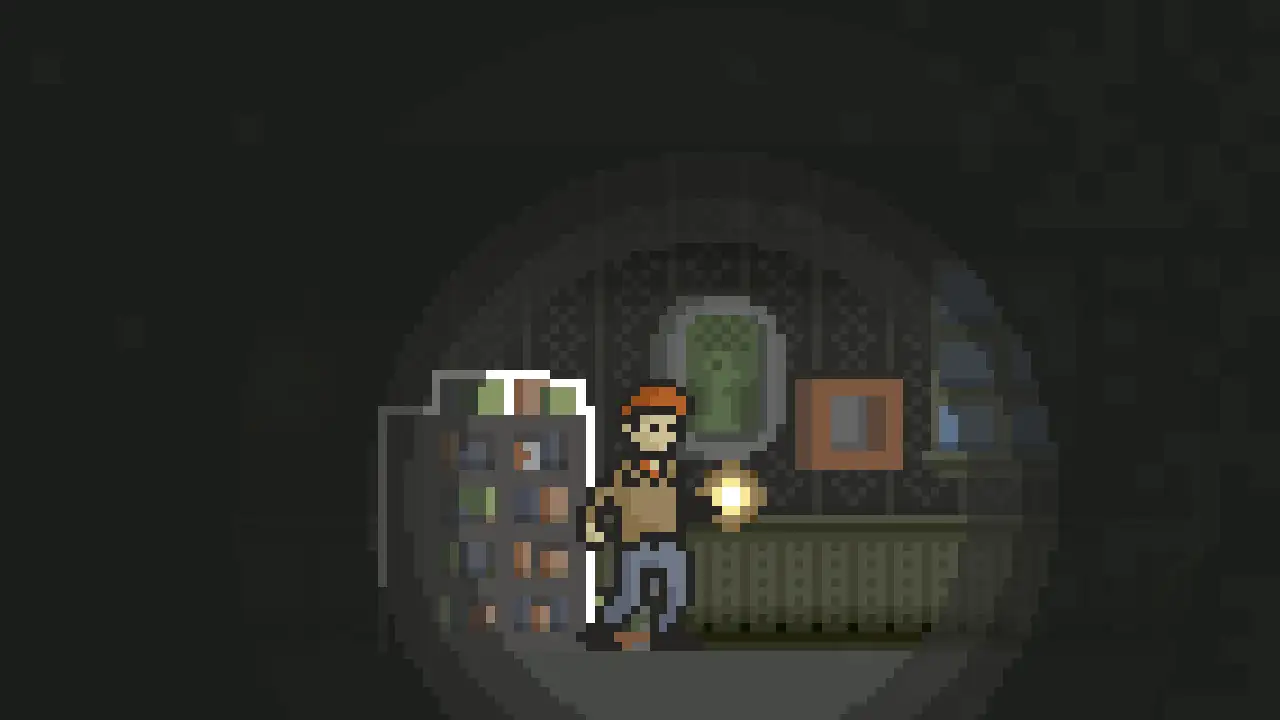
Humanity uploaded itself into Synaptica chips through the failed Project Ascendance, an AI and a rogue signal now share one core, and a fresh clone protocol is dispatched to deactivate four NodeX units and confront that core. The setting is post-human melancholy told through scattered lore logs and diary entries, and the robot-world tone lands convincingly without a single spoken line of consequence. It is a combat-heavy metroidvania in the Ender Lilies lineage, but its identity comes from the upgrade economy rather than the lineage itself.
The Tetris-grid chip system is the design’s genuine distinction. Chips slot into a spatial grid, adjacent same-colour pieces amplify each other’s effects, and building the layout becomes a puzzle in itself. The discovery lands as a delight early and stays interesting to the final minutes, because optimal layouts demand both shape-fitting and colour planning simultaneously. It is an upgrade economy where spatial reasoning determines combat power, and no comparable system in the genre does quite the same thing. Health-regen chips slot into the grid like everything else, and leaning on them late is a legitimate crutch the design permits.
No contact damage is the philosophy that makes the movement feel generous. Dodging through enemies freely, without losing health on touch, removes the punative friction most metroidvanias impose and makes the dodge-cancel attack flow genuinely fluid. Double jump, air dash, wall jump and ground pound arrive steadily, hook-shot warps extend reach, and the dodge-cancel itself, cancelling any attack animation into a dodge immediately, gives combat a responsive rhythm few games of this size match. Parries and a charge attack round out the toolkit.
Boss difficulty varies wildly. The first boss takes many attempts and deals minuscule damage to its health bar, the Margo fight is trivially easy once the jump-and-attack pattern registers, and the Zenaxis fragment fight is mechanically confusing without explanation. The two-phase Apex finale lands the combat properly but the ending that follows is abrupt, a scrolling-credits close that rushes the conclusion after all that buildup. Only three weapons exist, dual blades, saber and Naginata, and the arsenal’s thinness is a real limitation for a genre built on variety.
Environmental readability is the recurring complaint. Entrances and transitions camouflage into the background badly, blending in too well and costing repeated time hunting for routes forward, and the problem recurs across every region. Sparse loot compounds the disappointment: most areas hold a chest here or there, and the reward density never matches the exploration effort, which makes the backtracking that the movement unlocks invite feel less worthwhile than it should. One controller hiccup forced a mid-session switch to keyboard and mouse before resolving itself, an isolated technical quirk in an otherwise stable post-rebalance build.
The absence of any map completion percentage or area-completion tracker is the structural flaw. Finishing the game with 25 of 28 Synapticas, all diaries and most gadgets, the missing three stay missing precisely because the game offers no way to know where to look for cleanup, and full 100% is abandoned rather than chased. Around five and a half hours covers the campaign, and the length suits the material even if the ending undercuts it.
Overall, this is a fun, fairly short metroidvania whose Tetris-grid chip system, no-contact-damage generosity and melancholic robot lore outweigh camouflaged entrances, sparse loot and an ending that rushes its own finale. One genuinely distinctive progression system, and a warm recommendation for tinkerers despite the guidance flaws.