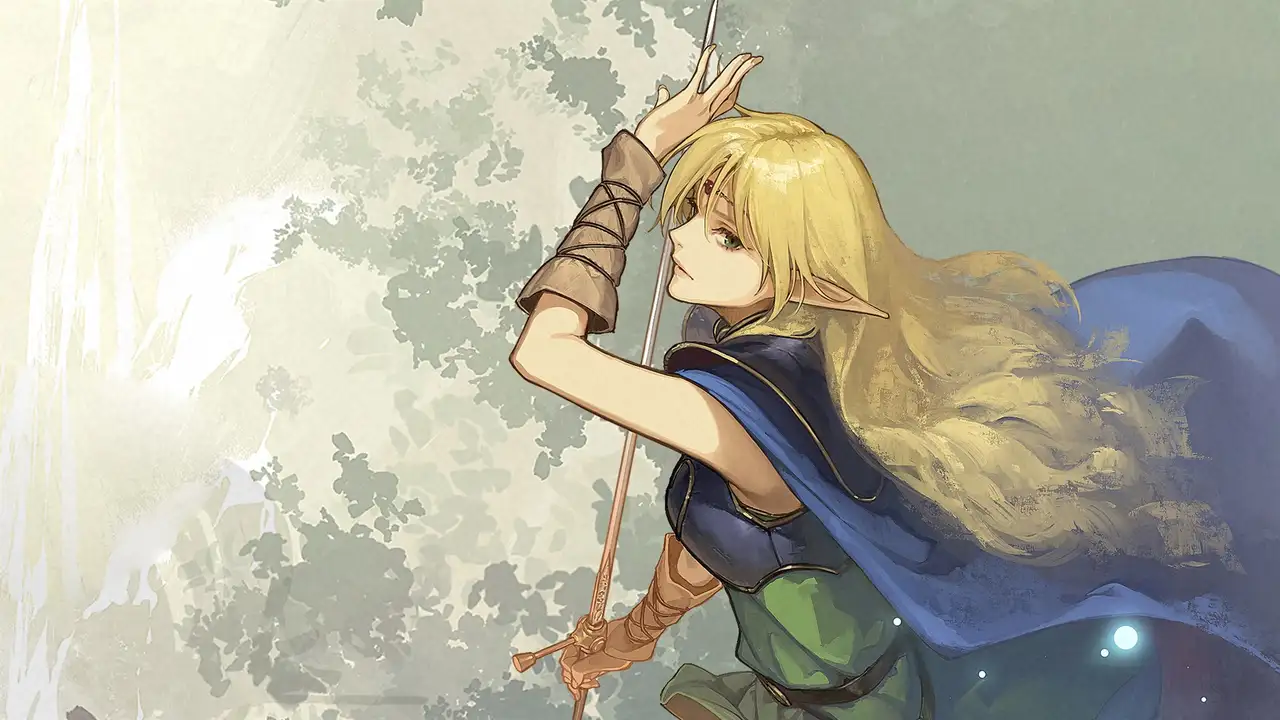
An elf of legend wakes in a shifting spirit-labyrinth, reliving memories and trials drawn from her franchise’s history while a meta-narrative quietly questions whether any of it is real. The premise honours its source with genuine care rather than costume: familiar faces recur, the dream logic deepens rather than frustrates, and the melancholy send-off registers as sincere. As a licensed adaptation, this is the rare kind that understands why its material endures.
The spirit-swap system is the mechanical heart. Wind, flame, water, earth and light spirits grow through combat, each gating coloured barriers and switches across the labyrinth, and elemental rock-paper-scissors keeps exploration continually rewarding. Swapping mid-fight to match an enemy’s affinity becomes second nature, and the elemental build the campaign ends on feels earned rather than accumulated. The possession twist on genre conventions gives the progression its own identity.
The Castlevania lineage is embraced rather than hidden. Movement and cape animation mirror Alucard’s silhouette so closely that the homage reads as affectionate, and the Symphony influence extends to the structure without ever becoming an imitation. Weapon variety spans daggers to a chainsaw, and the ricochet-bow puzzles stand as the design’s most creative flourish, bouncing shots through deliberately arranged geometry with a satisfaction that persists across sessions.
Pixel art and music carry the presentation superbly. Sprite work is crisp and expressive, backgrounds layer depth without clutter, and the stage-six soundtrack in particular overperforms to a degree that demands mention. A merchant, a casino mini-game and a full bestiary, weapon and spell completion tracker round out the systems, and a full-map completion run lands comfortably under five hours, tight by genre standards and honest about it.
The finale overreaches. The boss-rush gauntlet sends every prior boss back to back with only potions between phases, a memory test that taxes pattern retention more than skill, and the true final boss follows without respite. One dragon’s confusion attack stands as the single genuinely unfair fight: a stun that chains into unavoidable hits. Boss-fight readability suffers throughout from piled-up spells, minions and effects, with the action buried under spectacle at precisely the moments clarity matters most.
Those complaints are minor against what the game accomplishes. Backtracking through shifting stages stays engaging because the elemental gating keeps old rooms new, the completion tracker makes thoroughness its own reward, and the difficulty is fair almost everywhere else. A brief stumble mid-fight over which spirit the player controls resolves into fluency within minutes, and the opaque final door sequence is the only other spot where the game withholds its own logic.
The closing narrative beats land with a warmth the genre rarely attempts. The farewell register, the waking resolution and the epilogue’s melancholy combine into an ending that respects both the character and the audience, and fans of the source material will find the emotional payoff genuinely moving. As a love letter, it commits.
The labyrinth’s shifting structure keeps both sessions engaged. Rooms rearrange behind the player, familiar corridors return with new elemental requirements, and the meta-narrative of a wish being tested adds quiet unease to every backtrack. Completion tracking feeds the methodical loop: the bestiary counts more than ninety enemy types, spell and weapon tallies reward thoroughness, and the map reaches full marks in a run that respects its own pace. Short is not the same as slight, and this campaign is the proof.
Overall, this is a tight, beautifully made metroidvania whose spirit-possession hook, ricochet-bow puzzles and sincere homage deliver a compact campaign easy to recommend to genre fans. The boss-rush finale, cluttered boss readability and one unfair stun are small costs against craft this confident, and the short runtime reads as discipline rather than thinness.