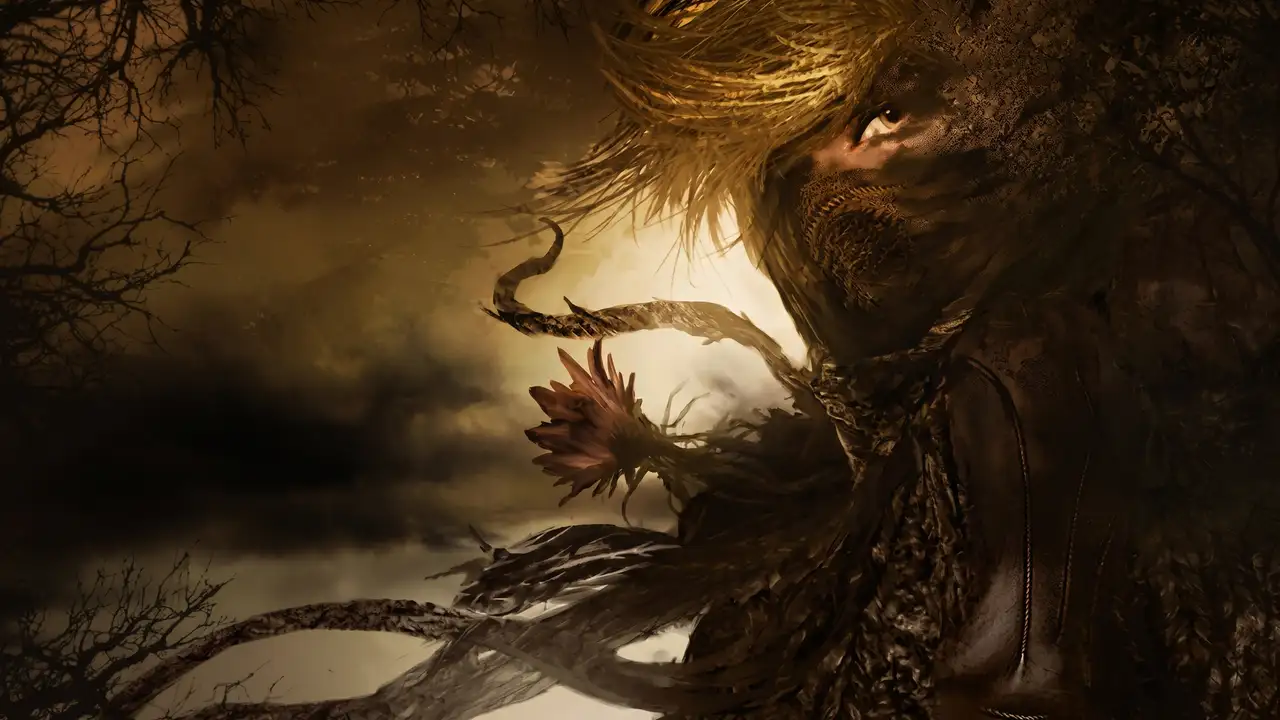
Rain pours eternally over a grim dark-fantasy world where the rain itself carries a transformative bloom, and a single champion walks a gauntlet of corrupted champions. Raindancer is a pure boss rush with a sharp inversion at its heart: where Titan Souls granted the player the one-hit kill, here the bosses take a while to fall and the player dies in one hit. Five bosses, each with a harder Tempest variant that doubles the fight or layers on extra attack patterns, make up the entire structure. There is almost no dialogue; the world exists in the margins of blessing texts and a lore map of rival factions. The premise is lean, but the twist on the formula is genuinely interesting rather than merely contrarian.
The blessing system is the game’s best idea. Each defeated boss grants a lore-backed blessing that meaningfully changes playstyle: larger crit windows, dash control, double damage for dashing through attacks, quick dashing, full-speed charging, and thorn dashes that deal flat damage on contact. Blessings stack across the run and can be swapped freely between attempts. The variety they add is real, not cosmetic, and the system supports genuine challenge runs, such as clearing a boss using thorn dashes alone, where the boss still falls remarkably quickly. Progression lives entirely in this layer, and it works.
The Tempest variants reward curiosity. Two bosses at once is a chaotic but fair escalation, and the extra attack patterns give the second pass through each fight a different rhythm. Difficulty is entirely skill-gated, with no in-fight health bars to hide behind and no statistical shortcuts, so a full clear across both modes is a test of pattern learning rather than grinding. The gauntlet structure means every attempt is a fresh start, which keeps the loop tight. It is a design that respects the player’s time even as it punishes carelessness.
The Zealot’s spear-spin phase exposes the game at its least fair. Hitboxes occasionally read as wonky rather than outright wrong, but at one-hit-death stakes the difference matters enormously, and this fight ate a disproportionate amount of time against everything around it. The multi-phase final tree boss is the other outlier, its escalating phases testing patience in a way the rest of the roster does not. Both fights feel like balance outliers rather than design failures, but in a game this lean the outliers are conspicuous. The two-at-once Tempest pairing compounds the Zealot’s problems further.
Aiming is the other persistent friction. The right-stick aiming and attacking feel awkward, particularly against the precision the one-hit structure demands, and the comparison to keyboard-and-mouse control does the game no favours. The screen also darkens as the final boss takes damage, a design choice that hurts visibility during the most demanding fight in the game, when clarity matters most. Neither flaw is fatal, but both are the kind of rough edge that a patch could smooth cheaply. Against bosses this punishing, control clarity is not a luxury.
The lore deserves more attention than its delivery suggests. The blessing origin texts sketch a surprisingly rich world almost from nothing: the Empire of Embers, the House of Gods, the Tribe of All, each described in genuinely dark detail that implies a full map of rival territories. Almost no dialogue carries any of it, which means the world-building is entirely optional reading, easy to miss and easy to underestimate. As pure flavour it exceeds what the game’s length promises. The grim tone of the texts matches the rain-soaked presentation well.
Overall, this is a strikingly good-value micro boss-rush whose one-hit inversion and blessing-driven variety outweigh wonky hitboxes and fiddly aiming. The skill-gated difficulty, Tempest variants and challenge-run support give it replayability far beyond its length, and the lore texts build real atmosphere from almost nothing. Judge it as a tight, pocket-priced palate cleanser and it thoroughly earns its keep.