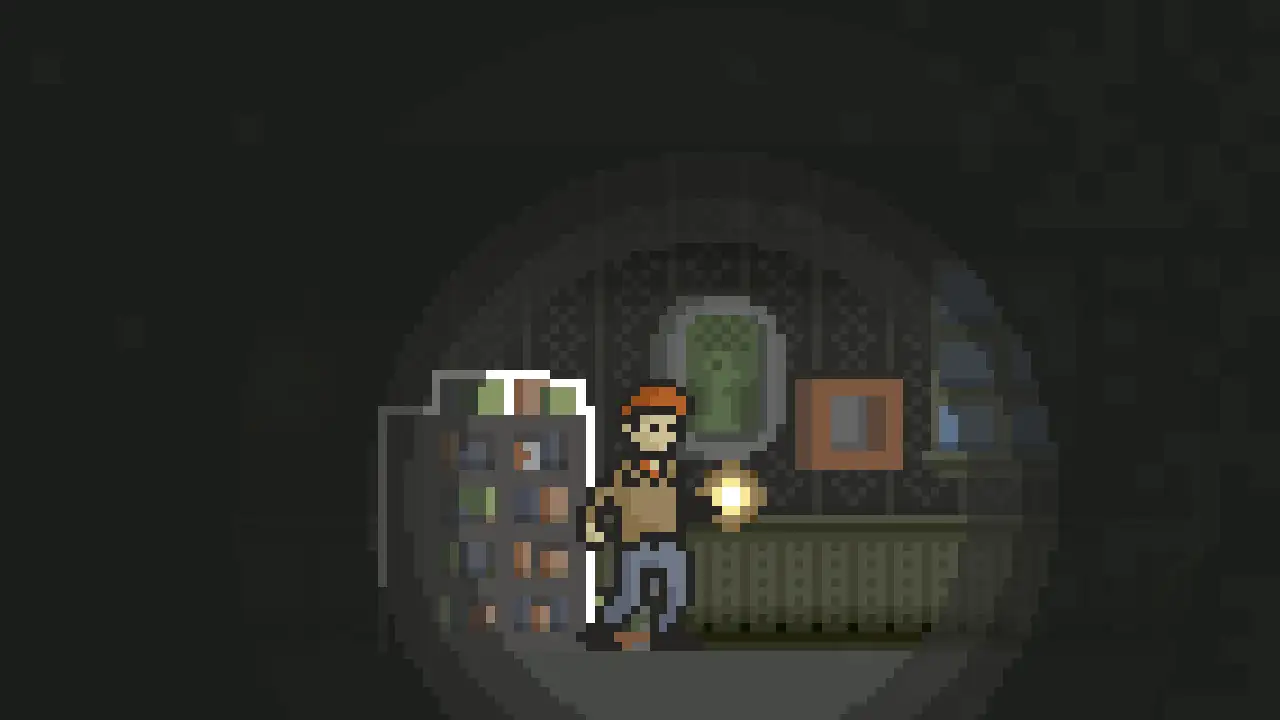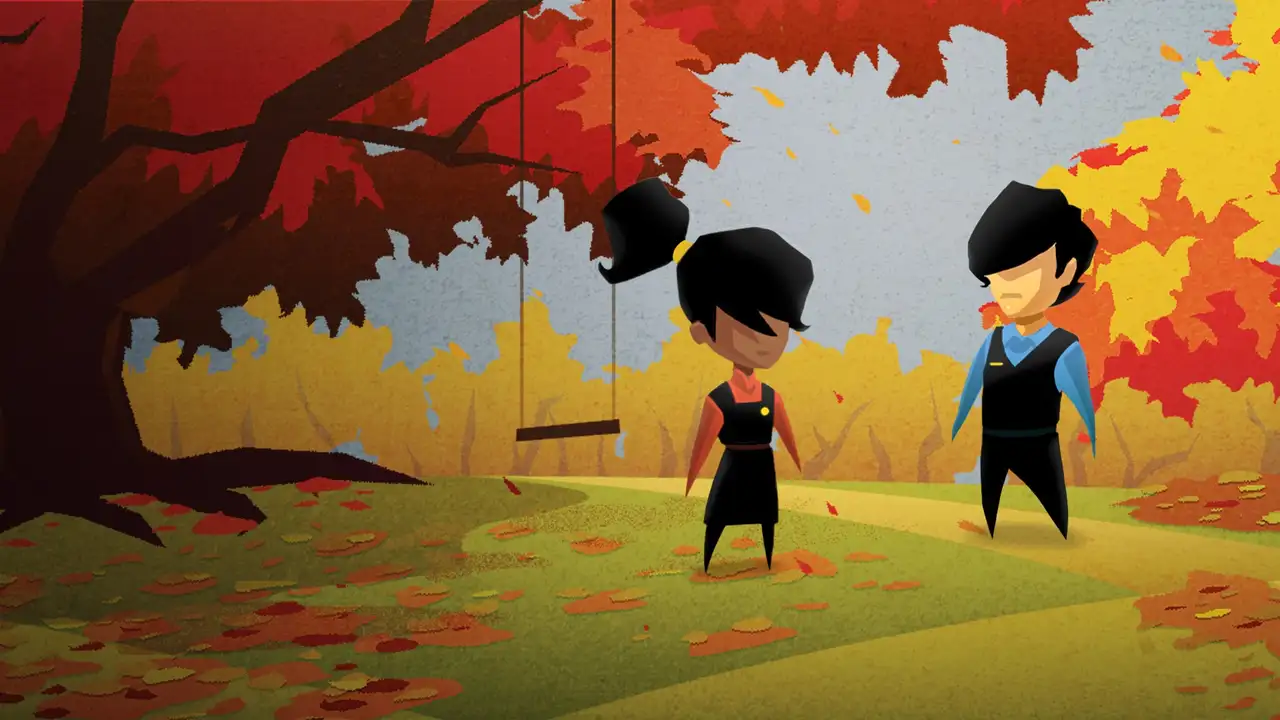
A greedy energy-monopoly matriarch loses her soul into her nephew’s yo-yo, and the two of them set out to recover four stolen mega batteries from the city’s villainous power brokers. The premise is cartoon noir played straight, complete with oversized sprites and a family of villains cast as the protagonists, and the whole package commits to the joke without winking at the audience. What could have been a gimmick instead becomes the foundation of an unusually inventive top-down Zelda and Metroidvania hybrid, one where the yo-yo is not a weapon bolted onto movement but the entire toolkit.
The trick system borrows from genuine yo-yo technique, and each unlock reshapes traversal. Walk the dog crosses water, UFO throws float across wide gaps, wall-ride dashes and hook shots extend reach in every direction, and coin flips bridge smaller intervals. The late teleport badge rewires the map entirely, trivialising distances that once demanded choreography. Stacking these abilities produces a movement web that keeps offering new options almost to the credits, and combat inherits the same flexibility, with tricks doubling as attack routes.
Sequence breaking is not merely tolerated here, it is celebrated. Puzzles can be solved as intended or cheesed outright in typical Metroidvania fashion, and breaking a room open through unorthodox yo-yo angles counts as a legitimate success rather than an exploit. The puzzle design rewards that spirit: repeatedly a room solved against its own grain draws out the delight of realising an unintended route works. The overworld is densely packed with optional rooms, collectibles and oddball NPCs, and fan-club recruiting and rock-paper-scissors tells fill the margins between dungeons.
The economy is the design’s most inventive corner. Upgrades arrive from cousin Papita as literal contracts that place the household in debt, and the debt is not cosmetic: roses stop dropping until the balance is cleared, converting an accounting abstraction into a gameplay debuff. Rose petals raise maximum health, badges refine with cash, and diamonds sell to a jeweller at escalating prices. An arena gauntlet and burger-delivery fetch runs pad the side content, though the deliveries route repetitively through the same southern plaza every time.
The Lincoln cosplay boss fight is the middle game’s low point. Its difficulty is never the problem; its length is, dragging on well past the point where the pattern is learned, and the fight only eases once parrying is remembered at all. The optional master jump challenge is worse in spirit: a spiked-roller gauntlet demanding precision while a great deal happens on screen at once, conquered only through repeated grinding and rewarded with a diamond of initially unknown purpose.
Some rooms never resolve at all. A scattering of puzzles and collectibles make sense to nobody, with no online guidance available for a title this niche, and their solutions resist every reading of their own clues. The completion percentage on the loading screen keeps honest track of this: finishing the story near 82% and accepting the obtuse remainder as unsolved is a reasonable ending, and the game never punishes that choice. The pop-culture-satire dungeon, skewering crypto scams and blockchain blather and phone-trade-in silliness, lands as a sustained piss take that justifies the whole detour.
Overall, this is a creatively dense, trick-based Metroidvania whose yo-yo ability web, celebrated sequence breaking and debt-as-debuff economy outweigh overlong bosses, a fiddly optional gauntlet and a handful of genuinely obtuse rooms. The frustrations read as bits rather than doubts, and the verdict holds warm and steady.