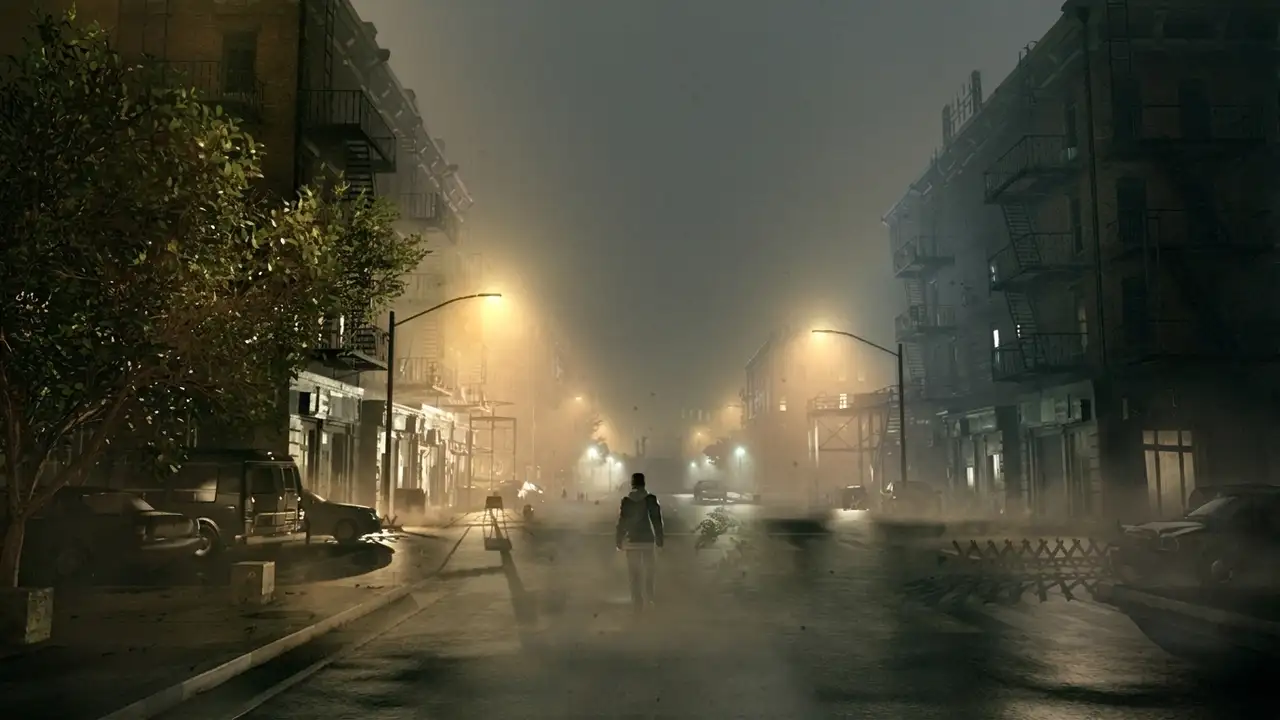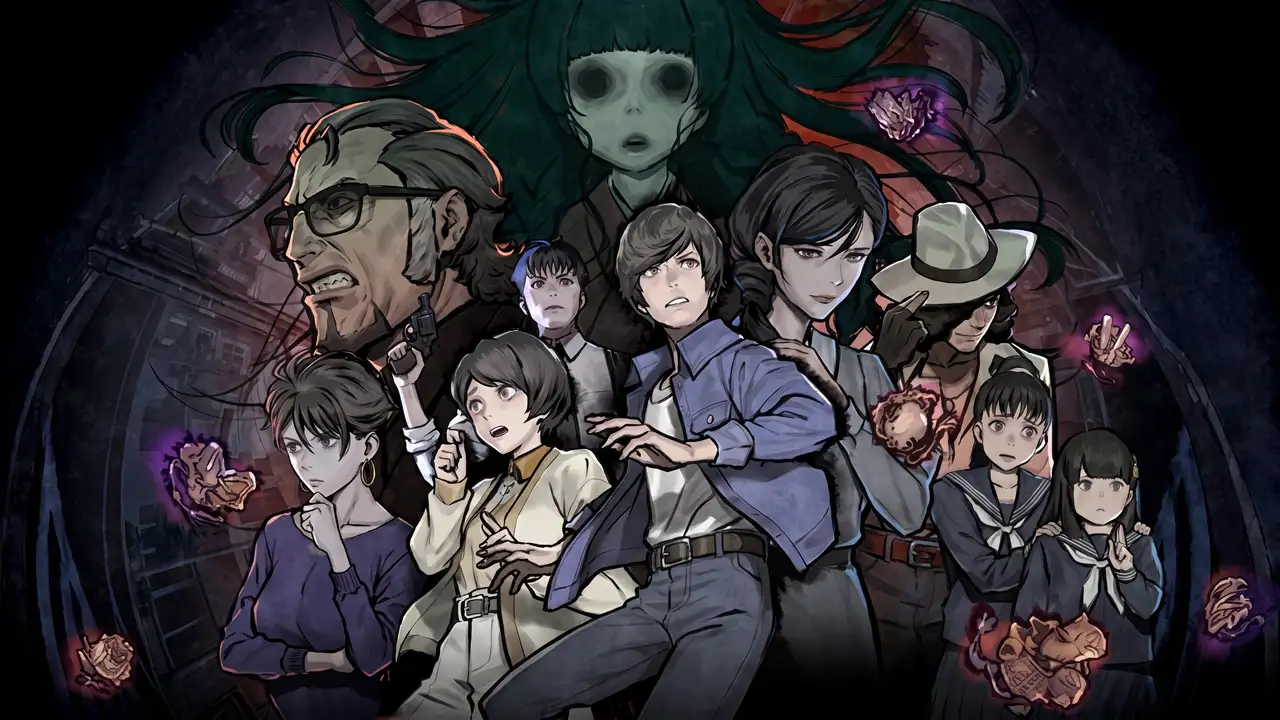
Sumida City in the 1980s is the setting for a race of curse bearers hunting for the Rite of Resurrection, built around the local legend of the Seven Mysteries of Honjo. The premise layers an Edo-period backstory beneath the modern supernatural hunt, and the mystery unfolds across intersecting routes for multiple protagonists whose cast keeps each perspective distinct. The atmosphere is genuinely creepy at the outset, and the writing carries both the folklore weight and the contemporary stakes without strain.
The story chart is the structural signature. Branching, replayable chapters map every character and every route on one screen, retrying after an instant death is trivial, and the multi-protagonist structure gives intersecting storylines a legible shape. The chart turns a genre usually defined by linear branching into something navigable and satisfying, and it is the backbone that makes the rest of the design’s risks viable.
The curse-triggers hidden in mundane player actions are the design’s cleverest trick. Muting the voice volume to block a sound curse, discarding a lighter, never turning your back: the game weaponises its own interface, and each discovery lands as a genuine surprise. The television framing of the Storyteller is a nice touch, and a screen that zooms and pans to hide background scares keeps the presentation active. Interface-integrated puzzles of this kind are rare in the genre, and they make the horror interactive in a way menus never could.
Spirit Sense rounds out the investigation loop, pointing the way toward clue interactions, and the horizontal camera pulls and screen tricks give the horror a physicality that static backgrounds cannot match. The painted, pseudo-real-life backgrounds are one hell of an art style, distinctive across every chapter and consistently handsome. Sound design supports the creep factor without leaning on loud stingers, and the presentation as a whole feels crafted rather than assembled.
The horror quotient fades after a strong opening. The first stretch earns its creepy label with real dread, and the false-procression sequence lands as genuinely rattling, but by the later chapters the campaign has shifted decisively into mystery-thriller territory, with dread giving way to deduction. The horror label oversells what the back half delivers, and anyone arriving for sustained scares will find the tension cooling as the puzzle architecture takes over. The pacing stays strong regardless, and the pivot is a tonal choice rather than a flaw.
The player-as-consciousness twist and the mastermind’s identity deliver the peak surprise, and the false conclusion that precedes the true route is a bold structural gamble that pays off. The tribute to a certain Edo-period artist at the end is a beautiful closing note, and the route structure makes pursuing the real ending a natural next step rather than busywork. Deaths are instant and cheap, which suits a story built on repeated crossings of the same branching ground.
The optional Mockingbird stickers have no effect on any ending, and skipping the last few costs nothing, which makes them the one loose thread in an otherwise complete package. The hefty install size is the only technical wrinkle, with no crashes or stability issues anywhere in a campaign that runs a little over twelve hours to full completion. The reading load is heavy, as the genre demands, and the writing earns it.
Overall, this is a clever, handsome visual novel whose puzzles hide in its own menus and whose story chart turns multi-protagonist mystery into something navigable and fresh, anchored by a twist that recontextualises the whole structure and an art style that stays distinctive across every chapter. The horror label oversells the back half, and the optional stickers are filler, but the interface-integrated curse design and structural ambition make this a Square Enix oddity well worth the time.