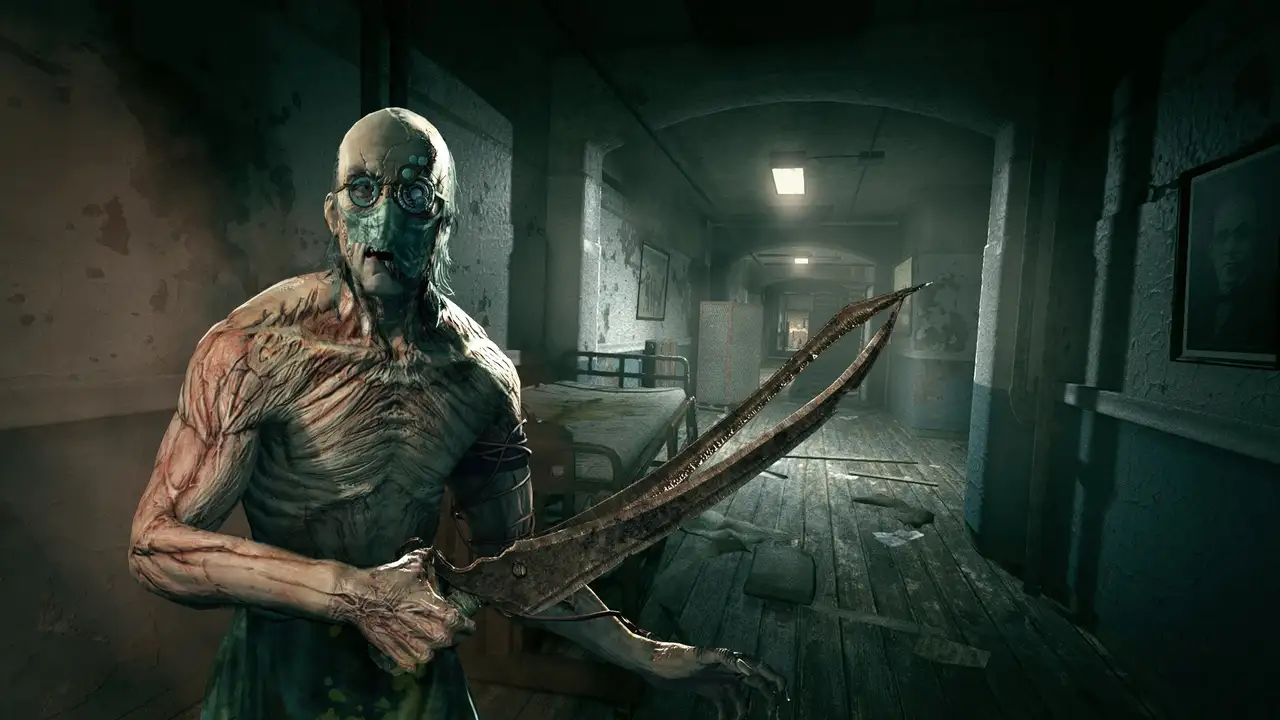
An investigative journalist breaks into a remote asylum after an anonymous tip and finds a corporate experiment has butchered the staff and unleashed the patients, and the found-document trail builds one of the genre’s most complete corporate-horror conspiracies. The Wernicke backstory, the MK-Ultra references and the phantom-pregnancy lawsuits reward close reading, piecing together a plot that escalates from rumour to apparition with genuine patience. Constant heavy breathing, head-stuffed toilets and recurring headless corpses keep the atmosphere disturbing rather than merely startling. The defenceless-protagonist formula proved genre-defining, effectively starting the trend of horror games without combat options. This is foundational horror design still functioning at full capacity.
The stealth system is the game’s foundation, excellent by design because nearly everything happens in the dark. Lockers, under-bed hiding and desks provide cover while pursuers patrol in scripted loops, and learning patterns, baiting enemies between rooms and debating locker-checking AI engages the player as genuine sleuthing rather than scripted navigation. Battery-managed night vision is the core resource, and its scarcity drives tension and frustration in equal measure. The lighting design in the darkest stretches is masterful, letting players see just enough to navigate without ever feeling safe. Stealth here is not a mechanic but the entire experience.
The Whistleblower DLC recontextualises the base game by running in parallel rather than before it, with a witness inside the outbreak escaping to upload the footage that starts the whole story. Its hobbled-leg chase removes the sprint option entirely, forcing genuine care about being spotted because running is simply not available. That sequence stands as the scariest material in the package, precisely because the escape option is taken away. The pre-outbreak prologue lands as an effective structural surprise. The DLC is essential rather than supplementary.
Dr Trager’s ward is simultaneously the campaign’s least-favourite stretch and its most memorable content, with a genuinely gross scene followed by a chase that is mostly a routing problem: the pursuer’s obsession with one side of the map collides with progress requirements. The basement generator section burns most of a battery stock and represents the campaign’s hardest resource squeeze. Occasional confusion in the asylum’s warren of corridors leaves objectives misread until backtracking resolves them. These frustrations are real but localised. None of them damage the whole.
Control fumbling is self-admitted rather than the game’s fault, though it colours the early hours. The camcorder’s forced-raise document capture means notes are missed and noticed only later, an odd friction in a game built around observation. Around six hours cover both campaigns in single sittings, brisk pacing that keeps the horror from overstaying. Health is forgiving on Normal, with survivable chases and generous checkpoints. The Johnson twins, the headless corpses and the persistent body horror add up to a package that disturbs rather than truly frightens.
The Walrider’s slow escalation from rumour to apparition to something far worse is the campaign’s narrative spine, handled with a patience most horror sequels never learn. The camera-crack sequence in the darkened male ward is a craft highlight, staged with a precision that justifies the game’s reputation on its own. Drager’s pursuit, the twin terrors of the ward and the experimental wing each leave their mark. The asylum’s geography becomes genuinely legible only through repeated navigation, which is the point.
Overall, this is the foundational defenceless-horror experience whose excellent stealth system, masterful lighting and complete corporate-horror worldbuilding justify the playthrough entirely, even though its reputation for terror oversells the actual scares. The DLC’s parallel structure and hobbled chase are essential additions rather than padding. Disturbing more than frightening, and very good at being both.