New York in 2329 rents out bodies. Consciousness transfers between “shells” while the poor face repossession, a corrupt bill lowers the body-subscription age, and aristocrats live on Olympus-height towers above the acid rain and riots below. Into that world of institutional rot steps a detective who cannot even open his own case files, working a conspiracy that threads through the city’s elite. The worldbuilding touches sell the rot: mandatory 10,000 daily steps as federal law, Statue of Liberty figurines hawked as scavenged relics, and a deliberate anachronism that loops technology back to keypads, vintage cars and film-style cinema, an oddity that reads as charm rather than annoyance.
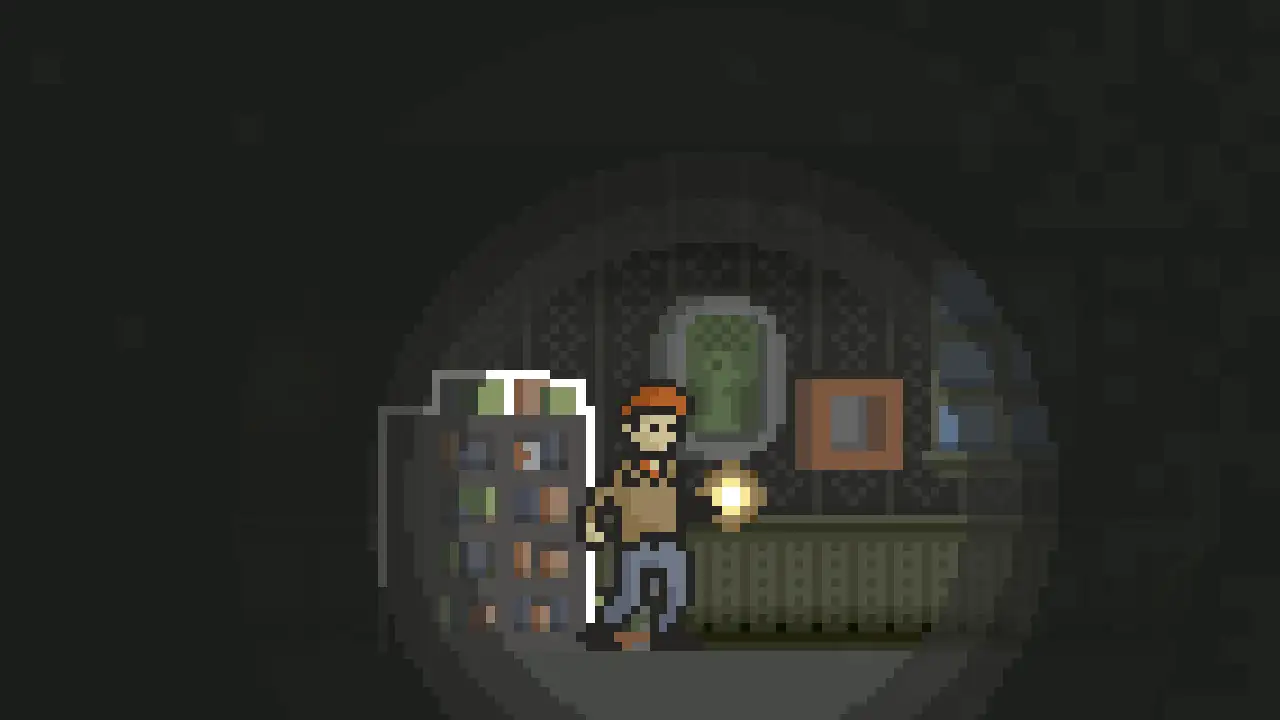
The reconstructor is the game’s defining pleasure. Crime scenes can be rewound and relived, with a timeline indicator dragged back and forth across the moment of death to catch details invisible in the present. The forensic toolset around it earns equal credit: X-raying bodies traces bullet trajectories through walls and wire networks, UV light tracks blood trails across floors, and evidence photography locks each find into the case. Seeing a bullet’s flight path rendered mid-air at the Icarus bar crash lands as a genuine reveal, and scrubbing time at each scene sustains its appeal from the first case to the closing thoughts.
The structure funnels three cases through Green’s apartment, the Icarus bar crash, Green’s secret dungeon and a train crash site, with the floating garden atop Green Tower and the EOS water section providing the visual peaks. Deduction segments on the evidence board connect causes and culprits in straightforward chains, and the puzzles that interrupt the flow, such as the Sarah-apartment lamp and chicken figurine sequence, stay brief and easy. The descent into a private pocket Hades body vault is the most striking set piece, a single location that says more about the setting’s cruelty than any briefing.
The visual presentation impresses from start to finish. Every district frames itself like a painted still, the light in each tower apartment and rain-soaked street holds up to scrutiny, and the driving sequences between locations look good enough to distract from the navigation itself. Few games of this format commit this hard to composition, and the payoff is a world that consistently rewards simply looking at it.
Friction is real but intermittent. A flashlight refuses to activate at one point for no apparent reason, and hint mode offers little help when puzzles stall. Hovering-car navigation disorients more than it should; steering a vehicle through vertical traffic leaves the player unsure whether the car is even responding. None of these break the flow for long, but they are the only moments the polish slips.
Brevity is the honest caveat. Three investigation areas run just over five hours, and the credits arrive quickly. Framed as tight rather than thin, the pacing never overstays, and the ambiguity the story leaves behind, particularly around whether the “stranger” haunting the cases is a psychosis projection, gives the ending a deductive afterlife that suits the genre. The ambiguity resists a single clean reading, and some threads do not fully reconcile under any of them, which suits a noir even when it frustrates.
Overall, this is a beautifully realised cyberpunk noir whose reconstructable crime scenes, X-ray forensics and striking visuals outweigh intermittent tool glitches, woolly navigation and a five-hour footprint. Tight, gorgeous and intriguing, it ends before it can overstay and lands its conspiracy with style.