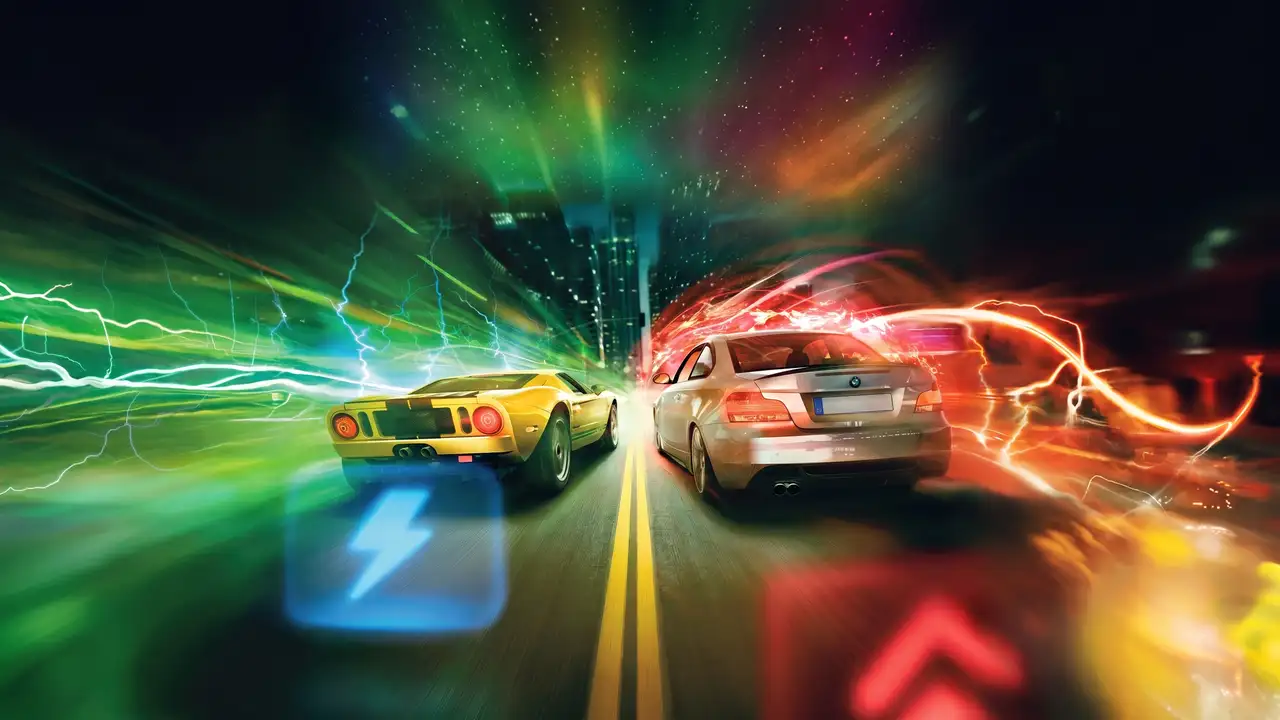
A thin but watchable B-movie frame drives the whole thing: a man owes the mob and enters a cross-country illegal race from San Francisco to New York, chased by mob shooters, a helicopter and the police. The opening car-crusher escape is a weird intro, the handler character’s introduction lingers gratuitously, and the central question of what the protagonist did to anger the mob is never answered; the mob itself vanishes after act one. What survives is the cinematic presentation, which carries the campaign from start to music-free credits.
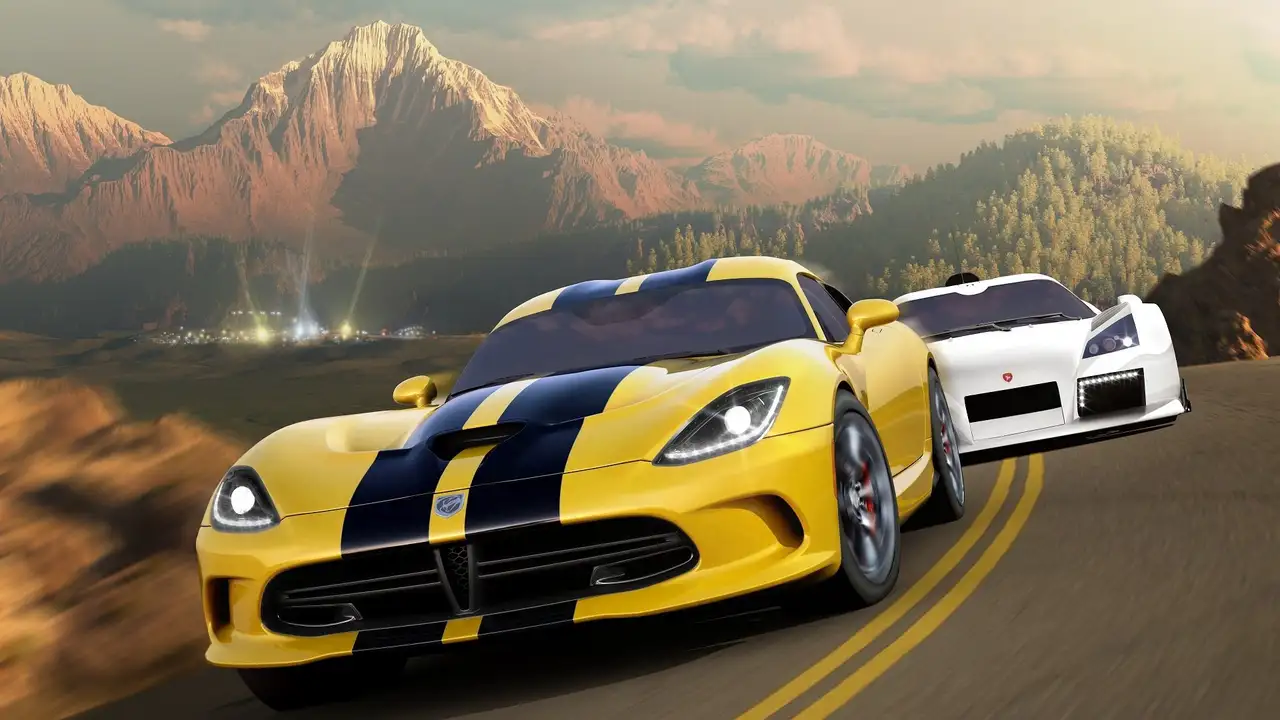
The movie-like set-piece structure is the draw: varied events and changing scenery rather than the same race loop repeated. Checkpoint and time-trial races mix with battle and elimination events, rival duels, police pursuits, on-foot quick-time escapes and car-stealing garage stops across ten stages of a coast-to-coast sprint. Canyon battles echo the series’ mountain heyday, and the late super-car stages are a genuine spectacle. It plays like an action film, and that identity is precisely the appeal, with the mob chase and helicopter beats giving the middle stages their adrenaline.
The overpowered shortcuts are the toy that keeps it fun: jumps through barns and walls that the AI rarely uses, letting aggressive, risky lines shine. Rivals can rarely answer a good cut, and the joy of threading one never fades across the whole run. Driver levels exist but stay mostly cosmetic, particularly with DLC cars in the garage, and the tiered progression from sports and muscle through exotics to super cars lands at the right moments.
Rubber-banding cuts both ways: the pack stays comparably close, never leaving anyone stranded far ahead or behind, but defeated rivals reappear instantly in front, a muscle car outpaces an exotic supercar, and position logic occasionally makes no sense at all. Wreck and reset rules are inconsistent, some crashes mercifully repositioning while others force a whole-event retry, with no discoverable logic to which is which. The timer-based final rival races let opponents pull ahead at the last second, a design weaker than the series’ older distance-based highway battles.
Immersion cracks accumulate in small places: terrain has no real handling effect, with snow indistinguishable from tarmac, cars have no headlights at night, the displayed distance and travel-time maths never adds up, DLC cars grant nitro absurdly early, and loading times run sizable. The mob-plagued Cleveland leg and the scripted, container-dodging New York finale provide the genuine rough patches, the latter demanding full retries of its smallest pixel.
Roughly three hours cover the campaign on Normal difficulty, fair throughout with those scripted spikes, and a Challenge Series extends things for anyone wanting more after the credits; the credits themselves run music-free, an odd final flourish that suits the film framing. Well over forty resets across a full run speaks to the retry loop’s generosity, and the whole thing stays good-humoured even mid-failure. Marcus Blackwell’s Aston Martin gives the rival duels a recurring nemesis worth beating more than once. Nothing about it really screams its franchise name, which is exactly why it works as a neat one-off between the series’ usual loops.
Overall, a genuinely fun playable action movie, best experienced once: varied set pieces, joyful overpowered shortcuts and a cinematic coast-to-coast arc that carries its thin story with style. Inconsistent reset rules, rubber-band quirks and immersion cracks are real costs, but the movie-like pacing makes this a one-and-done worth taking.