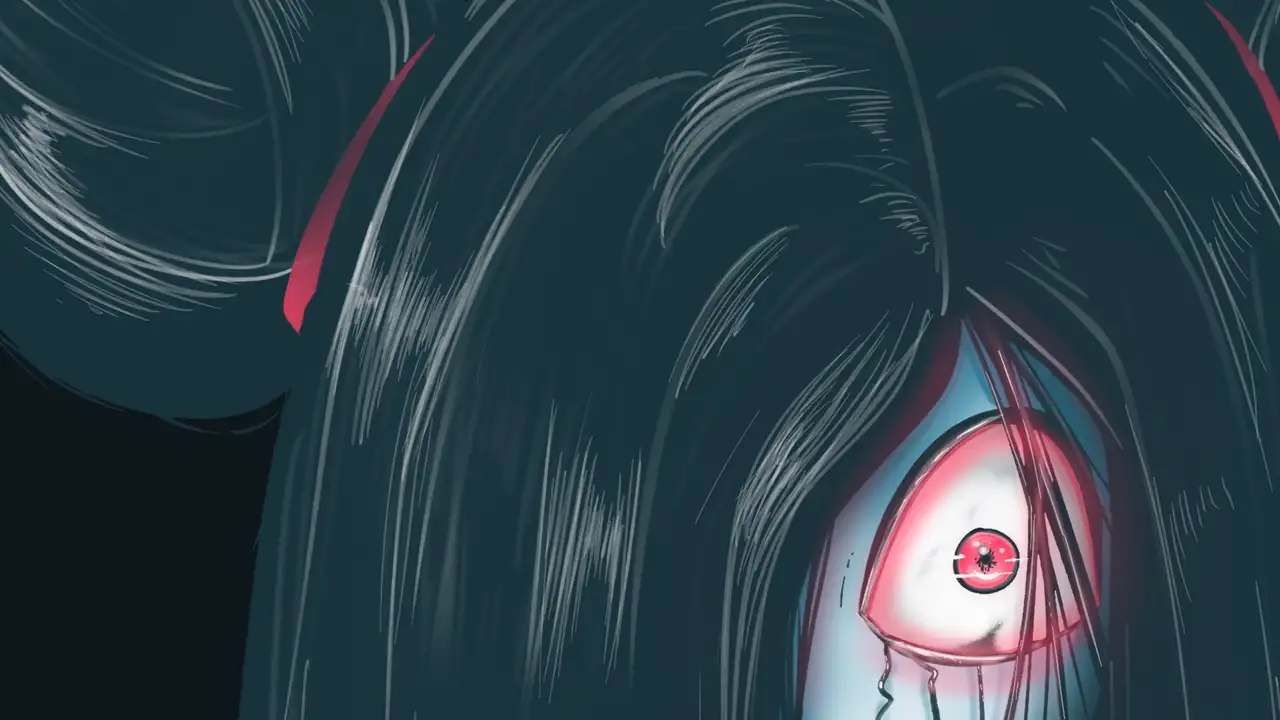
A 12-year-old girl’s recurring dreams, a kidnapped sister and a curse-loop of suicides thread through bath houses, spirit worlds and hospitals in this pixel-art horror adventure. The tone blends J-horror yokai folklore with genuine sibling comedy, and the bickering duo at its centre (one sister resembling a creepy doll, the other a swearing pre-teen) gives the creepiness a human anchor. Balancing dread with warmth is difficult; fewer games manage it as comfortably.
The trilogy structure is the campaign’s real draw. Standing entries in their own right, the three games (this one closing the set that began with a young girl’s revenge tale and continued through a red witch’s tale) share characters, motifs and locations that reward familiarity: a noodle-lady yokai resurfaces, a crooked bow motif recurs, and a prior protagonist appears as a spirit. The remaster’s ending breaks the series’ grim pattern with genuine happiness, a payoff that lands harder precisely because the predecessor refused one. As closure, the finale delivers.
The dream and loop structure keeps the story engagingly unstable. Scenes loop and twist, reality blurs deliberately, and the mechanics behind the curse reveal themselves gradually through pieced-together backstory rather than exposition. The central twist recontextualises the opening’s darkest detail, and the loop-breaking logic ties the sisterhood theme to the resolution without over-explaining. It is twisty in the good sense: every revelation reframes rather than negates.
Puzzles stay light and approachable. Exploring rooms, collecting items (chopsticks, a hairpin, a magnet-fishing-rod contraption) and trading with NPCs follow classic point-and-click grammar, and the solutions are fair enough that failure rarely stalls progress. Two set-pieces stand out: a mirror name-puzzle solved through reflection logic that rewards actual mirror-thinking, and a magnet-and-fishing-line build whose assembly feels earned. Timed sequences (a mushroom fetch, a sauna trap) add real tension, and failure states are elaborate enough to reward deliberate testing.
Minor jank punctuates the polish. The mushroom-fetch timed sequence can throw an unintended-looking error that forces a redo, loading transitions drag long enough to feel like crashes, and the script carries frequent spelling and grammatical errors throughout. The solo-developer context softens the criticism, and the errors rarely obscure meaning, but the technical floor sits noticeably below the writing’s quality. Continuity also assumes fresh memories: character roles from prior entries surface without reminders, and returning players will reconstruct relationships live.
The horror register deserves note for what it withholds. Suicide and depression themes sit at the story’s core, and the game handles them with a directness that avoids both exploitation and squeamishness, tying the curse’s mechanics to the emotional truth behind them. The horror never becomes cruelty, and the sibling bond gives the darkness something to protect. That balance is the campaign’s quiet achievement, and it earns the happy ending the series previously denied.
The pixel-art presentation carries the horror’s whole register. Sprites lean cute rather than grotesque, which makes the moments of body horror and despair land harder by contrast, and the bath house and hospital palettes shift convincingly between warmth and dread. Character portraits during dialogue sell the sisters’ dynamic with small expressive changes, and the spirit world’s design borrows yokai iconography without drifting into pastiche. For a solo project, the visual consistency is genuinely impressive, and the art direction does as much storytelling as the script.
Overall, this is a charming, creepy palette-cleanser of a horror adventure whose trilogy closure, sibling comedy and fair puzzles deliver genuine satisfaction despite typos, minor jank and continuity that assumes fresh memories of its predecessors. The solo-developed craftsmanship shows in every pixel, and the loop-breaking finale rewards series familiarity with the closure the preceding entries earned.