A Pony Express freighter hauls its cargo through deep space, and the tone announces itself before anything goes wrong: crew pay docked for dock infractions, HR complaints punished with punishments, corporate dread soaked into every corridor. The Tulpar’s five-person complement unravels after a crash, and the writing treats that collapse not as spectacle but as an anatomy of self-deception. Nothing here is comfortable, and none of it wants to be.
Structure does the heaviest lifting. Chapters jump non-linearly between before and after the crash, time-skip headers slam against each other (“2 months after the crash”, “6 hours till judgment”), and playable POV swaps hand control to different crew members without warning. The fragmentation makes every scene a puzzle of chronology, and piecing the timeline together becomes the real game. Details planted in one era detonate in another.
The mouthwash reveal reframes the entire premise in one held breath: fourteen percent ethanol, thirty thousand units of it, the sole cargo of a doomed delivery. The pitch-black joke lands because the corporate satire has already primed it. A delivery monopoly’s freighter, a crew whose wages depend on dock discipline, and the payload that outlives them all. Dark comedy and horror share the same punchline.
The blind horse-creature lurking in the dark maze cannot be seen at all, only detected through a code scanner beeping proximity, and that sequence supplies the game’s most pure gameplay tension. Elsewhere interaction stays deliberately humble: walk, look, zoom, fetch codes, assemble a cake recipe, mix a spiked mocktail. First-person movement through the ship grounds the horror in physical space in a way point-and-click framing never could.
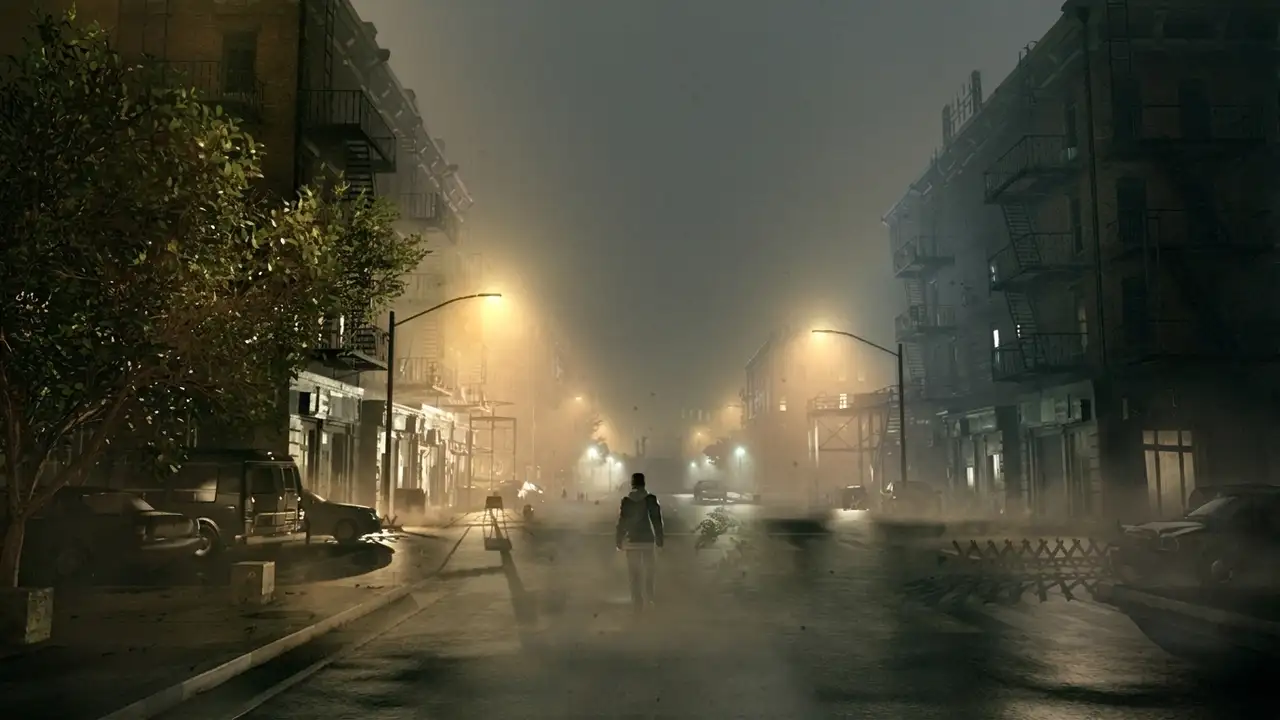
PS1-revival aesthetics do enormous atmospheric work. Low-poly faces and chunky interiors read as era-pastiche at first glance, then as unease once the body-horror nightmare sequences begin warping the ship’s geometry. Achievement statistics on the platform page underline how few finish the game, a small meta-detail that suits the material. The visuals stay distinctive throughout, never mistaking retro for lazy.
The interactive design deserves credit for exceeding its format’s reputation. Anticipation of a static point-and-click gives way to free first-person movement through the ship, an entirely different register of presence for a story-driven work. Objectives chain logically across decks, zoom inspection rewards close reading of environment detail, and the handful of minigames, however sparsely instructed, each tie into the fiction rather than padding it. Level design keeps the freighter legible even as the narrative scrambles its timeline, a genuinely difficult balance that most fragmented stories fumble.
Some surrealism resolves into confusion rather than revelation. A chase sequence involving a tied-up crew member implies pursuit that never returns, and one late mutilation goes unexplained, leaving threads that dangle rather than resonate. An early nav-computer minigame offers no instruction and briefly stalls momentum, movement speed stayscrawl-slow with no run button exactly when the hiding sequence wants pace, and dark scenes plus a cramped controller-glyph font occasionally strain readability.
None of those frictions undo what the writing accomplishes. The unreliable framing, the corporate rot, and a twist that recontextualises every prior scene through implication and imagery rather than exposition produce a story that respects its audience. The ultrasound imagery, the centipede-thing’s baby sounds, and the guilt-soaked staging trust viewers to assemble the horror themselves. Few games of any length manage that; fewer still manage it in a single sitting’s worth of scenes.
Overall, this is a genuinely disturbing, audaciously structured work whose obscurities cost it little against what its writing and construction achieve. The jump-cut chronology, the corporate satire and the PS1-revival dread combine into something few narrative games attempt, and the loose threads read as blemishes on a triumph rather than fractures in one.