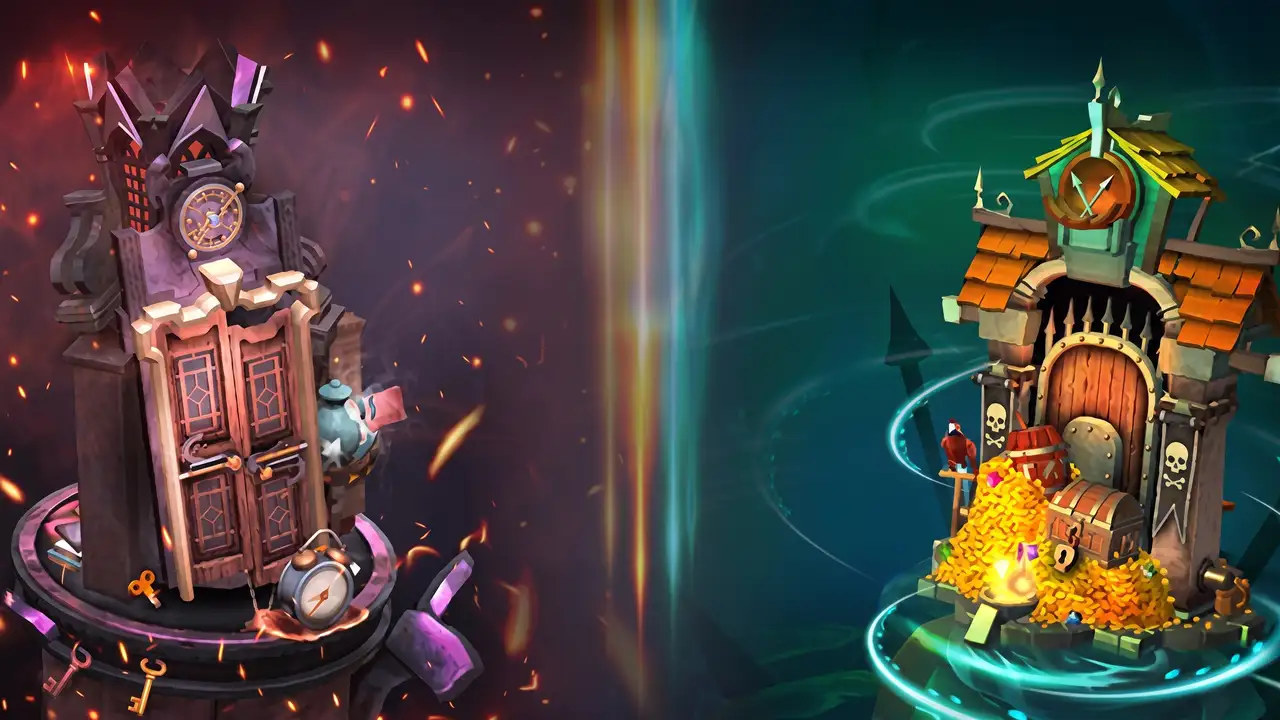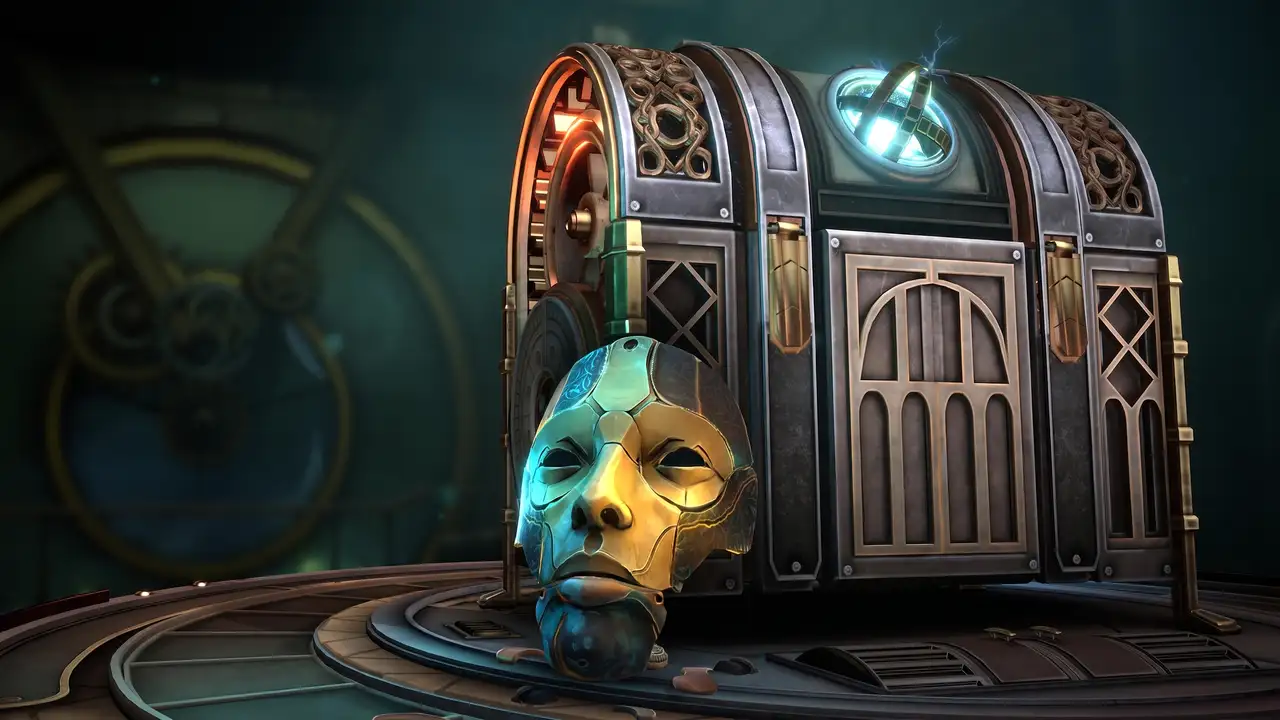
No title screen, no preamble: booting Lumote drops a bioluminescent blob straight into a luminous vertical tower where every level of the entire game is visible from the starting hub, one continuous structure with no loading anywhere in the climb. The art direction floods everything in bright reds and blues, making the colour-ownership language instantly readable, and the whole game runs on converting energy lines from one colour to the other. A wordless opening cut-scene sketches a betrayal and little more; the atmosphere comes from endearing creature noises and a warmly melodic soundtrack rather than any narrative ambition. It is a vibe-first puzzle-platformer, and the vibe works.
Each of the game’s towers teaches exactly one gimmick and sticks to it, a discipline that keeps the sixty-level climb unusually clean for the genre. Stomping pads flips ownership of the world’s energy lines, jellyfish carry the blob across gaps, and diverters reroute beams around the architecture. Timers measuring each tower’s completion tick upward steadily, from twelve minutes at the start to over fifty near the top, and the puzzles amped up with every ascent. The escalation disproves any early impression of triviality without ever turning cruel.
The red beam holds the design’s best secret. Its role in deactivating objects only clicks partway through the climb, and once the inversion logic settles, puzzles that looked opaque resolve with an agreeable snap. Physics occasionally permits solutions the developers never intended, and the glitches read as charming rather than damaging. A couple of towers resist that snap for longer than intended, most notably the jellyfish-bridge level and the final diverter tower, each of which stalls progress with opacity spikes that outlast the rest of the game’s fairness.
The dumbbats frustrate most among the tools. Steering the moving blocks once they are in motion runs finicky, and nudging them toward an intended path takes more fiddling than the puzzle demands. Small imprecision, but it stands out in a game whose controls are otherwise clean. The blob’s own hopping handles well enough, and the jellyfish rides work smoothly; the finickiness is concentrated entirely in the blocks that move.
Collectibles are the structural sore point. Sixty artifacts dot the climb, two of which are permanently missable, and with no level select anywhere in the game the only remedy for a missed one is a full replay. The design otherwise respects short sessions, with a roughly four-hour main game and a twenty-five-level epilogue that reverses the colour roles and leans into tighter platforming. The epilogue arrives unannounced after the credits, a second campaign that inverts the whole colour-ownership fantasy and recontextualises the climb.
Master Mode earns its place as more than padding. Playing as the opposing colour reframes every familiar tower, and the platforming emphasis, with tight jumps the main climb rarely demands, gives the epilogue a distinct physicality. The per-tower single-gimmick teaching carries over intact, so the second campaign re-learns nothing while still introducing fresh applications of the inversion logic. Together the two campaigns round out a package that feels complete despite its brevity.
Overall, Lumote delivers a bright, sharply taught puzzle-platformer whose colour-inversion gimmick escalates with real discipline, and whose single continuous tower makes the whole structure a pleasure to look at as well as solve. Finicky dumbbats, two permanently missable artifacts and the absence of level select sting, but the vibrant art language and the surprise second campaign carry it warmly to a recommendation.