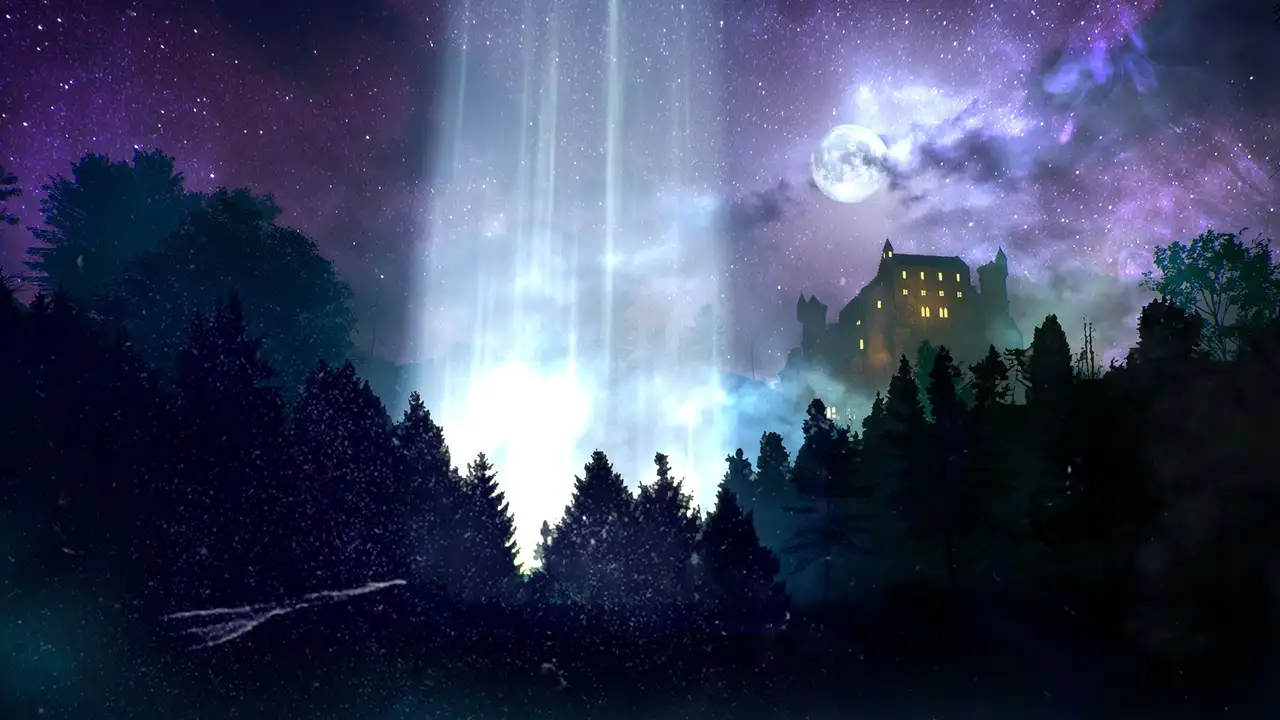
A melancholy fantasy of a woman with two-coloured eyes, a village haunted by its history, and a demon’s killing that sends her on a months-long quest through forests, caves and flooded temples to gather seal-guardian blood for a forbidden resurrection. The premise folds duality into everything: stances, eyes, spirits and finally two souls sharing one body, an identity the game builds deliberately. Lore arrives through readable in-world texts about the Ula tribe, the tremis hybrids and a genocide-tinged mythology, delivered with translation quirks that read oddly charming rather than careless. The pixel art is the defining strength, handsome enough to single out unprompted from the first boss onward, and it sustains that standard through every chapter.
The two-stance combat system is genuinely fun when it works. Melee and ranged forms swap on the fly, parry windows grant immunity, dashes carry invulnerability frames, and projectiles can be deflected back at their owners, with killing archers by their own arrows the system’s showpiece trick. A phoenix familiar even offers a one-shot revival, softening the boss gauntlet’s edge. The meditation-based heal, powered by spirit points and usable outside danger, is well designed and forgiving, keeping the pressure of each encounter without ever making recovery feel cheap.
The rune-cipher is the puzzle design’s high point and a genuinely rare idea: legible literacy itself becomes a mechanic, with syllables shifted three columns right across a rune table that the player, not the character, must decode. It respects the player enough to be solvable by reasoning rather than brute force, and it ties directly into the heterochromia-driven lore. By contrast, the later sliding-block puzzles draw open frustration, their slow tile manipulation a chore the cipher never is. The mixed bag is real, but the cipher alone justifies the puzzle budget.
The falling-ceiling escape after the second boss is the campaign’s low point. A long platforming chase across precarious platforms restarts in full on any miss, a failure frequency guaranteed by the section’s own design, and it tests patience precisely where the combat has just rewarded mastery. Nothing else in the four-chapter gauntlet approaches that severity, and the final boss and spirit-merging finale restore goodwill promptly afterwards.
The heavy attack is a design misfire. Its enormous wind-up makes the right-trigger strike near-unusable in real fights, a move that exists in the moveset but never earns a place in it, and the frustration compounds through the water chapter where its reach would otherwise help. One fix, a faster startup or a poise-breaking property, would rescue it entirely. As shipped it is a button most players will abandon early.
Stability wobbles occasionally: input is eaten and the character freezes mid-fight, requiring a menu restart to recover. It is annoying but recoverable, and it never recurs at a campaign-breaking moment. Progression comes via a skill tree fed by hope fragments and moonshards, which nears its maximum two bosses in, telegraphing the two-to-three-hour runtime as plainly as any store page could. The bittersweet ending, a spirit merging with the living to close the revenge plot on its own terms, lands emotionally despite the brevity.
Overall, this is a short, polished and handsome action-adventure whose excellent pixel art, clever rune-cipher and satisfying stance combat justify its two-to-three hours, judged fairly on its own compact terms. The restart-heavy falling-ceiling chase, the unusable heavy attack and the near-instant skill-tree ceiling are real blemishes. A melancholy, bittersweet gem that knows exactly how big it wants to be.