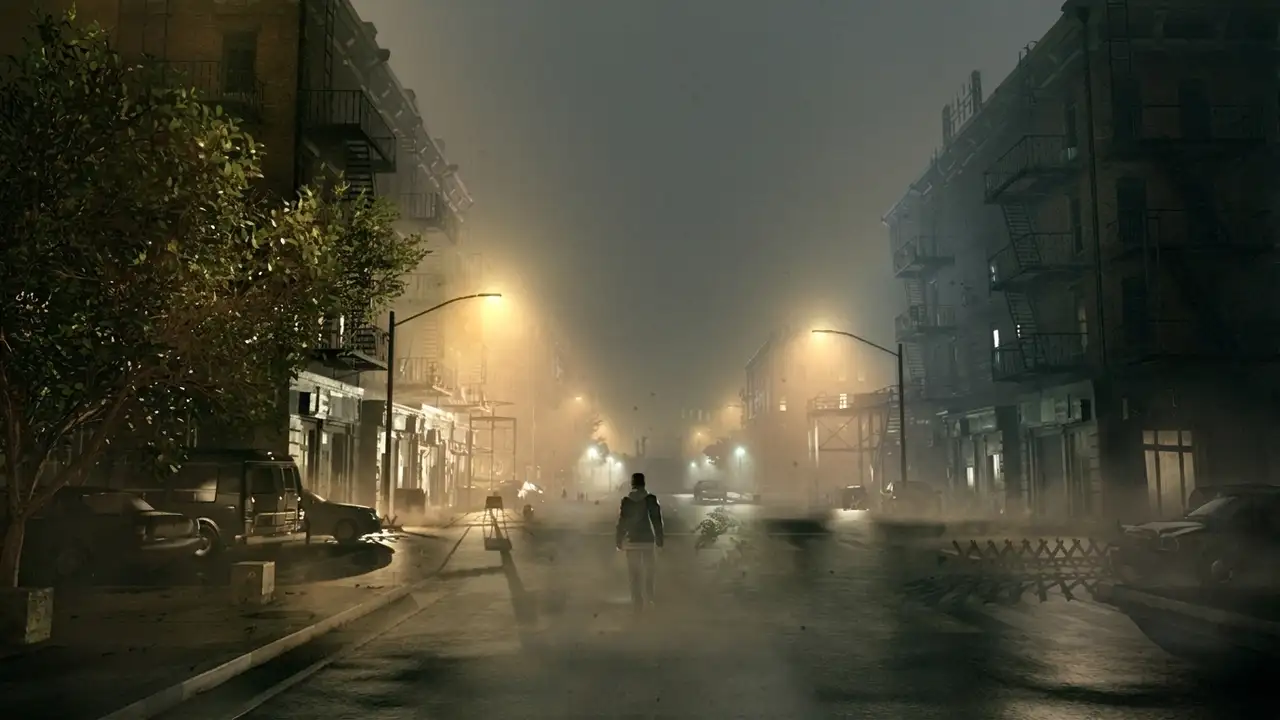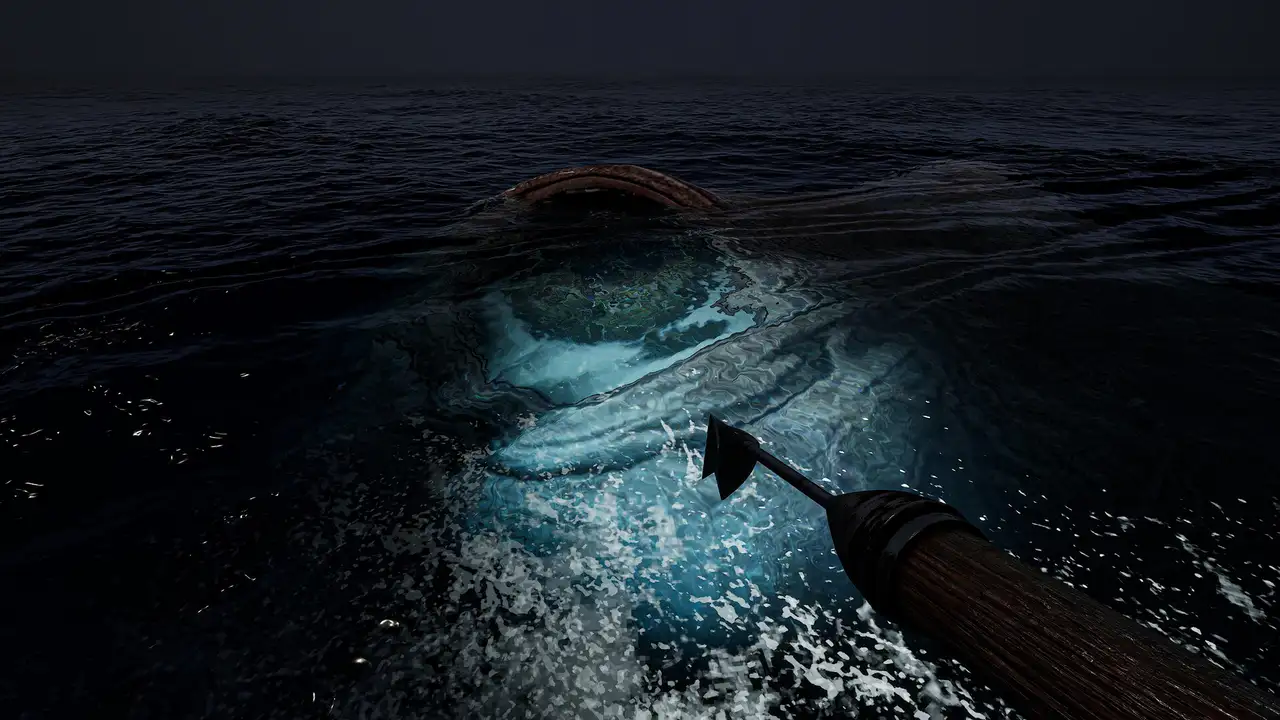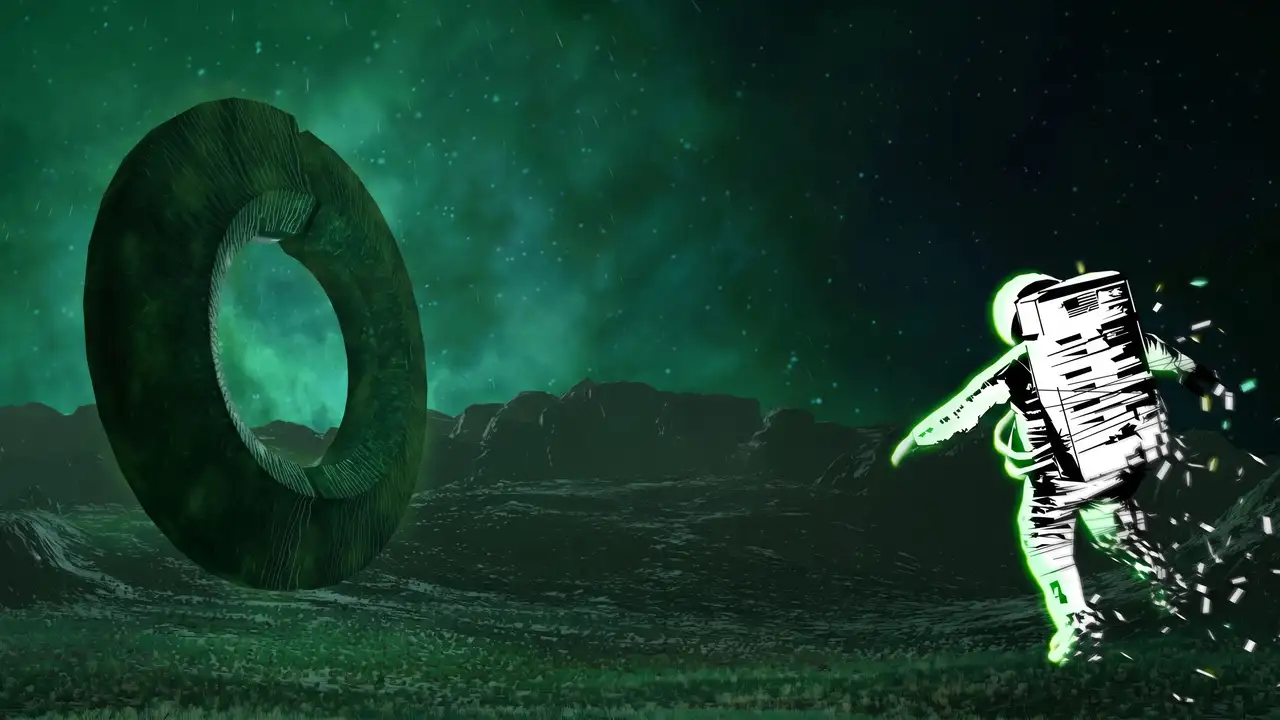
A Cold War test pilot falls through a teleportation anomaly onto a moon that is anything but lifeless: an entire Californian research town, a lakeside cabin, a dried seabed and a burning forest have all been dreamed into being by a handful of scientist survivors. The memory-manifestation premise is the design’s engine. Every location doubles as a character portrait, reconstructed from holidays, war stories, fossils and whole cities lifted from the survivors’ minds, and the escalation from town to foglands to fire gives the journey genuine narrative pull.
Where the predecessor offered a single desert and audio logs, this one delivers voice-acted scenes and cutscenes within the first half hour. The found-document layer (dated tapes, survivor diaries) fills in the backstory, and the tone walks a deliberate line: a horror vibe rather than a horror game, with a mausoleum of asphyxiated bodies and dead friends re-materialising supplying the register’s sharpest jolts. The invisible antagonist corroding the survivors’ paradise gives the paradise a rot that the bright meadows cannot hide.
Traversal improves on its inheritance. Boost-jumping gives way to a jetpack with continuous thrust rather than the predecessor’s rationed pair of boosts, and the upgrade re-energises the middle chapters outright. Light inventory puzzles thread the exploration: energy rocks carried into ring devices, seed photographs focused through lenses and mirrors, a binocular zoom that energises distant rocks, and a firefighting water-cannon interlude that breaks the rhythm pleasantly.
The absence of threat is the design’s central gamble. Nothing kills; the only hazard is falling, and even falls do not end the run. That fearlessness reads as weird rather than relaxing, and the game never resolves whether the lack of danger is a feature or a gap. Exploring a moon where nothing can hurt the protagonist produces a distinctive meditation, but players calibrated for stakes will notice the vacuum constantly.
Puzzle opacity costs real time. Keys arrive with no description of what they unlock, the photograph-versus-mirror arrangement never telegraphs its goal, and the binocular mechanic activates without explanation, leaving the current objective genuinely ambiguous. The worst part is that the solutions hide in plain sight; looking around thoroughly still fails to reveal what the game wants. A clearer objective line would dissolve most of this friction without diminishing the mystery.
Physics and presentation jank surfaces occasionally. Buildings scale into giant-feeling proportions, textures fail to load at intervals, and one fall-through strands the protagonist until a save reload. Achievement pop-ups punctuate key story moments unless disabled beforehand, an annoyance the game itself cannot help but one its pacing feels. The bugs never block progress, but they chip at the polish the memory-world premise earns.
The finale escalates the premise rather than betraying it. The technician’s corruption, the survivors’ cure, and the organism’s civilisation beyond bodily form converge on an ending that ties the memory theme into the resolution, and the memorial dedication closing gives the journey a personal punctuation mark. The runtime runs shorter than its predecessor, but the density per hour is markedly higher, and the trade reads as deliberate rather than thin.
Overall, this is a shorter but denser spiritual successor whose memory-built biomes, voice-acted storytelling and continuous-thrust jetpack deliver genuinely fun exploration. The threatless structure, opaque puzzle goals and small physics jank are honest costs against an atmosphere this carefully imagined, and the journey from town to burning forest earns the word meditative without ever feeling empty.