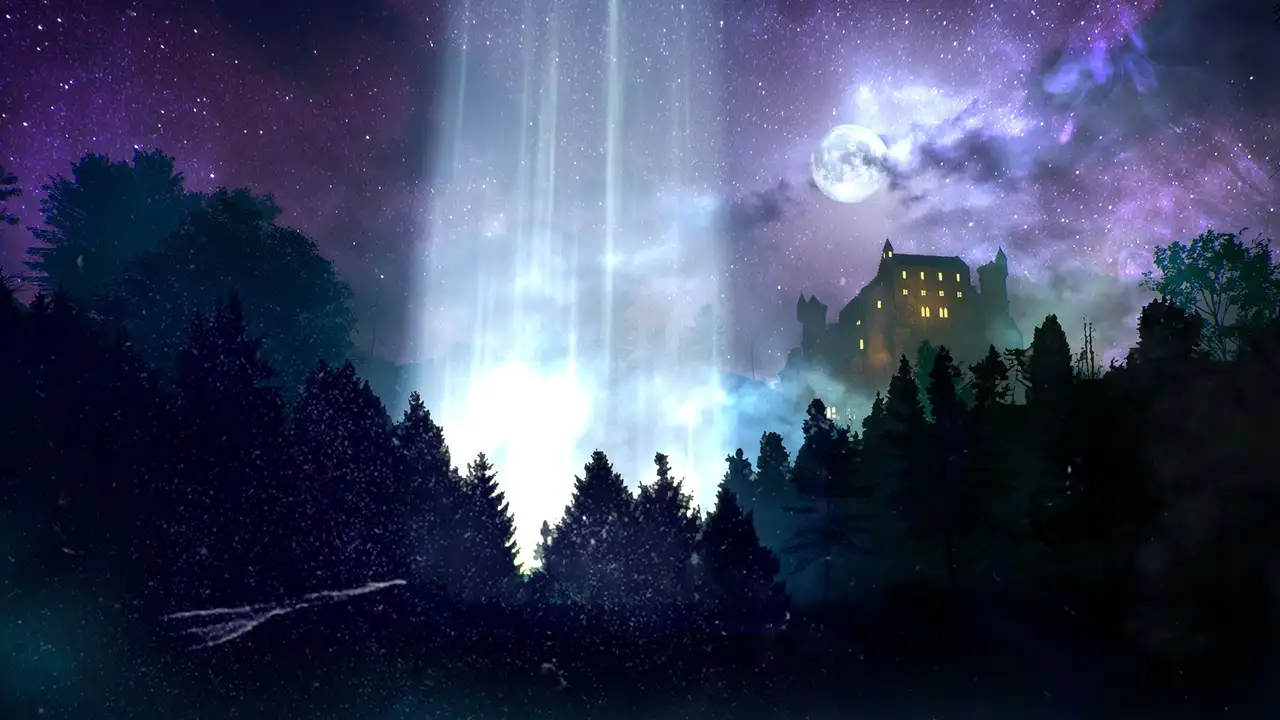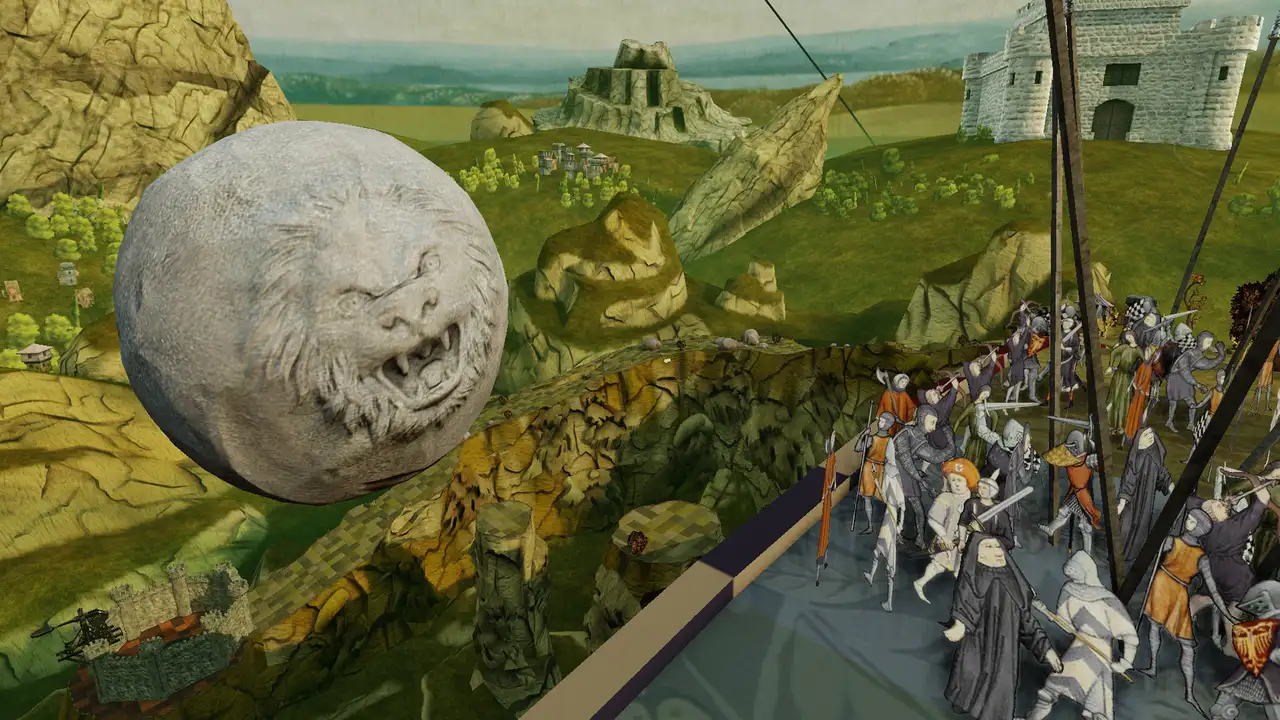
A tempest shatters the Mask of Eternity and petrifies nearly everyone in Daventry, sending a tanner with no royal blood to gather the five scattered fragments. The premise alone signals the departure: no Graham, no point-and-click inheritance, just a commoner with a crossbow in a 3D world of levelling and loot. Judged within the lineage it was born into, the game was punished for expectations it never shared; stripped of the family name, the shape underneath is a competently built action-adventure with real structural ambition, and its poor reputation says more about the label on the box than the design within.
The regional structure gives the adventure its ambition. Daventry gives way to the Dimension of Death, a swamp, the gnome underground, a frozen realm and the realm of the sun, each gating traversal behind a specific tool: an axe to bridge planks, a rope-and-hook for climbs, a severed hand that satisfies a witch’s fingerprint-scanner gate. The layout carries a Metroidvania flavour rare for its era, and constant experience gains reward backtracking through older regions with new power. Ye-olde dialogue keeps the fairy-tale register, from a hornless talking unicorn to a swamp witch with a goblin-tart recipe and a gnome elder fretting over dwindling faith.
Combat is the weak link. Swings offer no indication of a hit or a miss until the animation resolves, a swing-and-hope model that punishes melee and pushes the crossbow, with its reliable distance, into the role of default weapon. The Warhammer’s slow wind-up and unreliable contact render it barely worth carrying, and the marginal gains on gnome-merchant upgrades, a sliver of extra damage or a handful of defence points, rarely justify the price. Difficulty selection conveniently affects only combat, and the lower setting comfortably papers over the imprecision.
Jumping compounds the friction. The model offers a bunny hop or a full leap of faith with nothing between and no mid-air control, and the Dimension of Death’s instant-death gaps turn that binary into the game’s worst stretches. Platforming segments elsewhere inherit the same all-or-nothing feel, and a section only escapes misery when its ledges are wide enough to forgive the input. Precision and this jump model never reach an understanding.
Progression systems rescue the loop between stumbles. Levels arrive frequently, the spell-of-might crafting chain (golden mushroom, blue adamant, basilisk tongue under a lightning bolt) delivers a damage jump large enough to feel transformative, and the fire sword upgrades the melee arsenal late. The finale, guarded by a chained dragon and resolved through the betrayer once entrusted with the mask itself, proves less brutal than its reputation suggests and closes the fragment hunt on a satisfying beat.
Stability on modern hardware outperforms the game’s reputation, though the scars of 1998 remain: a default fifteen frames per second, load times from the CD-swap era, one runtime error, and repeated crashes whenever frost trolls close distance. Modern conveniences such as WASD rebinding and solid-state storage rescue much of the roughness, but the crashes persist as the one bug class no patch has retired.
Overall, this is the odd entry out in its family: the only one with real-time combat, jumping and levelling, and the only one whose protagonist is not Daventry royalty. The swing-and-hope combat and all-or-nothing jumping are genuine flaws, yet the region-gated structure, generous levelling and surprisingly sturdy modern performance make it a good action-adventure that deserved a name of its own.