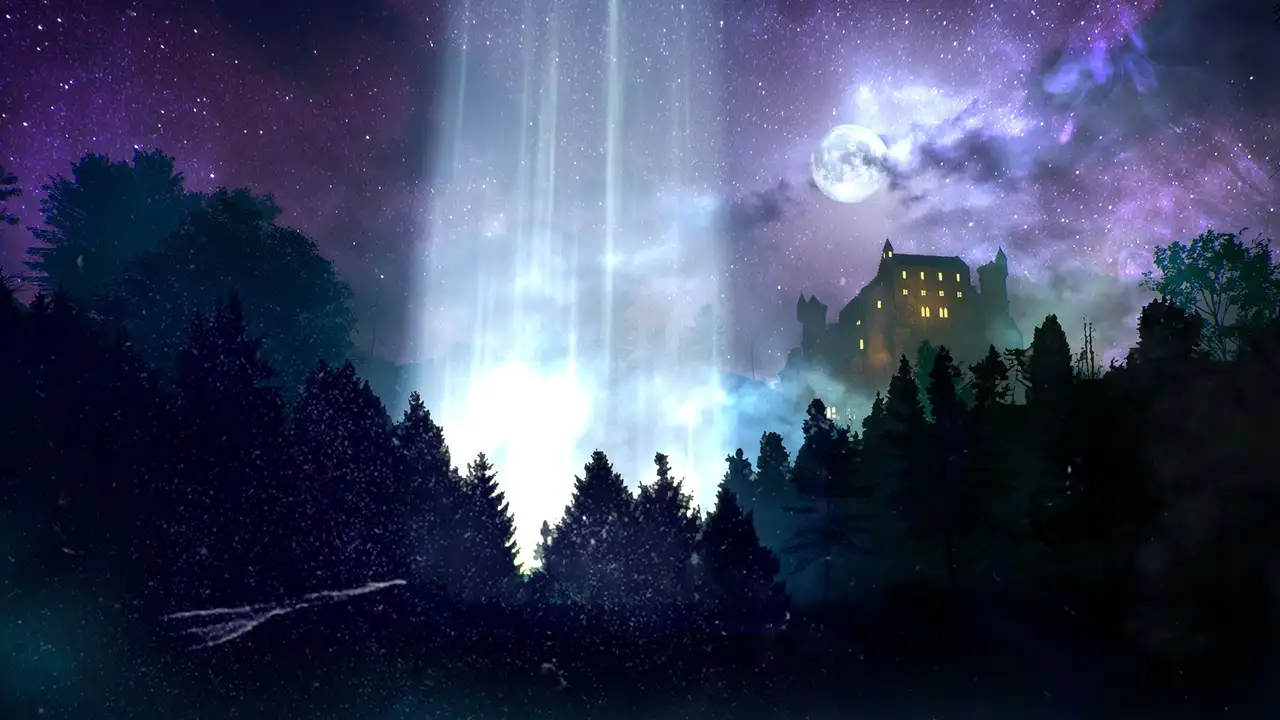
A wizard spirits away a castle and its royal family, and an owl escorts the displaced king through a fairy tale that spans a desert, mountains, a sea voyage and finally the wizard’s island. Serenia gives the journey its geography, rodent and insect allies supply its recurring motif, and the narration carries a streak of sass that keeps the fairy-tale register from going saccharine. The production was the first fully voiced, fully illustrated adventure of its line, and the ambition shows in talking willows, harpies quoting each other about eating men, and a wizard duel of shapeshifting into bunny, cobra and raincloud.
The ant musical number is the wildest surprise the game holds. A full song arrives with no warning, and it remains the single most charming thing in the entire entry, the kind of out-of-nowhere set piece that only this era of production design would attempt. Voice acting overall holds up remarkably for a 1990 release, and a cast of pitch-shifted bees, rats and owl-adjacent creatures earns amused affection rather than complaint, with a cast credit revealing one harpy voiced by the studio’s own co-founder.
The narrator deserves separate billing. Sarcastic, sassy and occasionally exasperated with the king’s choices, the voice-over turns failure into comedy and exploration into banter, and it single-handedly keeps the fairy-tale sweetness from curdling. The recording quality has aged better than most of the era’s digitised sound, and the delivery of repeated lines carries just enough variation to stay welcome, with the desert’s one notable exception. Rodent and insect allies recur as a motif, each rescue repaid later in the chain, and the game trusts the player to notice the pattern without underlining it. The writing is where the production’s ambition lives.
The barter-chain town economy is the puzzle design’s backbone. Buying a custard pie, befriending ants for a golden needle, trading needle to cloak and marionette to sled, plugging a leaky boat with beeswax and recharging a wand with moldy cheese all link into a chain where every item matters. Death traps abound, a rope on a brittle branch, a brittle tomb, a temple treasure-grab, a holey boat, but most yield to frequent saving, and the finale resolves with a wizard duel followed by a tidy motive reveal. A continuity payoff for the previous chapter’s cat transformation lands as a delight for series followers.
Sierra’s soft-lock design is the great flaw. Every pickup matters, a missed item can dead-end a run hours later with no warning, and the only insurance is constant saving or a guide within reach. The desert compounds the cruelty with a hidden thirst timer the game never surfaces, no indication of how thirsty the king is, only the sudden collapse, and the same stretch recycles its lifegiving-water narration line verbatim every time, a gag that wears from funny to tiresome across the crossing.
Cut-scene warning prompts interrupt the flow constantly. A content warning pops before scenes and yanks attention out of every transition, an irritation that persists from start to finish and stands as the most grating single element, telling the viewer to brace for material the fairy tale never actually delivers. The opening compounds the slow start, booting straight into a lengthy owl-narrated introduction with no title-screen idle, and audio stuttering on modern systems adds tech worry to the first hour.
Overall, a perfect-score run of a short, dense adventure lands as warm-hearted and frequently delightful, held up by the barter-chain economy, the sassy narrator and the ant song, and dragged down by soft-lock risk, the hidden thirst clock and the relentless cut-scene prompts. The charm outweighs the cruelty, and the short length is the only downside these games ever really admit to.