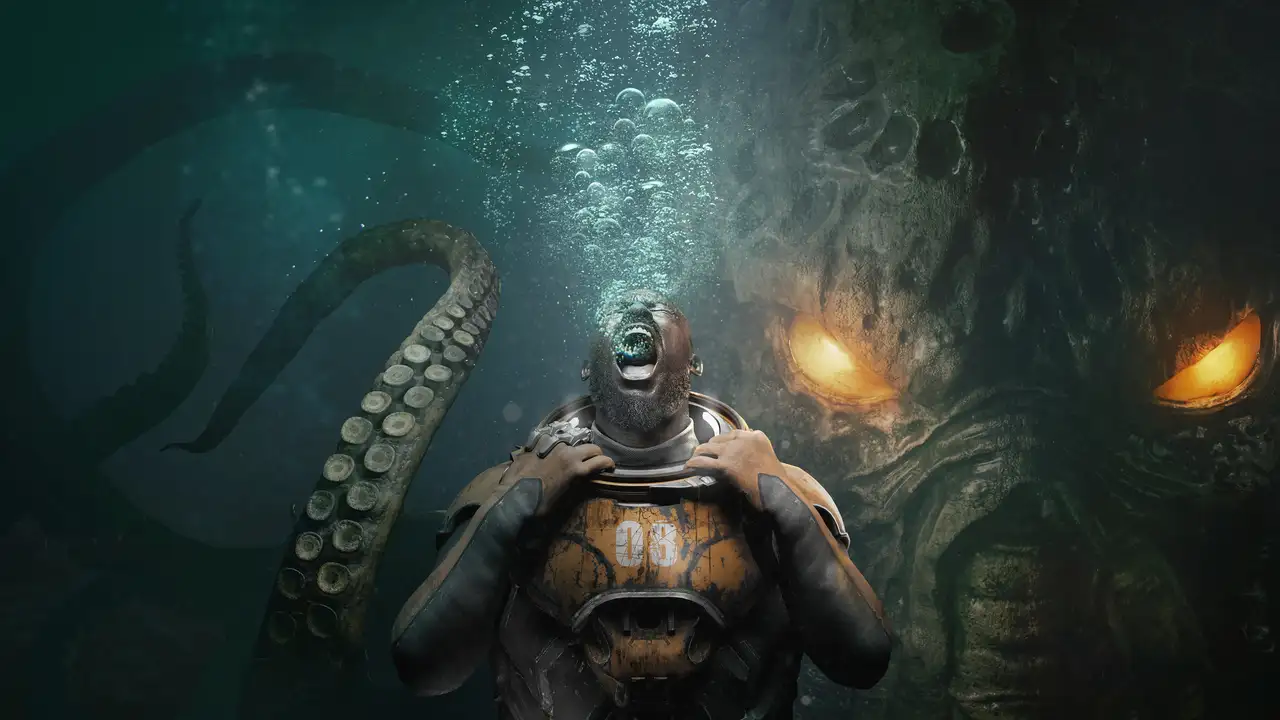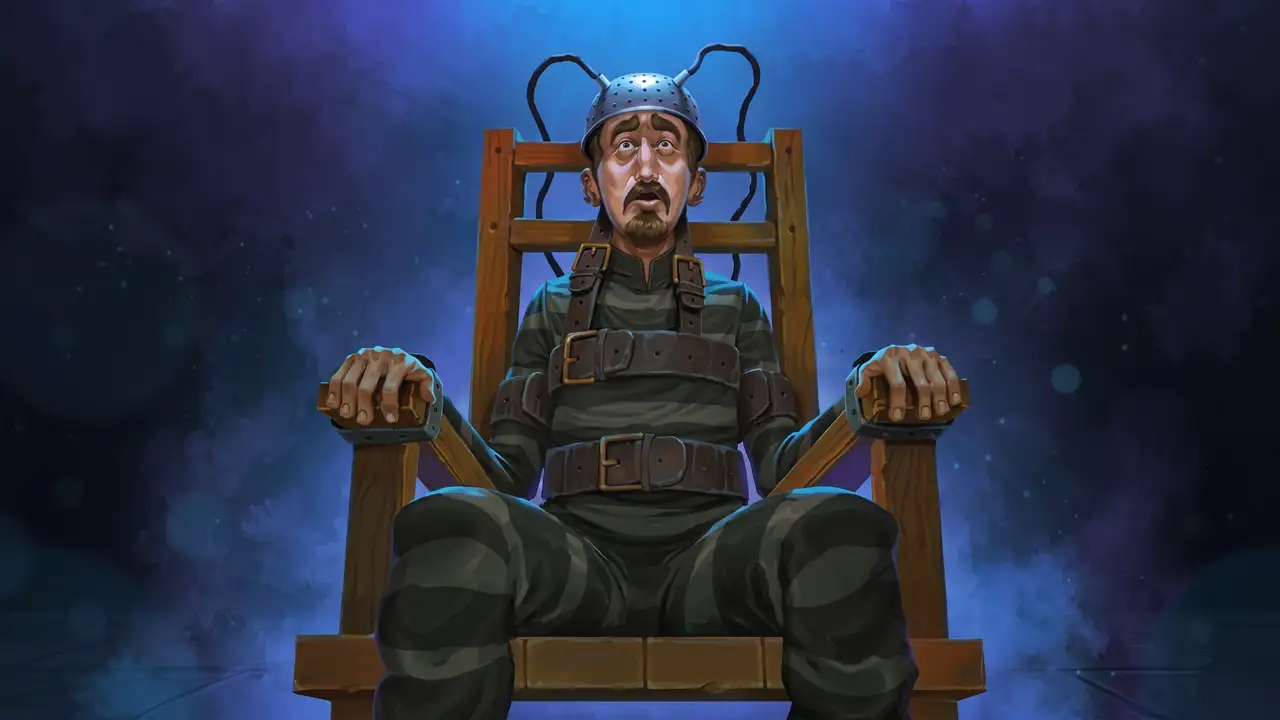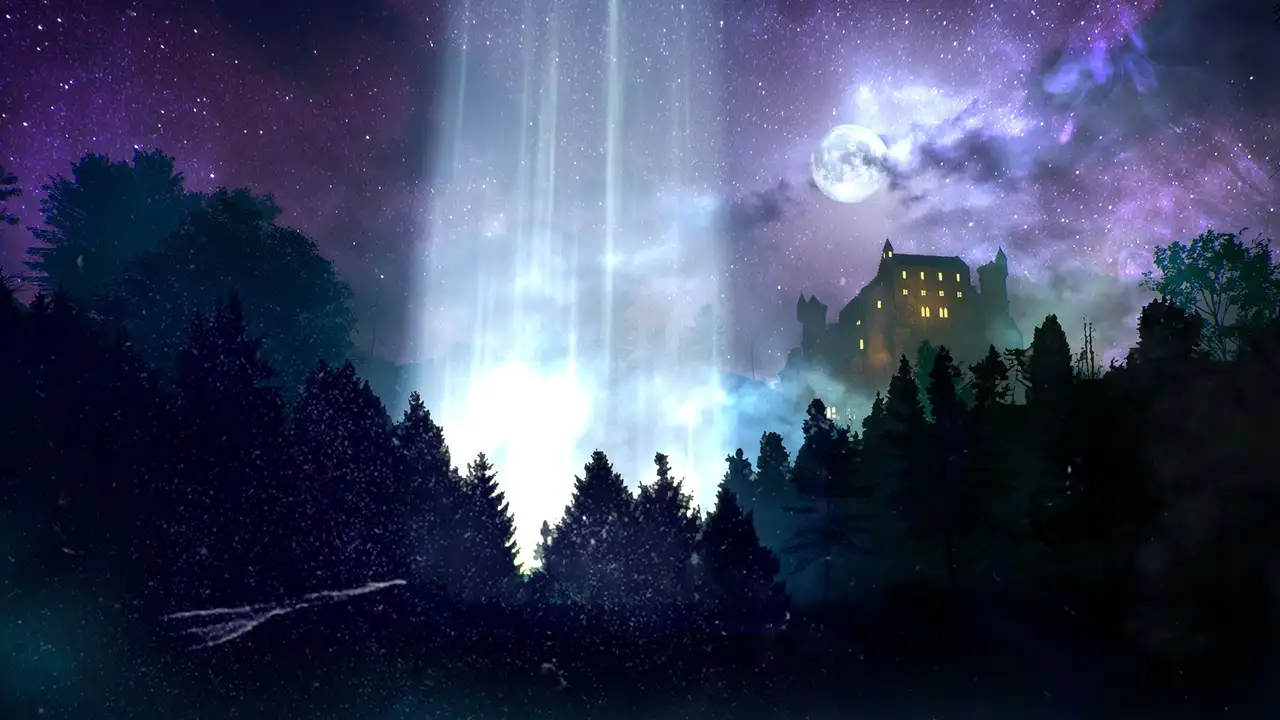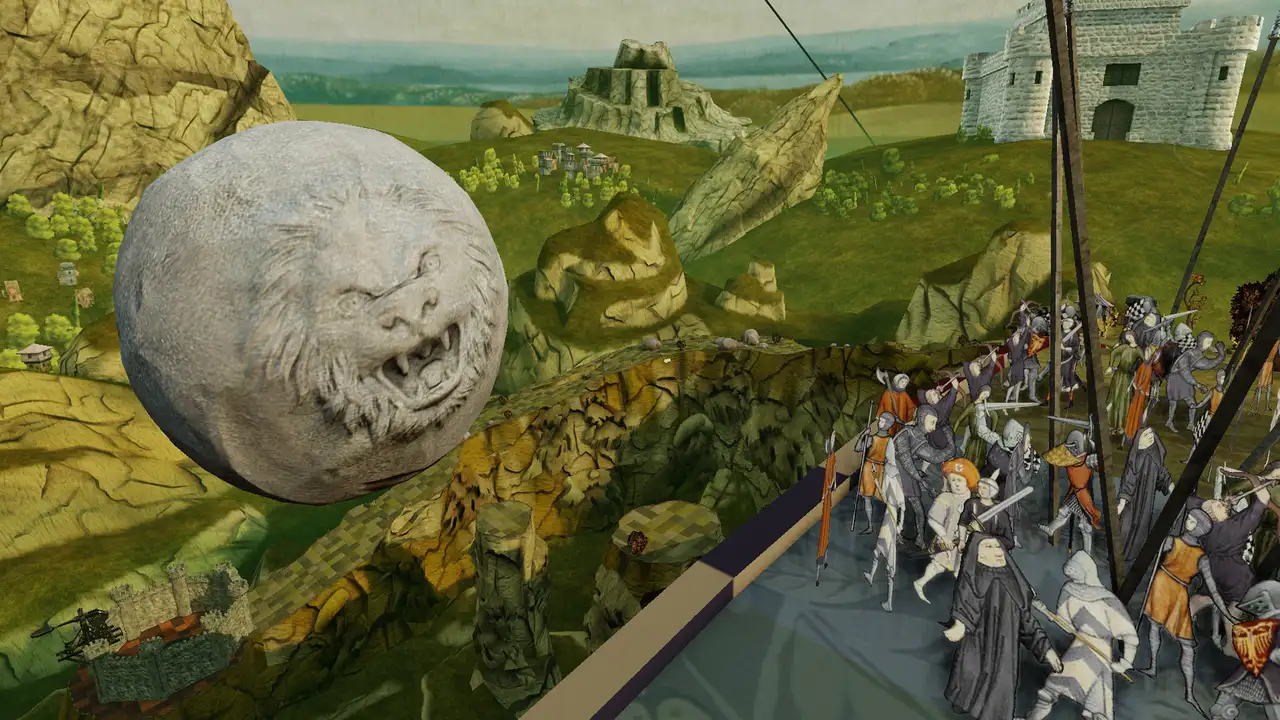
An elderly king tells his granddaughter the untold chapters of his life, framed in a hand-painted, cel-shaded fairy-tale Daventry of exceptional colour and beauty. The unreliable-narrator device is the structure itself: the story being told does not always make sense, the storyteller’s senility becoming the game’s own framing. Affectionate callbacks to the classic Sierra games run everywhere, from tapestry box arts to the fifth entry’s ant song to a pixel-art mini-game complete with the old Sierra death screen. The spirit of King’s Quest crossed with Space Quest is the precise register. This is a labour of love rather than a cheap reboot, and it shows in every frame.
The gag craft is consistently superb: deliberately unreliable “no, that didn’t happen” story rewrites, the poisonous-versus-venomous pedantry, and a luggage-bluff moment that turns a story right around. The dragon intro sells the tone in minutes, and the Whisper race sustains grin-after-grin through its middle stretch. Wacky humour is defended here as true to the character, since the original Graham was always more goofy than grave. The dialogue system is Telltale-adjacent, with choices rippling into who survives, who joins and which princess becomes queen. Tapestries recording every pick close the campaign as a personal record.
Presentation carries the fairy-tale frame with real conviction. The hand-painted, cel-shaded Daventry shifts palette per chapter, from the storybook greens of the early reign to the autumnal tones of the king’s old age, and the visual shift doubles as an emotional timeline. Character animation leans expressive rather than realistic, letting exaggeration sell the humour without tipping into parody. Chapter title cards and transitions frame each episode like a storybook page turned, reinforcing the grandfather’s voice-over as the spine of the whole structure. It is a beautiful game in a way that serves the story rather than decorating it.
Chapter structure lands each episode as its own distinct game, which works beautifully, but the length balance is lopsided: a four-hour opener against roughly ninety-minute follow-ups leaves the pacing braced for a grind that never quite materialises. Tournament duels, a bridge-troll union negotiation and an escape-room labyrinth fill the self-contained puzzle boxes. Chapter two hides a sequencing near-soft-lock, where grabbing the frog out of order convinces the player the chapter is broken and demands a restart. Odd collision friction in the first chapter’s bridge areas and long walk-backs across Daventry pad the journey. Skip options for repeated traversal are a welcome mercy.
The finale elevates everything: a memory-shifting duel of wits with knights-and-knaves goblets, a nonogram and logic grids worked out honestly, an elixir drunk by the storyteller himself, a companion turning on the antagonist, and a hat-and-crown passing that genuinely tugs the heartstrings. The franchise’s own box art becomes scenery in the memory-fracturing sequence, a eulogy and a continuation at once. Sliding-block co-op puzzles with a lost family member reward anyone schooled by old two-character adventures. The ending letter lands as the campaign’s emotional payload. Few reboots interrogate their own narrator this way.
The interrogation extends to the adventure-game form itself: inventory-combination drudgery of the classic era is replaced by discrete logic setpieces, and repeated traversal can be skipped without ceremony. The choice architecture is generous without pretending to be a branching epic, and the honest-puzzle ethos means nothing here demands walkthrough consultation. Speed-run comparisons at each chapter’s close add a light competitive garnish. The design respects both the old audience and the new one. That balance is the hardest thing a reboot attempts, and this one threads it.
Overall, the gags, the deep-cut Sierra callbacks and a finale that turns the franchise’s framing device into its emotional payload make this the rare reboot that honoured rather than replaced the classics. Lopsided chapter lengths, a chapter-two sequencing stumble and backtracking tedium are real but minor costs. For a story about stories and about growing old, this is a heartfelt, funny send-off that deserves the defence mounted on its behalf.