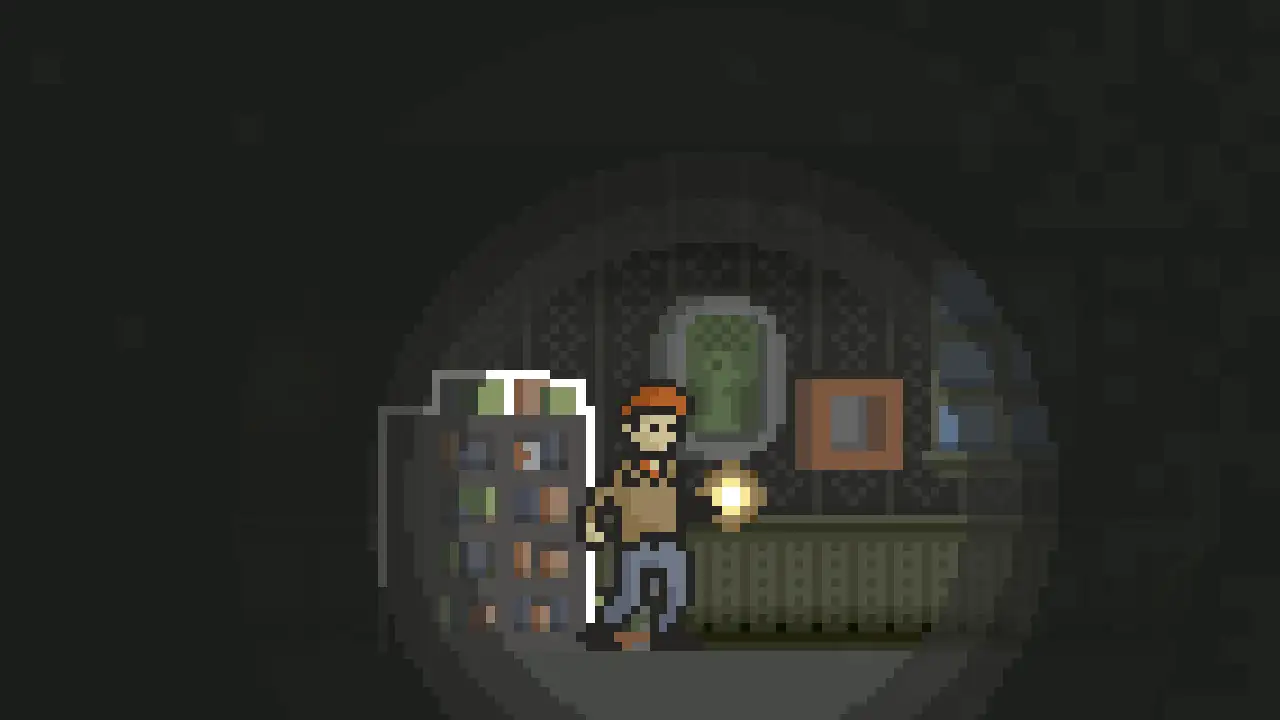
Karma: The Dark World drops a Thought Bureau “Rome” brain-dive agent into a dystopian 1984 surveillance state run by the Leviathan Corporation, investigating a theft at the Winston Research Institute. Social-credit memos, telescreen-headed citizens and ignorance-is-strength slogans build the world from the first documents, and a Soviet-flavoured Gold Rush backstory runs underneath everything. The tone is cold, bureaucratic dread rather than jump-scare horror, closer to a cerebral thriller in the Observer mould. Confusion is part of the opening: the surreal first act withholds its logic deliberately, and the narrative only assembles itself into a coherent conspiracy picture late. It is a mystery that trusts patience.
Puzzle design is the game’s best feature, a dense run of memory-extraction, symbol-combination, date-code, clock and pattern challenges that give the brain something to chew between story beats. Nothing here is filler; every puzzle feeds the investigation or the atmosphere. The variety is remarkable for a first-person narrative game, and the puzzles are what make the experience land rather than decorate it.
The diegetic settings calibration room opens the campaign, letting players configure the game through a puzzle rather than a menu, and it sets the tone for systems that stay in-world. Four-colour logic boxes, painting-clock passwords, teddy-bear family puzzles, chime-based clock decoding and a child’s toy-box memory restore carry the progression, each with its own logic language. The range is the point: no two puzzles share a solution shape, and the collection rewards paying attention to the world’s internal rules. Exploration rewards memo-hoarding, with documents doing the worldbuilding the cutscenes withhold.
The narrative is rich but confusing in the moment, a deliberate disorientation that assembles into genuine satisfaction by the close. Memory-wiped clone experiments, a monstrous failed test subject, a blackmailed clerk’s broken family, a brothel-keeper’s daughter and her scientist love all surface through the investigation, and the final reveal chain recontextualises the whole campaign. Light chase sequences (the Lucas monster, the final virus pursuit) punctuate the puzzles without dominating, and the monster is rarely a real threat. The horror stays mild; the thriller register carries, and the genre delivery is all the stronger for committing to dread over fright.
Moon-logic is the puzzle design’s one flaw. A handful of answers, most notoriously a black square with a white dot, make no sense on any reading, and even puzzle-friendly players will stare at a few solutions without a clue. The failures are rare enough not to sink the experience, but they sting precisely because the rest of the design telegraphs its logic so well. A nudge system would have covered the gap.
Presentation quirks aside, the production is attentive to detail. Main-menu portraits change per chapter, and a real-world nod in the credits captures York Minster in 1845. The one genuine blemish is a credit sequence that renders the English voice cast at 144p, degrading from legible to illegible in a way no other game has managed. Odd choices like these sit alongside the polish without explaining it, and the game is stranger for them. Little touches elsewhere (the Sean dive’s uncomfortable beats, the hefty family-reveal cutscene) show a studio willing to linger on tension when it matters.
Overall, Karma: The Dark World is a cerebral Orwellian brain-dive thriller whose puzzle density and conspiracy-laced storytelling outweigh its mild horror content and its handful of moon-logic answers. The varied puzzle languages and 1984-flavoured world-building carry it, and the confusion resolves into satisfaction. More thriller than horror, and all the better for it.