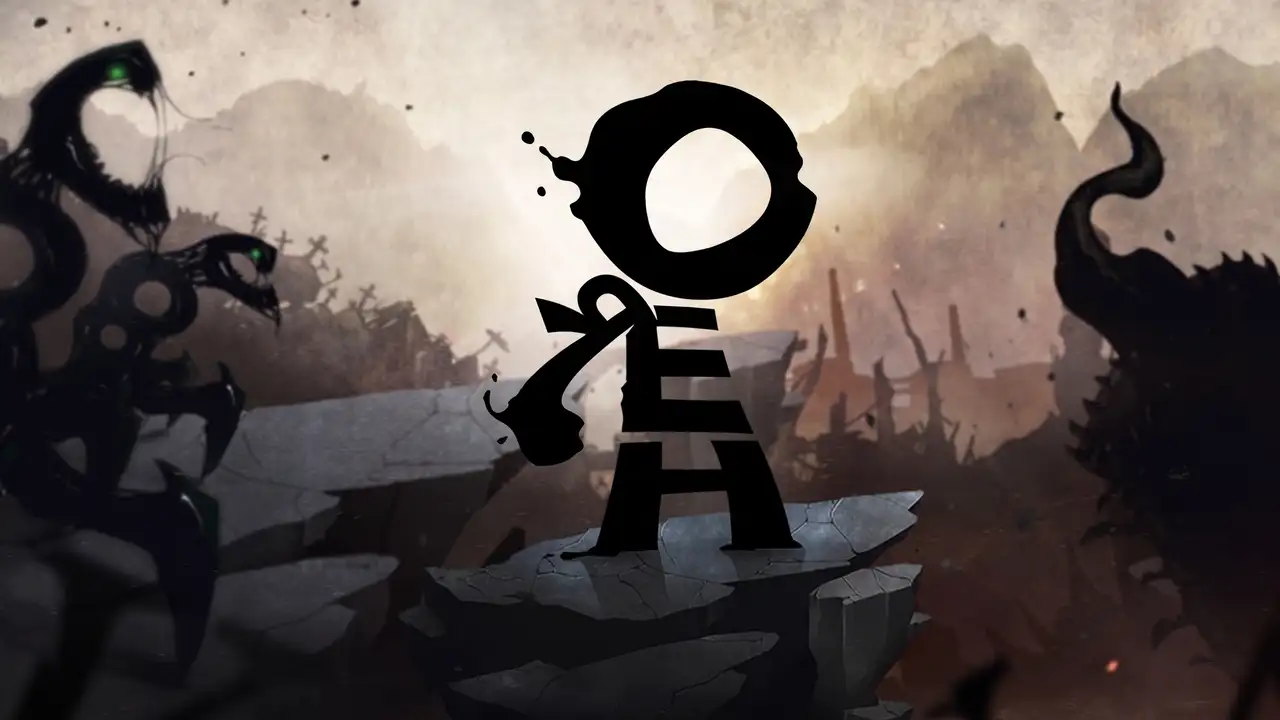
A red-shirted boy flees through woods, farms and a vast subterranean facility of mindless husks, taser drones and human experimentation, descending toward a fleshy mass that everyone in the world seems drawn to. Inside is a wordless dystopian fable in the Limbo lineage, refined from the same studio into something grander, more industrial and more bodily. The narrative never explains itself, and the ambiguity is the point: the boy’s flight reads as both escape and pilgrimage, and every set piece deepens the mystery rather than resolving it. The oppressive atmosphere carries the entire experience, with no dialogue, no text and no exposition to lean on. Few games trust silence this completely.
The sheer scale of the world is the defining quality: an endless, ever-descending facility that dwarfs the tiny protagonist at every turn, dwarfing even the smallness that Little Nightmares trades in. Marching lines of husks, industrial caverns and the crowds puppeteered late in the game all reiterate the same question, just how big is this place, and the answer keeps getting bigger. The sense of scale is genuinely massive, and the camera work sells every vertical drop and horizontal expanse. Where most puzzle-platformers use space as a frame, this one uses it as a threat. The descent structure makes the world itself the antagonist.
The inventive, physical puzzle design earns genuine delight repeatedly: the disco-ball helmet mind-control, the human-chain body pile, the inverted-water rooms, the maggot-worm and chick-chucking farm puzzles. Possession is the signature mechanic, controlling husks to solve multi-layered physics puzzles and escalating to puppeteering an entire crowd. The Simon-Says marching exam, dog chases, the underwater fan and the 19-body collection sequence all stage physics as horror, with domino effects that reward watching as much as solving. Set-pieces escalate inventively without repeating a single trick. Every puzzle teaches its rule through death rather than instruction, and the generous checkpoints make the lesson cheap.
Sound design does the dread work: a heartbeat audio that swells with danger, the silence of the no-sound rooms, the grotesque finale’s wet noise. The underwater creature sequences are the least favourite stretches, with a jump-scare fish, the dangling-feet bait puzzle and repeated drownings that trade timing frustration for tension. One scare reads as genuinely cheap rather than earned, and the water sections’ helplessness cuts both ways, unsafe by design and unpleasant by result. The inverted-water and no-sound rooms genuinely confuse on first pass, which is either a failure or a feature depending on taste. Either way, the audio carries more narrative than any cutscene could.
The finale is body horror staged as awe: the boy absorbed into the fleshy mass, ripping his own clothes free, the silent zoom-out. It recontextualises the entire descent, and the ambiguous ending leaves more questions than the opening did, with theories about the boy’s scent, his purpose and the facility’s design multiplying afterwards. The disco-ball collectables never reveal their purpose during play, only at the finale, where disabling all of them would have unlocked a secret nobody could have known to pursue. Auto-sprint’s existence stays unclear for most of the runtime. The opacity is deliberate and mostly earns itself.
Checkpoint design keeps deaths frequent but consequence-free, which suits the trial-and-death physics puzzles and the roughly three-hour single-sitting shape. The 2.5D presentation is minimal-input and contextually animated, with every interaction feeling physical. Compared to the same studio’s previous work, this is larger, colder and more inscrutable, trading woods-and-spiders fairy-tale logic for industrial dread. It is a game that leaves the player wanting to talk about it more than to replay it. That is a compliment, and a limitation.
Overall, a short, stunning, deliberately opaque descent whose immense sense of scale, creative possession puzzles and dread-building sound design deliver a masterclass in wordless storytelling. The underwater stretches and a finale that only multiplies questions are real costs, yet the body-horror awe and industrial atmosphere make it worth every unanswered question.