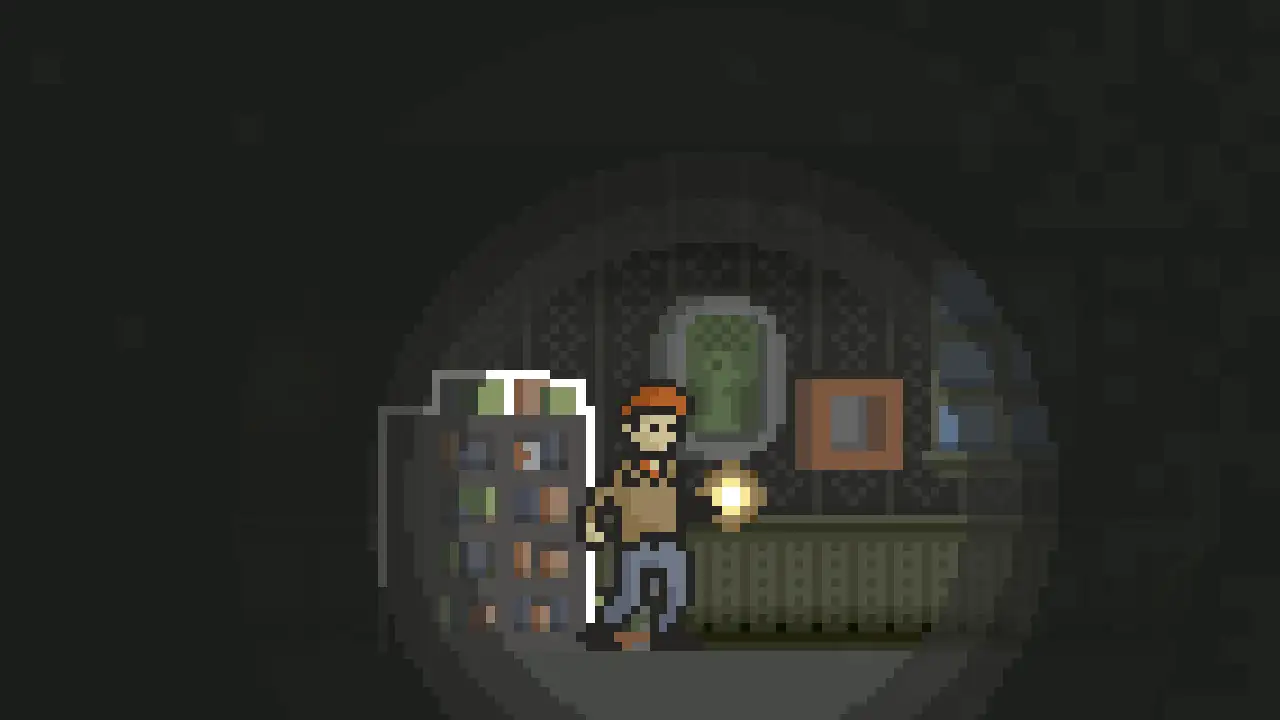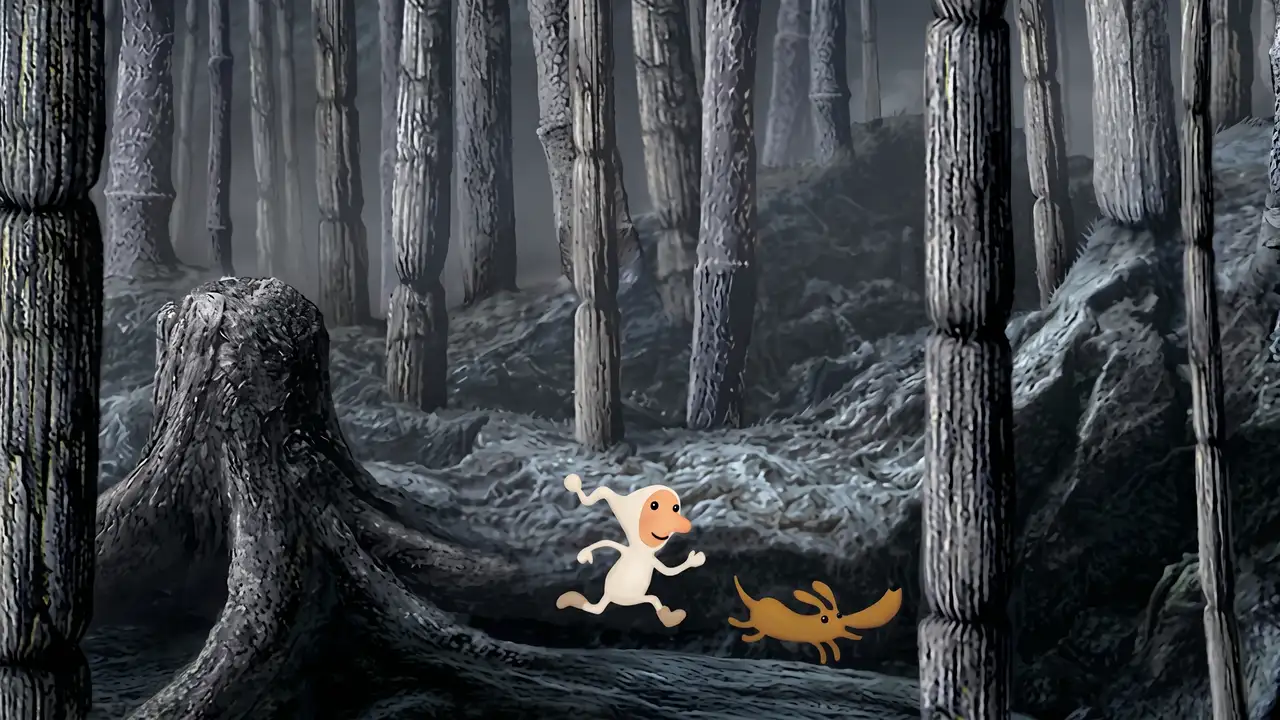
Two silhouetted children walk through four season-themed worlds where the edges of the screen are not boundaries but doors. Warping from one side of the display to the other is the entire premise, taught within the opening minutes, and the elegance of the idea lands immediately: press a trigger, appear on the opposite edge, and every platform becomes a two-way puzzle. The presentation strips everything back to flat colours, seasonal backdrops and shifting wardrobes, letting the spatial conceit do all the talking. There is no dialogue and no story to speak of; the game is a pure mechanics toy, and it is a superbly clever one. Portal-style surprise value aside, this puzzle grammar belongs entirely to the game.
The base warp grows fast. Batteries and barriers soon demand warping objects rather than just the character, adding a physics layer to the spatial one. Gravity inversion follows, flipping both the world and the screen position, so that up becomes down and the left edge becomes the right. Each twist recontextualises the same single verb, and the escalation never repeats itself. What begins as a neat trigger press becomes a genuine puzzle vocabulary by the midpoint, and the game keeps finding permutations that feel fresh rather than recycled.
The season structure gives that vocabulary a tidy shape: four levels, one per season, each adding its own permutation. Spring introduces the warp, summer layers in batteries and barriers, autumn turns gravity on its head, and winter closes with background/foreground plane switching where the foreground plane requires no jumping at all. The winter levels are the highlight, cycling between planes with a fluidity that makes the earlier gimmicks feel like preparation. The vertical split works far better than the horizontal one, which is harder to read spatially, but even the weaker variation earns its place.
Batteries deserve specific mention as the best mid-game addition, since they turn the warp from a movement tool into an object-manipulation puzzle. Barriers gate which side of the screen a warp can cross, forcing deliberate routing rather than reflexive hopping. The interplay between the three systems produces the game’s finest puzzle moments, where a solution demands warping an object, inverting gravity, and reading which plane an obstacle actually occupies. Puzzle design this economical is rare, and the toybox elegance of the whole structure holds together remarkably well.
Collision is where the craft falters. Levels are fragile: walls can be fallen through, sections skipped entirely, and a level can be broken wide open with a badly timed warp. A softlock against a wall at one point can only be escaped by exploiting the collision itself, which turns a design flaw into an accidental escape hatch. Texture boundaries and hitboxes simply do not agree, and the result is sequence breaking that amuses more than it infuriates but still undercuts the puzzle integrity. The static battery puzzle compounds this, since its intended solution remains opaque enough to complete the level without ever learning the proper method.
Floaty controls take a moment of adjustment, with jumps drifting more than expected in the opening minutes, though the warp mechanic soon dominates the feel and the imprecision fades into the background. Performance is otherwise clean, with no crashes or loading trouble. The horizontal split levels remain the roughest read spatially, demanding more mental rotation than the vertical equivalent.
Length is the honest limitation: four levels and then credits, wrapping within a single sitting, though a new game plus mode unlocks afterwards to extend the warp-play. The brevity stings precisely because every minute is so well spent, and the credit roll arrives before the premise has been exhausted. What exists is close to flawless; there simply is not very much of it.
Overall, Four Sided Fantasy is a compact, genuinely inventive puzzle platformer whose screen-warp premise is explored with more imagination than most games manage across triple the length. The season structure gives the gimmick a satisfying arc, the winter plane-switching is a superb closer, and the fragile collision, while real, is more amusing than damaging. Weighing invention against brevity, the invention wins decisively.