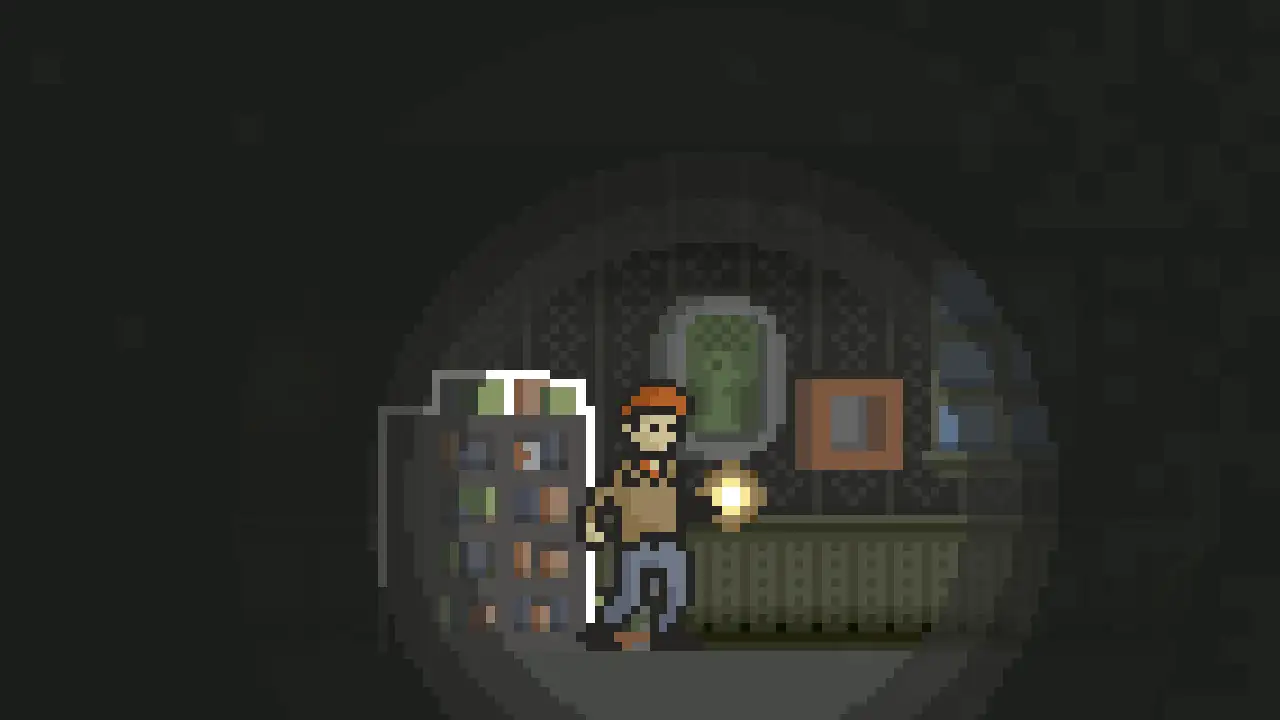
A search for a missing colleague pulls a woman from a 1989 East Berlin office into Hakovic, a decaying industrial kingdom of fog, ruins and hostile machines, twenty years after some catastrophe. East Berlin gone strange supplies the opening: caged birds, blue lights, an office that stops obeying its decade. The whole story is told through found notes, diary entries, radio broadcasts and the voice of a companion on the radio, and the alternate-history texture of futuristic machinery in a retro setting gives the world its distinctive flavour. As a studio debut, the confidence on display is remarkable.
Physics interaction is the game’s purest pleasure. Throwing, lifting and ragdolling objects and enemies across Walter’s office and beyond sustains a joy that few shooters bother with, and the shock wave effect in the machine chamber gives the toys a spectacle payoff. The lineage is obvious and acknowledged: Half-Life’s tactile framing and Frictional Games’ object handling both echo through the design, and the opening hours lean on that playground feel before the combat thickens.
Progression is puzzle-led rather than combat-led. A chemistry vending machine mixes acetylene and sulphuric acid into rust remover, a steam-power restoration sequence reanimates the machinery, a code-list keypad and security-protocol panel gate the route, and a dual-control-room elevator demands coordination between two stations. The two-soldiers-plus-Titan escape gauntlet is the campaign’s combat peak and its most harrowing stretch, and the moment of discovering supply crates as the main ammunition source converts early scarcity anxiety into confident resource management. Optional batteries and a photo-delivery side objective to a grave reward thoroughness.
Combat is serviceable but thin. Four weapons, pickaxe, pistol, SMG, bolt-action rifle and shotgun, face roughly five enemy types, and the limited carry capacities (36 pistol bullets) push the loop toward rationing rather than spraying. Some enemy behaviours surprise: machines that retreat rather than fight to death are a genuinely unusual sight, and enemy hit counts are learned by trial, nine bullets to bring one down. The variety ceiling is low, however, and the arsenal never deepens beyond its opening roster.
The darkness is the most persistent technical complaint. Very dark visuals with no brightness or gamma option fumble several sections into guesswork, and battery scarcity compounds the problem: batteries are mysteriously excluded from supply crates, leaving the flashlight economy unsupported by the very system meant to sustain it. A sequel advertisement baked into the title screen cannot be removed, and one collectible note early on is easy to miss. Each gripe is minor in isolation; together they dent the polish of an otherwise assured presentation.
The ending hands off rather than resolves. A clear set-up for a successor closes the campaign, which suits a debut announcing a franchise but leaves the story deliberately unresolved, and the final confrontation frames the antagonist’s identity without fully explaining it. Around three hours covers the whole thing, a compact single-sitting footprint that matches the game’s focused scope. Ray tracing stresses even powerful hardware, a sign of ambition in the rendering that the rest of the presentation supports.
Overall, this is a short, eerie, Half-Life-inspired gem whose alternate-history world-building, found-document storytelling and tactile physics toys outshine thin combat, an unsupported flashlight economy and a handful of technical gripes. For a first game, it is a striking achievement, and the hand-off ending lands as an invitation rather than an insult.