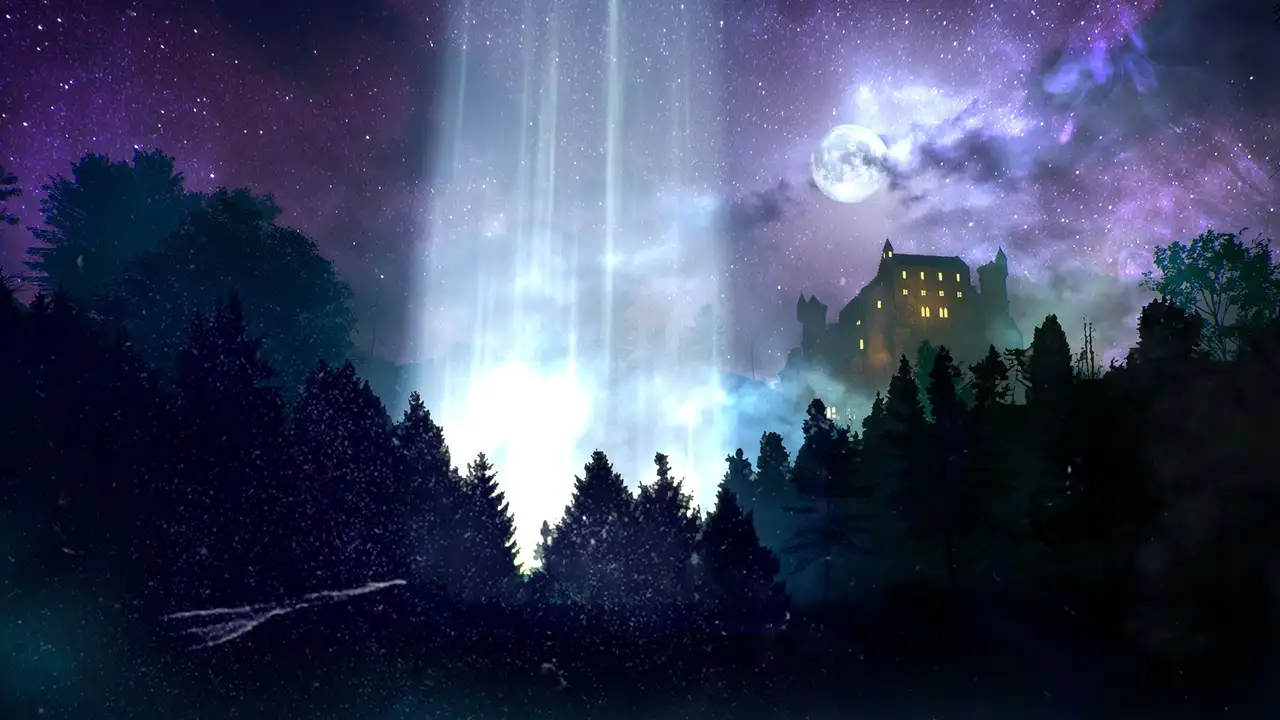
A frozen, irradiated zone in the S.T.A.L.K.E.R. lineage sets the stage: a lone survivor abandoned by his expedition, hostile sub-zero forests, an ancient church, an abandoned children’s camp, and a biological infection spreading through the woods. A mysterious figure hires the protagonist to destroy it, and the bleak Soviet-bloc tone is delivered almost entirely through found notes, military reports, letters from quarantined parents and cult texts. The premise promises more than the plot delivers, but the atmosphere of creeping dread in the snow is real, and the wind-driven soundscape makes empty forest feel populated by something just out of sight.
Survival systems form the core identity, and they interlock well. Health, stamina, suit temperature and battery must all be managed; trash scavenged from the zone breaks down into metal, polymer and electro components; and fire-building, bed saves and optional safe-house barricading round out the loop. The temperature management in particular transforms from an early nuisance into a system the player can eventually master entirely, and that slow conquest of the cold gives progression a satisfying arc. Scavenging under time and warmth pressure forces routes that would otherwise never be attempted.
Upgrades are printed, not bought. Crafting is possible only at specific fixed 3D-printer stations spread across the five areas, a restriction that forces deliberate route planning and gives the backtracking purpose. The pool includes a large backpack, exoskeleton, insulated suit, heat harness, gas mask and night vision. The design earns praise for the fixed-station constraint, but the pool itself is shallow, effectively one upgrade per slot, and early pricing is brutal, with the exoskeleton grind marking the first real wall.
The early forest hours are the best stretch. Stumbling through darkness, infection sites and upgrade recipes with barely any direction, the game settles into a survival-first rhythm where horror and exploration blur; wind, distant noises and heavy footsteps keep the tension up even when nothing is happening. A locator tool that pings infection samples gives structure to the wandering, and the infection-root destruction quests give the zone a distinct flavour alongside its teleporting anomalies and the glow-eyed forest stalker whose proximity distorts the screen.
Jank, though, is constant. Enemies T-pose and vanish, trees lack collision, a floating gun hangs in shadows, and bodies poof out of existence on death. The TAA implementation produces ghosting and sprint trails that make movement look ugly throughout. Combat is minimal and shallow (three-shot headshot enemies, a bear, one deer), and the forest stalker functions as a harassment system rather than a fight: the sensible response to every appearance is simply to run and hope it goes away. Complete the campaign and it still feels, in places, like playing an alpha.
The farmhouse basement finale squanders the buildup. A stalking axe-wielding figure in near-total darkness, with one-way rappels and stingy checkpoints, plays more frustrating than frightening, mostly because the audio cues are opaque: the stalker can see the player far earlier than the player can hear it. Worse, a quest-critical family portrait despawns after a death, soft-locking the quest and forcing a save rollback. The abrupt, lore-light ending then leaves the forest creature, the farmhouse entity and the infection’s origin essentially unexplained, closing on unanswered questions rather than payoff.
Overall, this is a damaged but worthwhile survival game: the temperature, battery and printing systems give plenty to chew on, and the audio-driven atmosphere stays genuinely unsettling for hours despite never delivering a true scare. The T-posing, the disappearing corpses, the soft-lock and the unresolved story are real stains, and the verdict rests on whether the survival-loop appeal outweighs the rough edges; on balance, it just does.