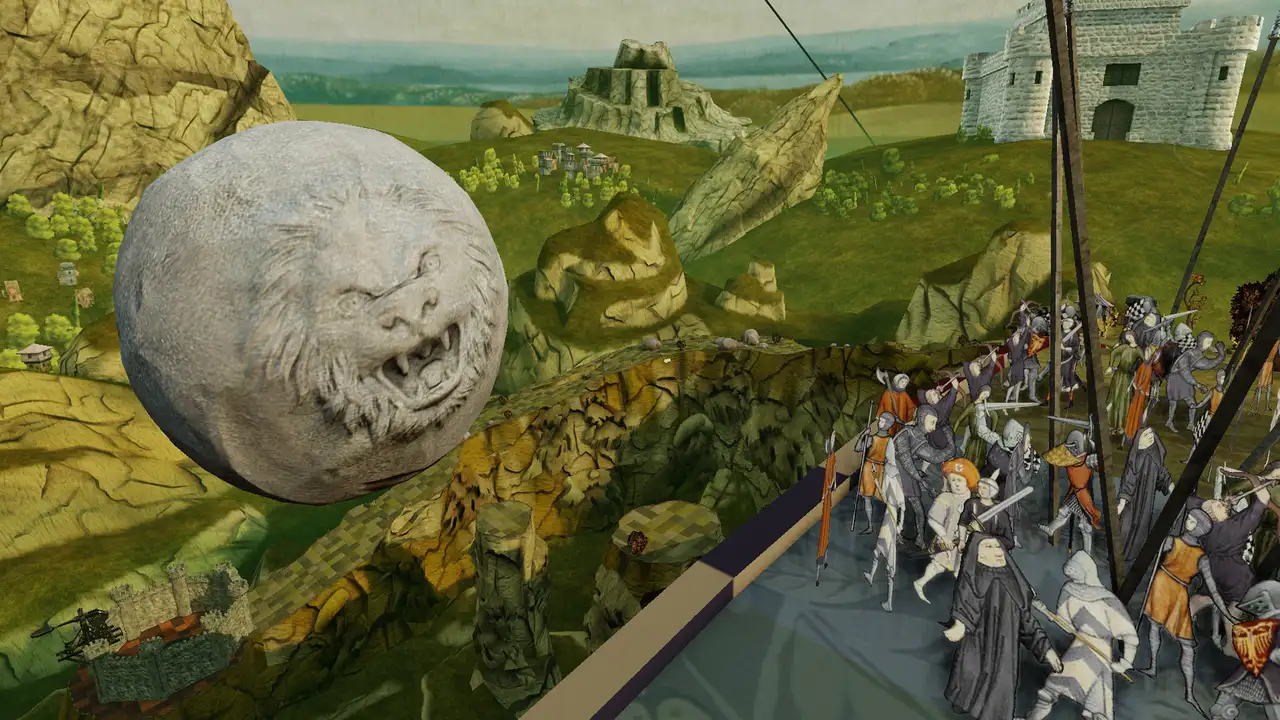
The premise is a playable museum of RPG history: a thin, deliberately throwaway plot about an ancient evil resurfacing and a Dragon Knight’s descendant, existing purely as scaffolding for the real star, a world that literally unlocks its own history one chest at a time. Each chest is a decade of gaming progress, and even the shops sell a “fast DVD player” that removes loading screens, the game’s jokes understanding their own subject completely. A healer companion meets an expected genre fate, and the story never pretends to be more than a delivery mechanism.
The evolution gimmick carries everything: 8-bit movement, sound, sixteen colours, save points, turn-based battles, a Mode 7 overworld, 3D, Diablo-style loot sections and time-travel past/present switching in the Sacred Grove. Every transition lands as the game’s best moment, and hearing sound arrive for the first time makes the whole thing feel alive. The nostalgia-reference design reads as affection rather than theft, with the Zelda, Final Fantasy, Diablo and Mario DNA spotted and relished as tribute to the medium’s evolution, the safest reading of a game built entirely from other games.
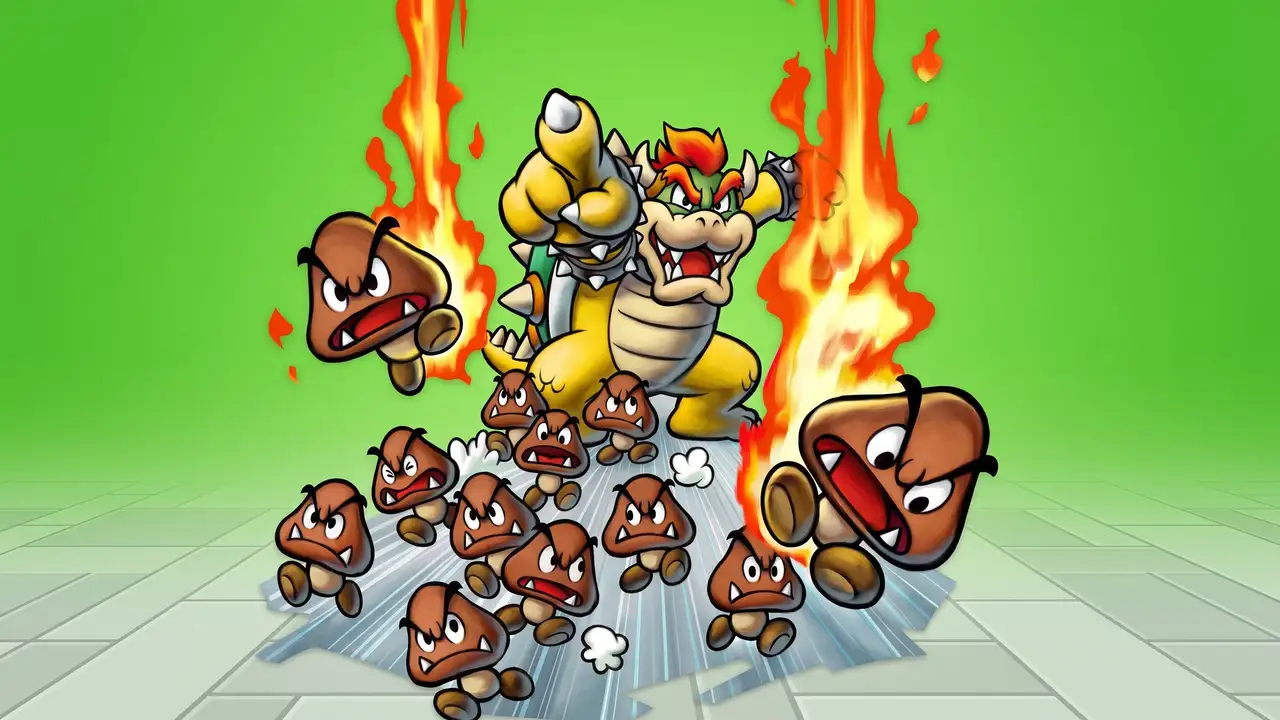
The Diablo-style Ruins of Sarudnak section is the standout stretch, changing so much so fast and showering loot that does nothing but delight. Kefka’s ghost, a Buster Sword, Goomba-like Zumbas, chocobo-like Jerichos and a Bahamut-like summon are the texture of a world written by people who love these games, and the Holy Trinity of borrowed mechanics (Zelda-style overworld puzzles, turn-based combat, action-RPG dungeon crawling) is the structural joke that keeps on giving.
Random encounters are frequent enough to genuinely annoy, with new battles every couple of steps in the turn-based and overworld stretches, the one friction that repeated through the whole run. The final boss is genuinely painful on first attempts, its unclear phase-two mechanic better understood once glimpsed than described, though the fight is fair once the pattern clicks. Some systems are shallow or useless by the end: money stops mattering once the shops are drained, and the boss’s bats are trivial.
Backtracking for full collection is costly enough to skip: the stars and cards scattered across the world demand a second pass that the short runtime does not invite, and completionists will pay for it in patience. Small typos and localisation quirks add amusement rather than irritation, in keeping with a game that never takes itself seriously. One-per-area save points keep the pace brisk, and a single sitting covers the story in roughly two hours, with a chase-everything run stretching to three and a grindy ingot-farming stretch to fund it.
The joke density is remarkable for a game this short: from the “fast DVD player” gag to the loot-spam humour of the Diablo stretch, the writing understands that the game’s subject is the history of the medium and never wastes a beat on anything else. The Sacred Grove’s time switching is the cleverest single mechanic, making the past and present versions of the same map feel like two different games.
Overall, a short, affectionate playable history of RPGs that earns its recommendation as a novelty done well rather than a deep game, with the chest-by-chest evolution gimmick and the Diablo-style stretch as its highlights. Frequent random encounters, an unclear final boss and deliberately shallow systems are the honest costs, and the two-hour trip through gaming history is worth taking anyway.