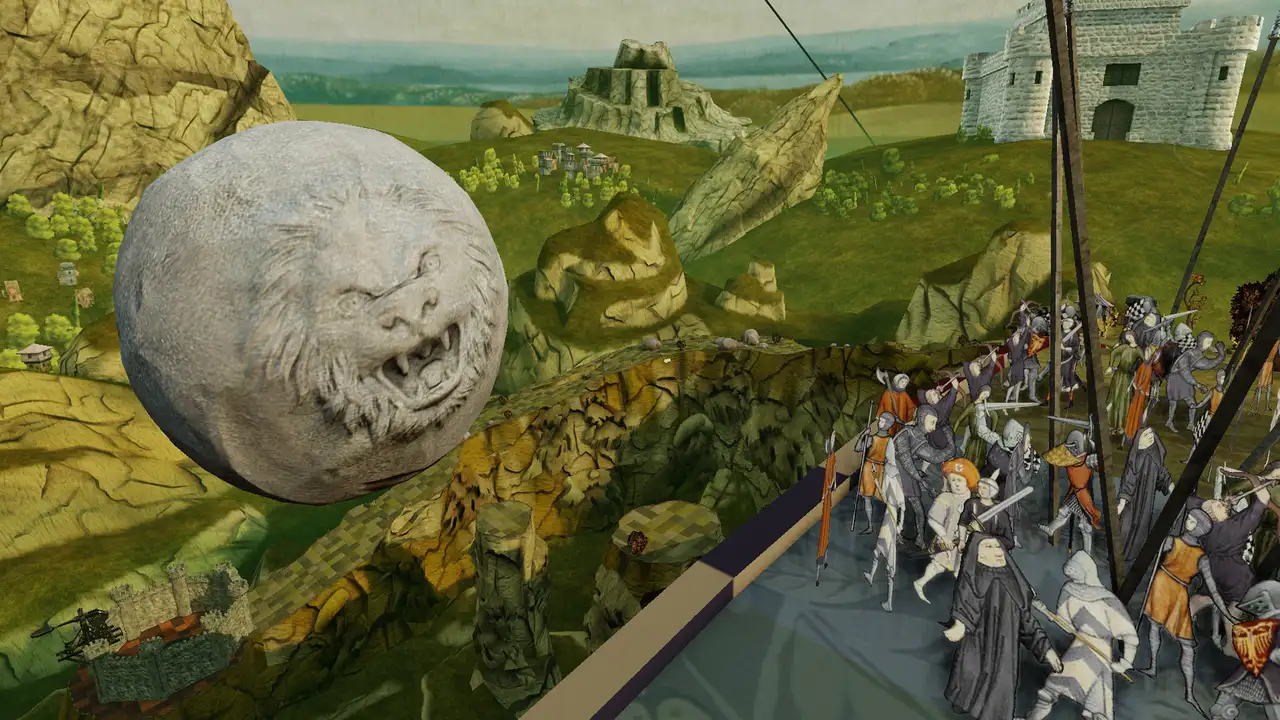
A grim side-scrolling duelling game set in a dark fantasy of cursed fields, castles, necromancers and captured beasts, Driven Out strips the action genre down to a single question: can an opponent be read? Story arrives only through terse, courteous exchanges with knights and mages, and the mood is carried by muted art, gallows, graves and an unsettling stage dressing in which an arm-transplanting shapeshifter lurks. Nothing here is generous. Every fight is a small, deliberate negotiation, and the game trusts the player to lose, learn and return.
That negotiation has a precise shape. Every enemy telegraphs through fixed, learnable attack strings, and combat resolves as rock-paper-scissors across high, mid and low attacks: read the tell, block or counter, then strike. There are no combos of the player’s own and no dodge to lean on, so the entire system rests on observation rather than reflex. The design resembles For Honor’s duels compressed into a side-scroller, a comparison the game earns rather than borrows. Each foe becomes a puzzle, and solving one arms the mind for the next rather than the hands.
Contraptions complicate that purity in a good way. Placeable turrets and traps, scrounged between fights, act as a risk-management safety net across each area’s linear gauntlet, softening the harshness without diluting it. Corpses double as checkpoints, which turns every failed attempt into progress of a sort. The structure is a linear chain of areas each ending in a boss, and the learning curve is visible in the elapsed time between attempts, which shrinks from hours to a single comfortable clear as patterns settle into memory.
Blocking three hits to score one attack defines the late-game spike. In the final third, a single lapse ends a run entirely, with no invincibility frames to absorb error and the music losing the thread entirely during the melee, an odd soundtrack choice that at least matches the panic. The sharpened difficulty is fair rather than cheap, but it demands a level of pattern memorisation the earlier areas only hint at.
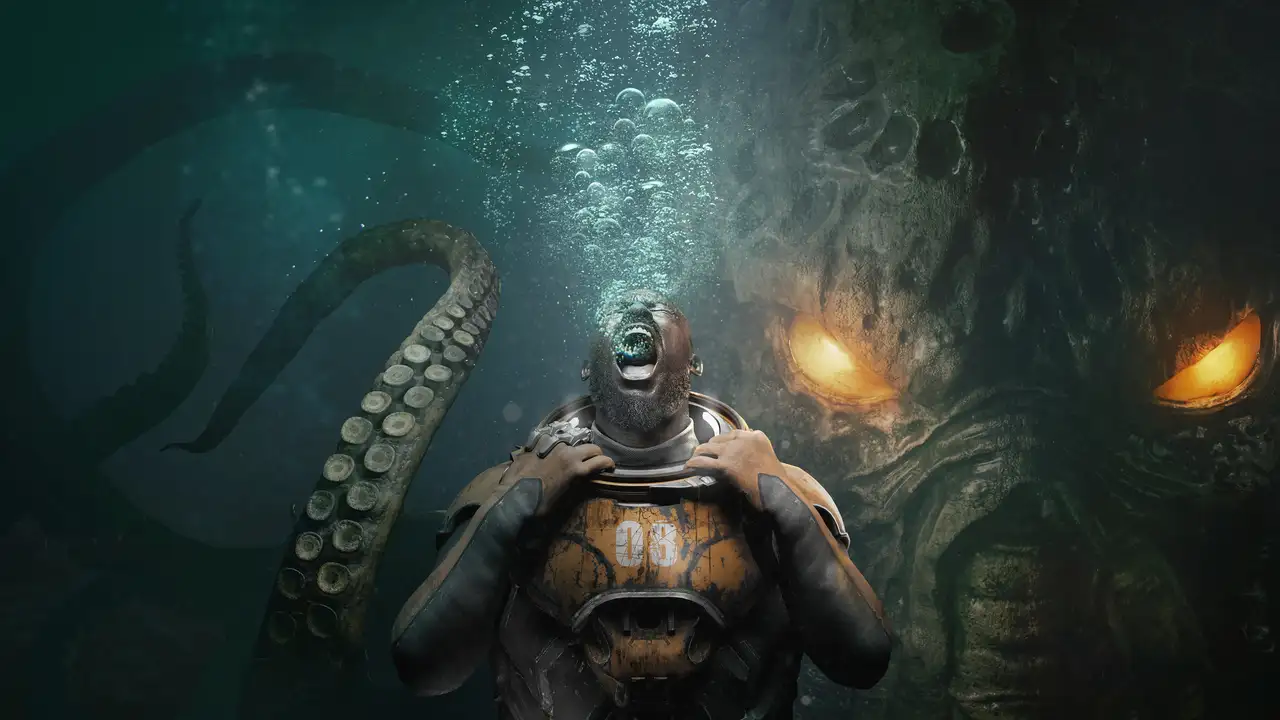
The octopus final boss is the wall the whole game builds toward, and its tells are genuinely awful to parse until a bait strategy cracks the fight open, after which the encounter collapses from nightmare to routine. An arm-throwing shapeshifter and a two-headed monkey supply earlier flavour, both demanding the same telegraph discipline. Beating the credits unlocks a harder rematch gauntlet across all bosses, an unlockable whose purpose is never clarified beyond tougher enemies and which sits as an odd, unexplained post-script.
Stability is the serious wound. On one platform the game crashes with a fatal error at the final hit, a bug severe enough to make the credits unreachable on an affected copy, and smaller friction accumulates around it: invisible cave entrances requiring an unintuitive press-up to enter, contraptions that despawn on death, left-facing enemies whose animations read awkwardly, and text that becomes unreadable on a television at distance. None of these break the core loop, yet together they signal a build that needed one more pass.
Overall, this is a brutal but fair telegraph-reading duelling game whose difficulty is precisely the point, and the satisfaction of finally conquering an enemy that seemed unbeatable is the entire reward. The fatal-error crash, the murky final-boss tells and the purposeless post-game are real deductions, but the core loop of dying, learning and conquering holds firm. Judge it on the fights and it earns its place.