The Sprawl trades a single derelict ship for an entire space station, and the sequel trades slow-burn dread for relentless momentum. Isaac wakes in a straightjacket three years after the Ishimura, haunted by visions and pursued by a government that wants his engineering expertise for its own ends. The amnesia opening throws the player straight into the action with no preamble, and the horror-action register is intense, loud and unceasing from the first corridor. Escalation is the design thesis: bigger set-pieces, more aggressive enemies, faster pacing, an urban sprawl instead of a drifting hull.
Memory-driven level design rewards a returning player in ways few sequels manage. Jump scares, enemy spawns and set-pieces land exactly where recollection places them, and revisiting familiar beats (the psych ward, the church, the government sector, an Ishimura flashback) validates old knowledge repeatedly. Each district of the Sprawl feels distinct and memorable, which gives the faster pace an anchor. Knowing where the ambush waits does not dull the tension; it sharpens the anticipation.
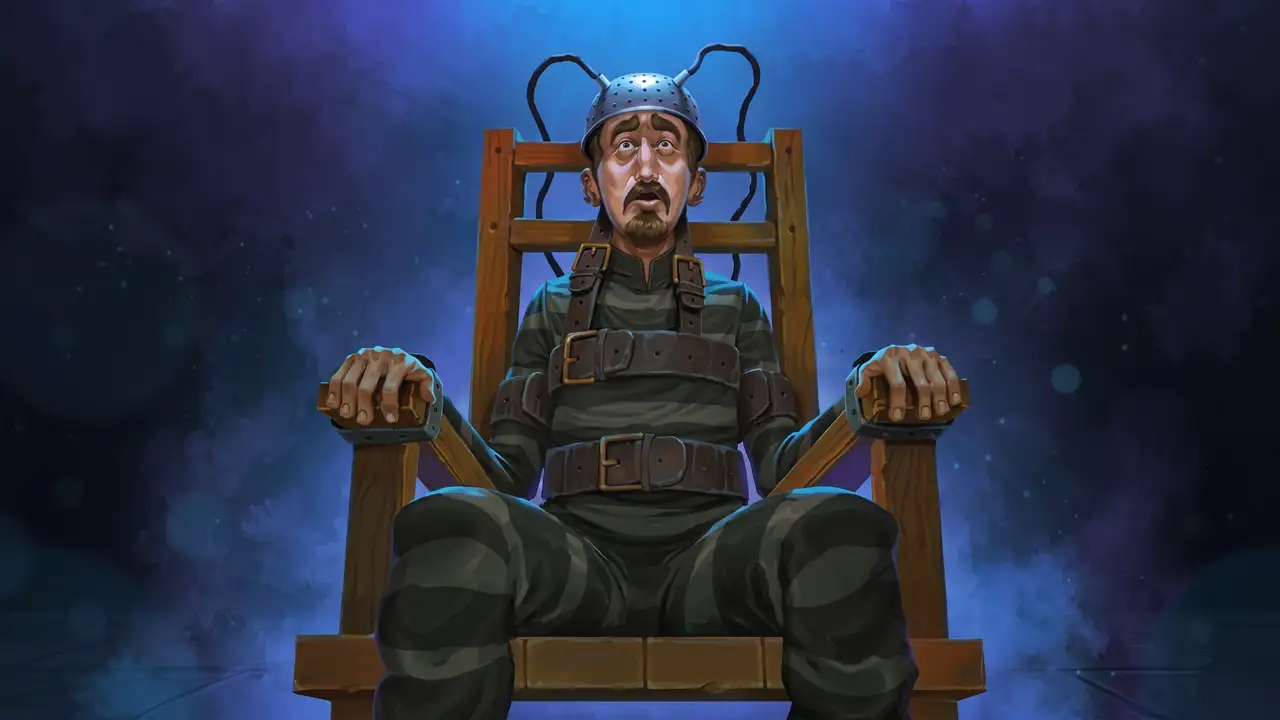
The needle-in-the-eye sequence remains a masterpiece of tension, one of the most infamous set-pieces in the genre and still landing years later: a machine that demands the player hold steady through the worst possible moment, and it earns every flinch. Stalker encounters are the enemy design’s other peak, charging opponents whose AI earns grudging respect even as they chase through corridors. Playing-dead necromorphs are the love-it-or-hate-it trick, springing back up after taking what should be lethal damage, and catching even veterans repeatedly.
The plasma cutter remains the king weapon, and its consistency outlasts everything the broader arsenal (seeker rifle, javelin gun, detonator, rivet gun) offers. Suit upgrades, stasis packs that stack, and a credit economy locked behind schematics round out a progression system that rewards exploration. Zero-G sections return with reworked traversal, and the campaign runs roughly three hours shorter than the original, a tightening that suits the escalation thesis even when individual set-pieces suffer for it.
Friction points cluster around the enemy roster and one platform gap. Leapers are dramatically more aggressive than in the first game, their charge attacks producing genuine frustration spikes late in the campaign, and the final marker confrontation layers in spawning pack enemies whose chaos divides opinion. A janky physics moment interrupts one late set-piece. The Severed DLC does not exist on PC at all, pushing anyone who wants the parallel storyline toward console hardware and a halved frame rate in the process, an odd gap for a campaign whose DLC structure (interwoven rather than appended) is otherwise one of its cleverer ideas.
The sound design deserves its own mention, since the Sprawl’s claustrophobia is as much auditory as visual: alarms, the chitter of something in a vent, the sudden silence before an ambush, all calibrated to keep the player listening as carefully as looking. Combat audio telegraphs threats through direction rather than visual cues alone, and the final confrontation’s layering of chaos over the station’s sirens is the campaign’s loudest, busiest, most effective crescendo. The opening’s abruptness, throwing the player straight into a catastrophe with no preamble, sets that tonal commitment immediately.
Overall, this is a superb sequel that trades some of the original’s dread for relentless momentum and mostly gets away with it. The memory-rewarding level design, the eye-machine sequence and the ever-reliable plasma cutter carry the campaign, while hyper-aggressive Leapers, a PC-missing DLC and occasional jank are real but survivable irritants. For anyone fond of strategic dismemberment and set-piece-driven pacing, the Sprawl delivers exactly the escalation the Ishimura promised.