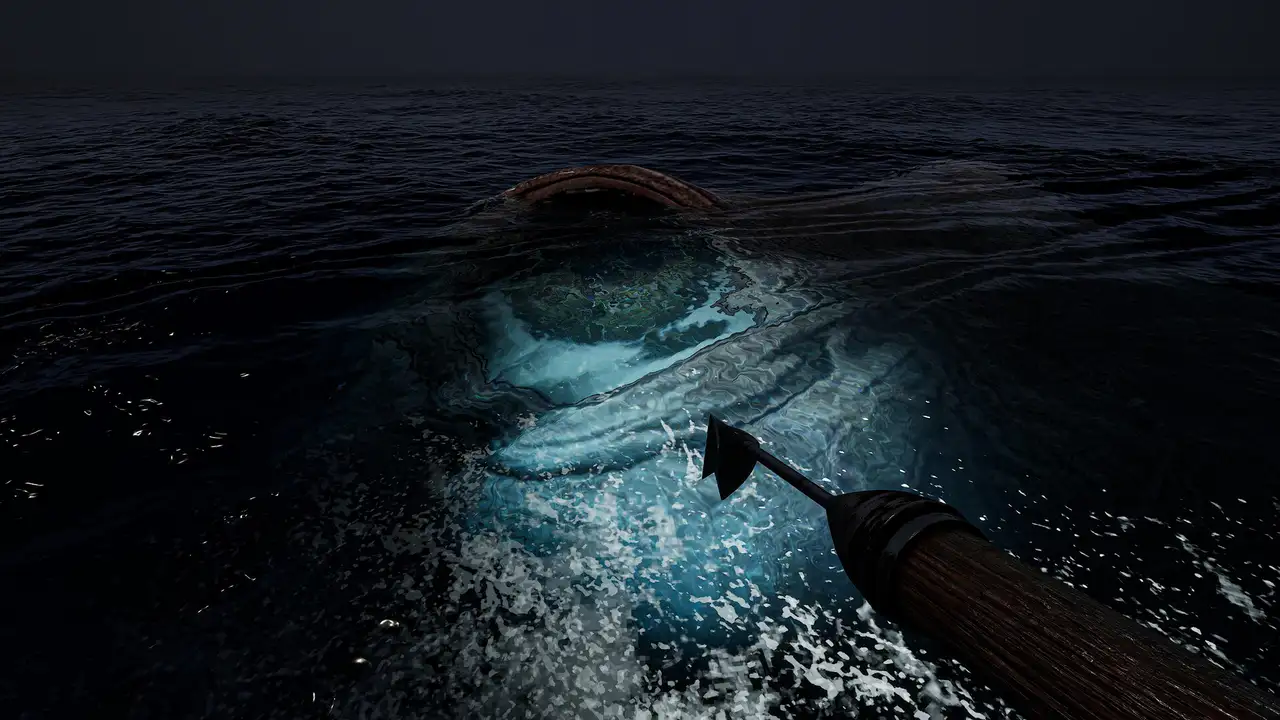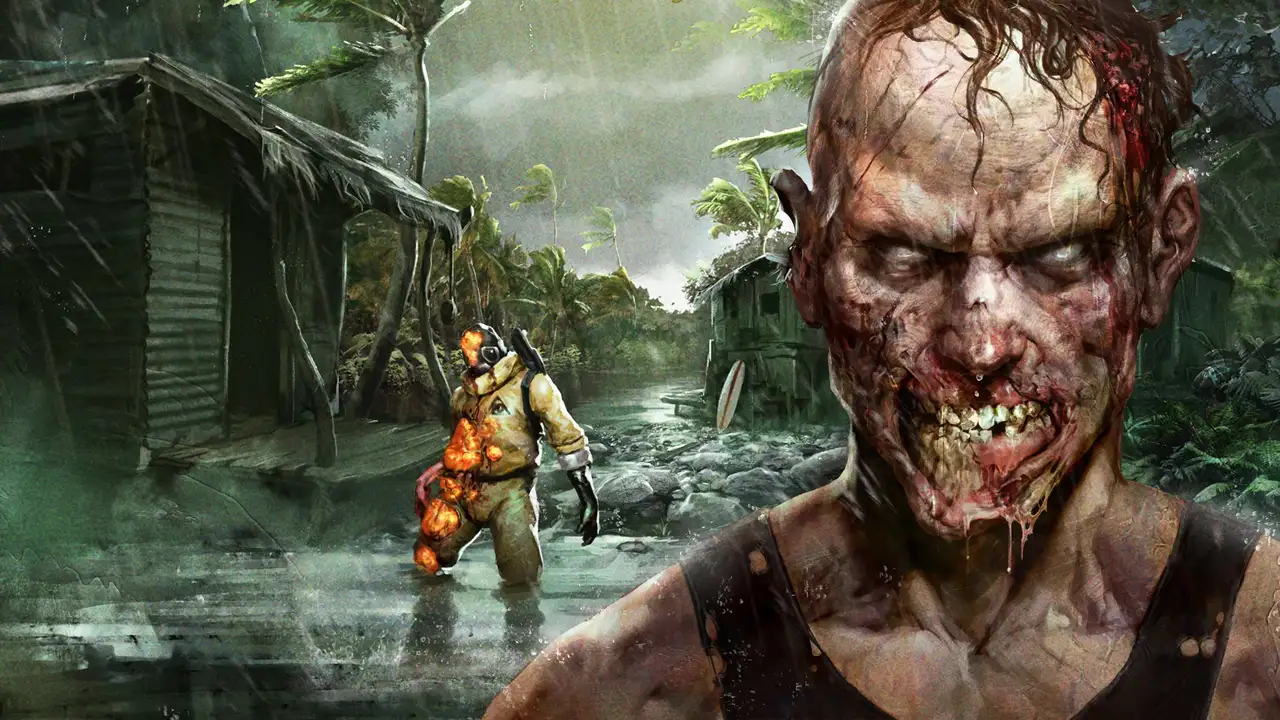
A tropical outbreak romp with a conspiratorial military thread running underneath the carnage. Immune survivors get shuttled between soldiers and scientists while audio diaries and scattered notes trace the firebombing that razed the island settlements. The register stays comic rather than horrific throughout: corpses cartwheel on ragdoll physics, one-liners punctuate the fights, and a costumed quest giver named the Zominator plays the apocalypse as pageantry. Structure follows a jungle-to-city route strung along boat travel, from overgrown interior to the tighter streets of Henderson.
Blunt weapons (hammers, staffs, batons) anchor the combat loop, the preferred kit of Sam B’s brawler loadout, trading reach for impact. Limb-breaking sends arms and legs flying, the tackle closes distance inside a crowd, and a fast head stomp finishes grounded enemies without pausing the brawl. Fury mode converts accumulated aggression into a damage window, and craftable mods bolt lightning, liquid fire and bleed onto whatever weapon is carried. Guns stay marginal because ammunition stays scarce, so sidearms function as panic buttons rather than loadouts. Every swing and sprint drains stamina, keeping windedness in the loop from the opening minutes through to the credits.
Dense side content fills the space between story beats. Rescues, fetch quests and continuous turn-ins reward sweeping every cleared district, and repeatable delivery missions make power-levelling straightforward. Team quests prove the weakest branch, repetitive errands whose turn-ins can slip past unmissed if a region is left behind early. Defence missions hold the pleasant surprise, anchoring a position against escalating waves with the satisfying structure of a dedicated horde mode. Side content volume carries the pacing even when the campaign itself moves briskly.
Dead zones, the named-boss dungeons dotted through the island interiors, are tuned for a full four-survivor group and lose that shape when tackled alone. Damage sponges stretch each encounter out while swarms collapse the surrounding space, making crowded fights the sharpest wall in the campaign. The suspicion runs deeper than raw numbers: enemy resilience reads as scaled around co-op assumptions, so a solo approach absorbs punishment that a group would split. Wrestlers once presented as an overbearing enemy type, though familiarity saps the intimidation across repeated encounters. Regular infected fare little better on crowd density, yet the ragdoll comedy keeps the losses light.
Stamina gates both combat and travel, forcing winded recovery after short sprints and turning every escape into a breather. Vehicles never respawn once abandoned, a regression in convenience that punishes covering the larger stretches of map. One-way fast travel routes lock journeys to a single direction, and the shop interface offers no bulk buying, so restocking becomes a menu-by-menu chore. Against that, loading times stay near-instant, dropping into the world almost immediately after a reload. Death rarely costs momentum, only patience.
The mini-map proves close to useless, with thin icon coverage and a jungle layout that resists reading, so navigation falls back to eyeballing terrain. Input glyphs flicker between keyboard prompts and controller prompts, breaking visual consistency whenever a pad is connected. Cutscene audio sits far below gameplay volume, flattening dialogue in an otherwise loud mix. Settings slide back on every launch, with chromatic aberration re-enabling itself each time the title boots. None of these break the experience, but together they roughen its edges.
Henderson rewards the back half with tighter streets, denser loot routes and quicker sightlines than the jungle interior. Boat travel links the two halves, so the shift from overgrown wilderness to urban ruin gives the journey a clear structural shape. The jungle stretches longer than its layouts justify, with dead ends and awkward exits multiplying after each cleared area. Physics comedy supplies the identity: bodies sent tumbling by ordinary swings turn every skirmish into slapstick, and the comic tone keeps repeated brawls from curdling.
Progression stalls late, since no new skills unlock across the campaign and builds settle into their final shape early. The package runs shorter than its predecessor and reuses much of the same machinery, an expansion wearing a standalone release, a trade that reads as acceptable given how much of the core loop still works. Near-instant re-entry cushions that repetition, dropping back in without friction. The whole outing functions as a direct stepping stone toward the developer’s later open-world work, with visible lessons in traversal and density carried forward.
Overall, the blunt-weapon loop, dense side content and comic ragdoll tone carry the island outing, even as co-op-tuned dead zones and near-useless navigation undermine solo attempts. Treat it as bonus content rather than a full sequel and the balance lands squarely in favour.