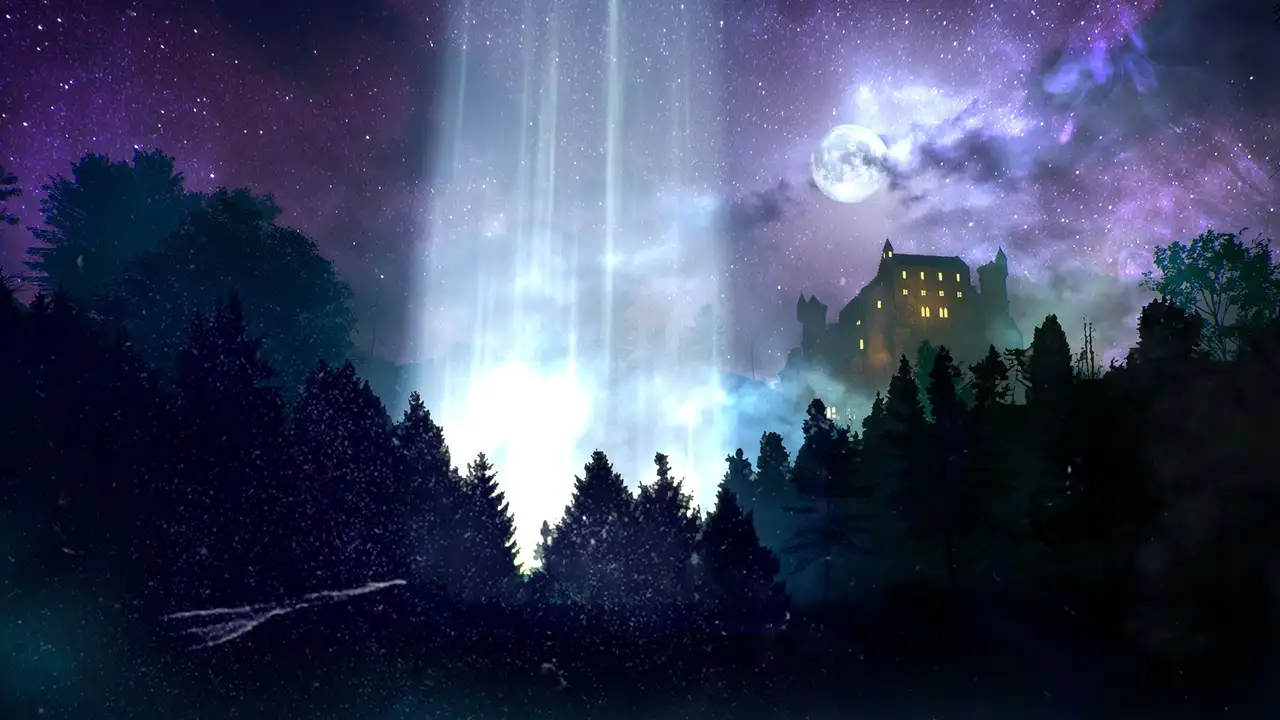
A dark Slavic fairy tale sends a boy through an autumn forest of possessed girls and flesh-eating butterflies after his sister is enslaved by a mind-controlling diadem, and the sequel upgrades every dimension of the first game: voice acting arrives, the art grows more detailed, the length triples, and the wordless picture-book discipline survives the additions intact. The witch’s cookbook of child recipes, boys kept as living cocoons and a river that demands gifts keep the folklore-horror register at full morbidity, and the art mixes cosy autumn warmth with genuine dread. What the first game sketched, this one builds.
The puzzle design rewards real observation. Counting shape sides for a chest lock, reviving wooden idols with living and dead water to build a bridge out of their own bodies, matching candle notes on a piano, reading stained-glass wave directions, brewing poison by matching leaf colours to rune clues: the puzzles are invented rather than echoed, and the shape-counting lock in particular earns genuine admiration for its logic. The living-water idol system, commanding speechless servants to construct a bridge from themselves, is the standout mechanic nothing else does. Experimentation is assumed, and the assumption is fair.
The swamp-hiding gauntlet of chapter three is the game’s worst section by its own design logic. Pick the wrong hiding spot and the enemy parks beside it, soft-locking the run into restarts, and the trial-and-error punishment lands after the choice rather than before it. The fix is obvious (telegraph which cover conceals), and the section’s brutality stands out precisely because everything around it is fair. The witch and swamp-monster stealth sequences otherwise keep the tension honest without tipping into guesswork.
The diary’s decorative font is the presentation’s lowest point. Essential lore text renders its letters indistinguishable (the Rs read as Zs), and the readability cost is real: a fancy-font toggle, or simply a plainer typeface, would have cost nothing. Smaller friction accumulates harmlessly: the first game’s jump is gone, inventory items need a non-obvious button press to use, and a character’s scar switches sides with his sprite. One stuck-flag mid-game forces a room restart. None of these dent the core loop; all of them are avoidable.
Pacing holds at roughly two hours across three chapters, brisk enough that the morbidity never numbs, with a final cave sequence that closes the structure cleanly. Two endings resolve from a single finale choice, and both cutscenes are extremely short, an abruptness that follows the series’ economy rather than undermining it. The house spirit and voice-acted idols give the world genuine character, and the family twist recontextualises the journey in a way that rewards attention to the earlier chapters.
As a sequel, it is the decisive upgrade that makes the first game look like a test run, and as folklore horror it deepens the universe (tree-hollow spirits, gift-demanding rivers, butterflies that devour minds from within) without repeating a single puzzle mechanic. The picture-book aesthetic hiding executions remains the series’ signature, and the voice acting finally gives the grotesques their voices. The formula grows without losing its shape.
Overall, this is a short, atmospheric folklore-horror sequel whose clever puzzle design, living-water idol mechanics and fuller presentation make it a decisive upgrade over its predecessor, despite a soft-locking swamp-hiding gauntlet, an illegible diary font and brief dual endings. Roughly two hours of grim storybook invention, and the clearest evidence that the series’ formula had a real game inside it all along.