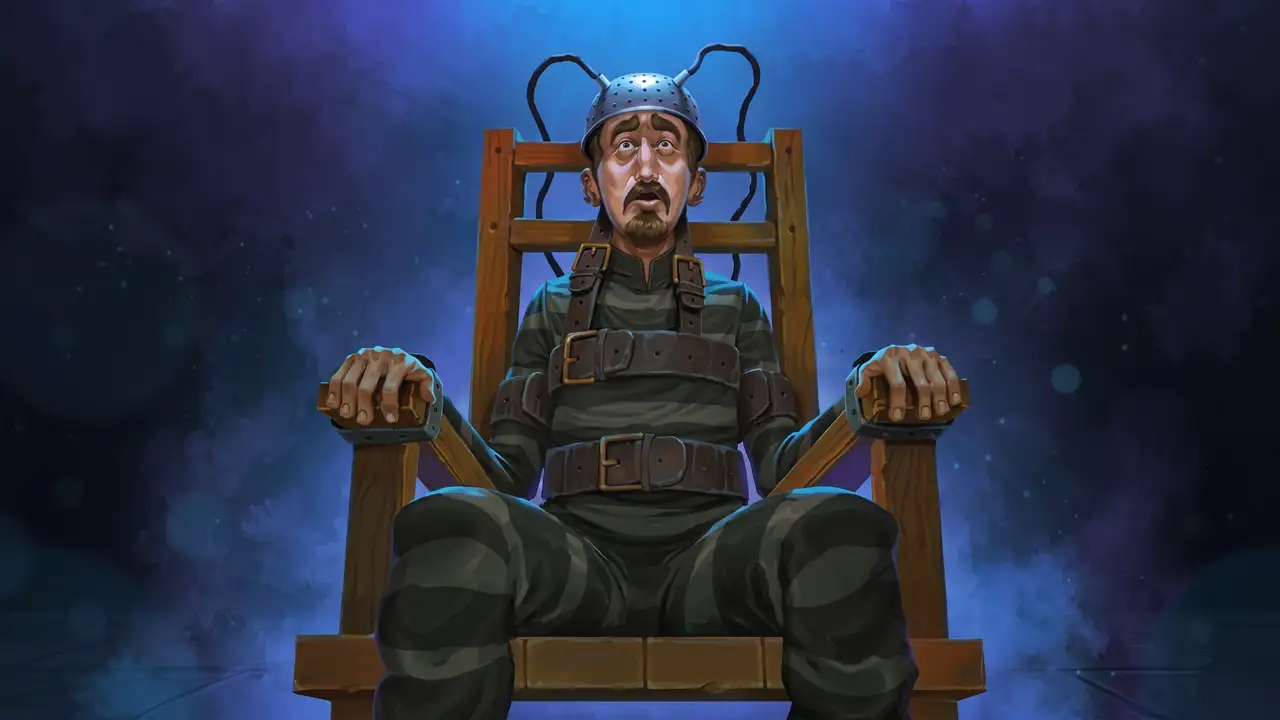
Five specialists from different nations sit captured in a 1945 Hamburg cell, and their interrogator’s questions unlock the flashbacks that form the campaign: a D-Day battery assault, a Stalingrad sniper duel, a Pacific island trail, a North African demolition raid and a Midway flight. The anthology structure is the only classic-era entry built this way, and the interrogation frame gives each origin story a reason to exist beyond montage. The historical framing rewards attention, with the revelation that the Reich’s command planned to escape underground giving the five stories a common thread. The war-drama tone is cinematic, and the writing earns its melodrama through genuine character work.
The specialists’ abilities differentiate the campaigns meaningfully. Squad orders let an infantryman direct teammates in a novel-if-limited command layer, a Soviet sniper’s focus reveals distant threats in a duel against a named rival, and the pilot’s focus ability, effectively a time-slowed aimbot, is the standout mechanic, absurdly strong and consistently satisfying. Throwable grenades and satchels round out the demolition specialist’s kit, and the abilities mesh well enough that each flashback feels mechanically distinct rather than reskinned. Playing each character’s strengths is the intended loop, and it works.
The Berlin finale is the campaign’s peak. Playing every character in sequence through a single connected mission, each ability deployed where it matters, delivers a payoff the anthology structure promises from the first cell scene, and the interrogation reversals (the team playing their captor like an instrument) land as genuine writing rather than spectacle. The Stalingrad flashback, with its paternal loss and sniper duel, raises the storytelling bar early, and the Pacific and African campaigns fill theatres the series rarely visits. Variety across theatres is the campaign’s quiet strength.
Structure is also the campaign’s central misjudgement. Only two missions unfold in the present day, the opening capture and the closing breakout, leaving roughly ninety percent of the campaign as flashback, and the frame that promised an interrogation drama dissolves into an anthology that forgets its own premise. The reveal of the escape plot keeps momentum through the flashbacks, but the present-day thread is so thin that the structure feels like a framing device abandoned rather than sustained.
Movement friction persists throughout. Forced slow walking punctuates every mission, double-tap sprint is a poor substitute for a hold key, and the scripted corridors rarely reward speed even when the game permits it. The stealth mission on the island trail is half-baked, with no detection meter to telegraph how close capture is, and one recurring series habit, siccing dogs on the player, returns here as reliably as ever. None of these break the campaign, but the forced pacing grates against missions that otherwise move well.
Presentation carries a persistent blemish: the user interface is cluttered, self-promotional and genuinely ugly, advertising the publisher’s other products in menus that should be doing nothing but launching missions. Twenty minutes of unskippable credits close the campaign, a test of patience the research queue rescues only partially. A capture-system failure erased the opening session’s recording, an external mishap rather than a game fault, but the campaign’s single-stream length made the loss survivable. The visuals themselves, from Stalingrad’s frozen ruins to the Pacific’s jungle trails, hold the cinematic standard.
Overall, this is a character-driven anthology campaign that deserves better than its reputation, carried by five distinct specialists, a standout focus ability and a Berlin finale that pays off the structure it barely sustains. Forced slow movement, the double-tap sprint, the half-baked stealth mission and the self-promotional UI are real costs, and the flashback-heavy frame undercuts its own premise. The campaign itself is genuinely decent, and the hate it received belongs to other modes.