A ruined post-orbital-strike America invaded by a resurgent Federation sets the stage for the most experimentally varied campaign the series had attempted, and the premise earns the ambition. Two brothers fight through a near-future occupation alongside a father figure, a camera-synced military dog, and a squadron of soldiers defined more by their optics than their personalities. The setup promises revenge and survival in equal measure, and for most of the runtime the set-pieces deliver on that promise. What the title does not deliver is the connection its branding implies, and the misdirection shapes expectations the campaign never intends to meet.
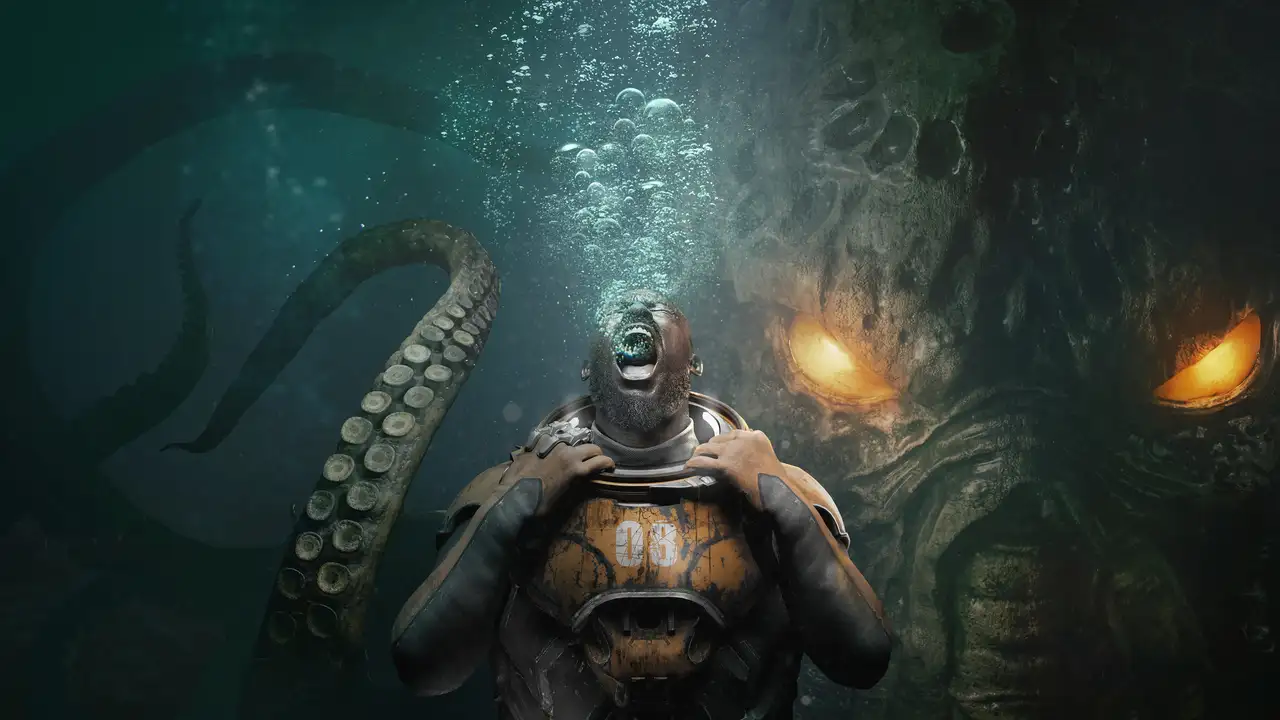
Mission variety is the defining strength. Underwater destroyer attacks, skyscraper rappel stealth, a disguise-based heist infiltration straight out of a crime caper, tank battles, a space-station skirmish and a dog-controlled sequence all feature, and the rotation never stalls. This is not reinvention so much as volume: there is always something new within a few minutes, and the pace of new ideas holds across the whole campaign. The dog mechanic, piloting a canine companion through enemy lines via a synced camera vest, remains unique in the mainline series and justifies itself repeatedly.
Compared with later entries, the balance of gameplay to storytelling tilts favourably. Cut scenes occupy a fraction of the runtime that modern campaigns surrender to them, and the shooting itself carries more of the experience as a result. Regenerating health is generous, deaths come slower than in the rebooted entries, and the older, heavier pacing of scripted waves reads as deliberate rather than dated. Grenade spam persists as a series constant, and the sniper and vehicle missions (helo gunner, tanks, orbital debris) fill the gaps between infantry firefights with welcome texture.
The antagonist sinks much of the narrative’s weight. His motivation amounts to a petty grudge against former allies, and the thread never deepens into anything worth the screen time it consumes. The branding compounds the problem: the title suggests an origin story for a beloved masked operator from an earlier sub-series, and delivers nothing of the kind, a misdirection that explains much of the game’s poor reputation. Add an abrupt, confusing ending whose coda leaves the villain’s survival genuinely ambiguous, and the story closes weaker than its opening acts promised.
Friendly-fire confusion is a persistent mechanical hazard. Teammates and enemies wear nearly identical colours with no friendly outlines, and shooting the wrong soldier happens often enough to sting. Explosive vehicles are inconsistent, with intact-looking cars detonating without warning, and a strobe-light section in the skyscraper mission is genuinely unpleasant even for those insensitive to flashing lights. Shotgun-wielding enemies barely exist for most of the campaign, a curious omission for a series built on loadout theatre.
The PC port is the real liability. Random stuttering, texture failures and general instability accumulate from the prologue onward, culminating in a hard visuals break on the final mission that effectively ends the game’s technical credibility. The problems persist across platforms and configurations, and no settings adjustment fully tames them. A campaign this inventive deserved a competent version; this is among the roughest ports in the series, and the performance mess shadows even the best missions.
Overall, this is a fun, inventive campaign that deserves less of the hate it received, carried by unmatched mission variety and a healthier gameplay-to-cutscene balance than its successors. The petty villain, the misleading title and the shambolic PC port are real failures, and the ambiguous ending leaves the narrative short of its potential. Judge the campaign on its set-pieces rather than its reputation and it holds up.