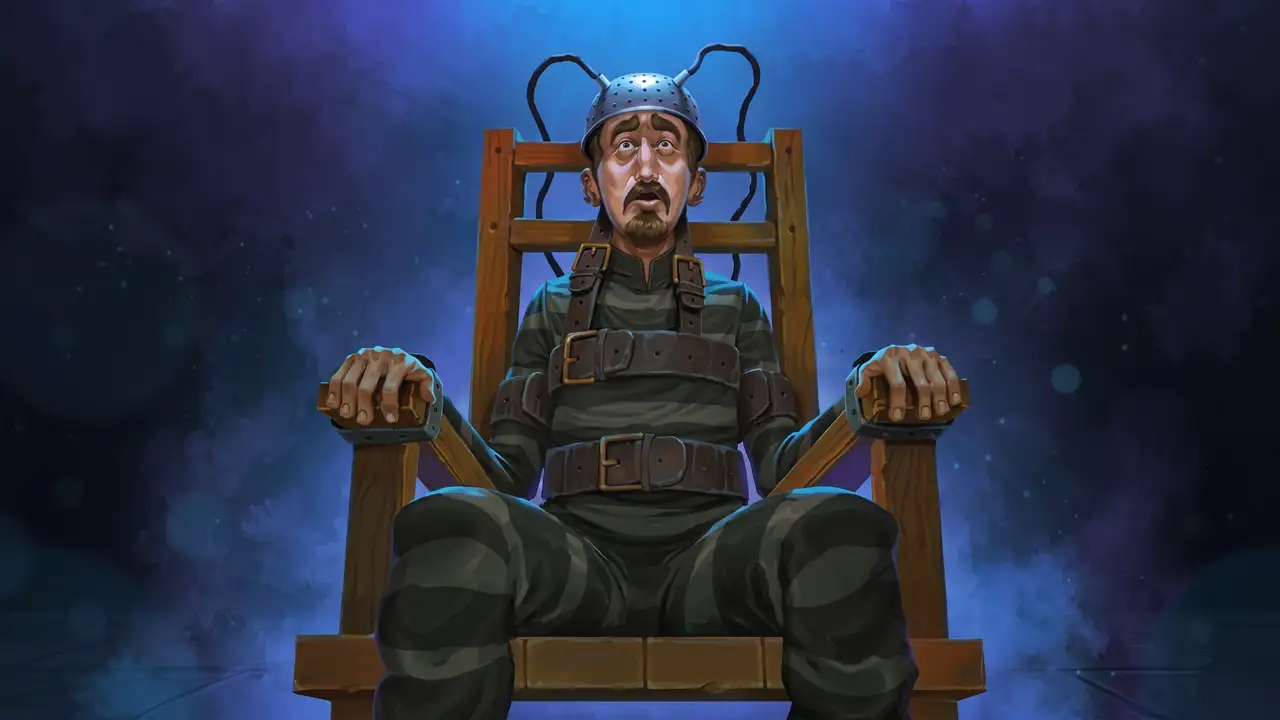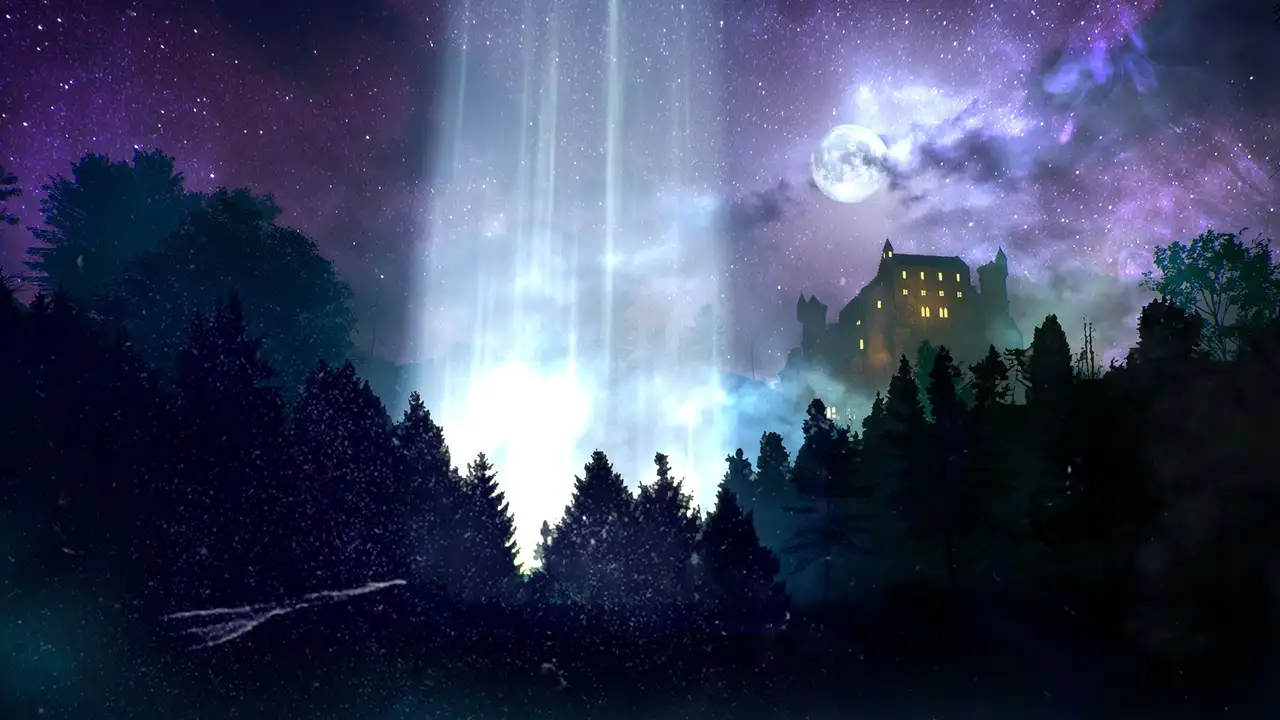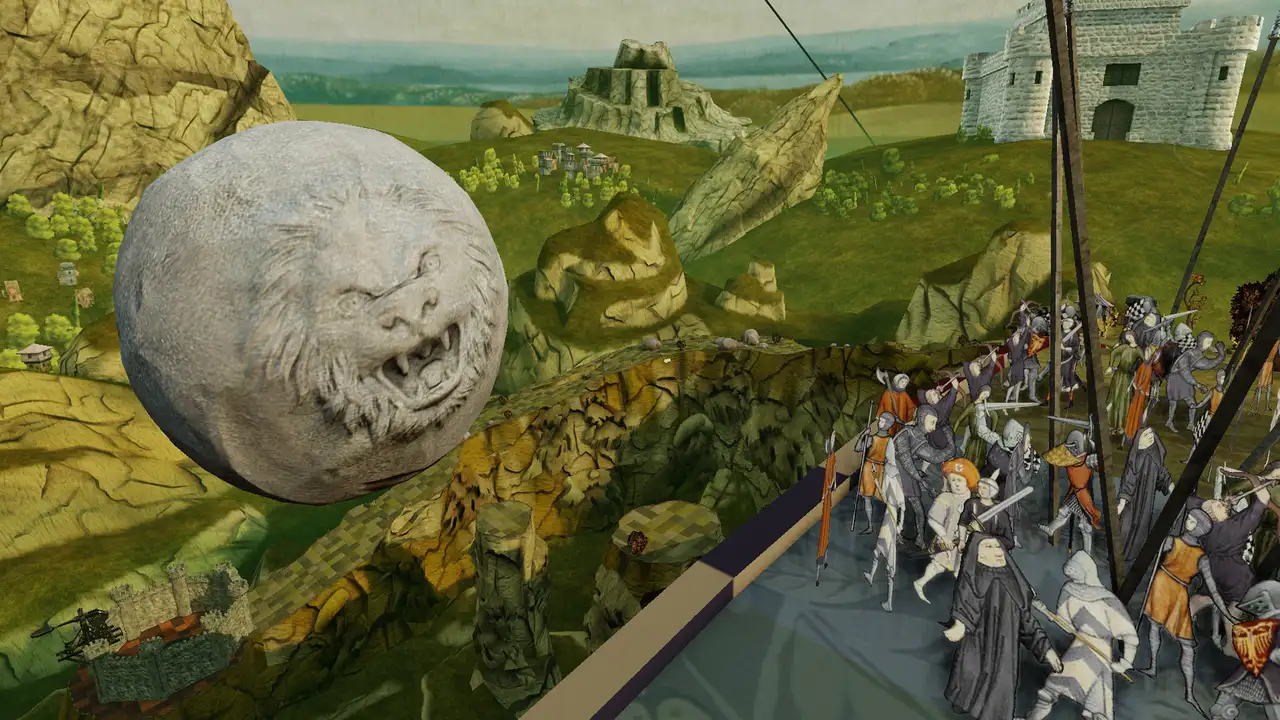
A young girl searches a storybook forest for her missing twin sister, and the search drags her through mushroom folk, ant empires, a stone war and the roots of a corruption that will make her a legend. The Slavic mythology runs deep (Perun, Veles and the three fate sisters all appear), and the journal entries corrupt classic fairy tales into something darker and funnier than their sources. The relationship with the sarcastic voice in her head drives both comedy and the finale, and the Baba reveal at the end genuinely recontextualises the tale. It is a gorgeous little dark fairy tale that tells its story beautifully.
The morality system meaningfully reshapes the game. Choices change which NPCs and quests are offered, and crucially the label is not permanent: an early evil reputation can be undone through good deeds, which then alters quests in turn. Paired titles gate skills and story branches, and the two paths (a grand knight on one side, rebels on the other) make the world feel responsive rather than decorative. It is a rare morality system where the reward for experimentation is narrative rather than cosmetic.
Open-world exploration scratches the wanderlust itch of the genre’s best. The seasonal world design (spring, summer, autumn, winter) is coherent and pretty, each region reading clearly as its season, and the what’s-over-there pull is constant across a seventeen-hour complete run. Warden chests, totems, fishing, blink-idol fast travel and optional fights against the opposing mushroom faction fill the map, and the cauldron crafting system with lost pages gives the collectibles purpose. Fairy rings dot the landscape as both landmark and lore.
The 2D platformer memory segments are a striking genre shift. Flashback sequences drop the action-adventure frame for a two-dimensional style that feels genuinely different rather than a palette swap, and the Delgoi memory in particular lands as a memorable change of pace. The finale and its boss fight close the story emotionally, and the twisted Snow White, Sleeping Beauty and three-little-pigs codex entries are worth reading aloud.
Friction is mostly mechanical. Controls are strange throughout, with sneaking bound awkwardly and bow and dash mappings fighting muscle memory. The red-flower activation mechanic is poorly taught: the bow must be stowed to use the flowers, a fact that went undiscovered for an entire session and blocked progress on several puzzles. Poison is relentless and applied far too easily, a recurring annoyance across every session, and the spider-bureaucracy fetch quest is deliberately tedious, though an evil short-circuit option redeems it for anyone aligned that way.
Small polish gaps accumulate. Winter is nearly empty, with barely two hours of content after autumn’s fullness, and the quarry tower-defence fight has unclear positioning. Small, fast enemies are genuinely painful to hit with the bow, encouraging spell spam instead, and occasional visual jank (a stone boss with broken animation, low-frame-rate enemies, one suspected bugged quest) undercuts the polish. Chests nearly always contain only teeth, and the toad-bag giant toad’s full-heal buff suffers an enormous cooldown that makes it nearly useless in practice.
Overall, this is a charming, folklore-drenched adventure whose morality system, twisted fairy-tale codex and gorgeous seasonal world outshine its mechanical roughness. Awkward controls, under-taught mechanics, ubiquitous poison and a hollow winter chapter are real flaws, but the emotional finale, the satisfying Baba reveal and the sheer voice of the thing make it thoroughly worth playing for the world and writing alone.