A reimagining of Journey to the West sends a silent warrior across five realms to recover the scattered senses of a legendary king, and the scale of the undertaking is felt in every chapter. Forest, desert, snow, web-hollow and lava each bring their own atmosphere and status effects, and the layered mythology (animal generals, spider-weddings, a bull-family tragedy) gives the quest depth beyond its plot. The warmth of the supporting cast, from rhyming enemies to a drunk pig and a zodiac village hub, keeps the world from feeling like a series of arenas. This is a game about a journey in both structure and spirit.
The boss roster is the campaign’s defining achievement. Roughly ninety distinct bosses appear across a full run, essentially all unique, with no repeats, and the encounters range from duels to spectacle battles that redefine what a mid-game fight can look like. Most bosses carry a single health bar, a refreshing change from the genre’s constant two-phase escalation, keeping fights legible and momentum intact. The prologue alone sells the whole game, and the post-game mural fight is a spectacle worth every attempt. For anyone who values boss variety, this is the new benchmark.
Sound design earns repeated, unprompted admiration. Every hit lands with weight, the charge-attack thump is genuinely satisfying, and the soundscape carries the combat even where the mechanics stay simple: the light combo never changes, but the feedback makes every strike feel deliberate. The per-enemy poems in the journal, each foe receiving its own verse, are a beloved touch that turns the bestiary into literature. Chapter-ending animated films, each in a different art style (traditional animation, claymation and more), are an atmosphere highlight that re-elevates enthusiasm at every chapter break.
Combat depth comes from the tools rather than the basics. Stances (Smash, Pillar, Thrust), charged heavies, focus points and a large skill tree support a spell kit that includes immobilise (a lifesaver), cloud step, ring of fire, pluck of many and spellbinder, plus transformations, spirit skills, vessels and gourd drinks. Progression flows through sparks, crafting and permanent stat pills, with free reallocation of sparks at any shrine. No death penalty, no XP or loot loss, fast travel from anywhere and shrines before nearly every boss make the loop unusually friction-free for the genre, closer to a mix of Dark Souls and the God of War reboot than to either’s punishments.
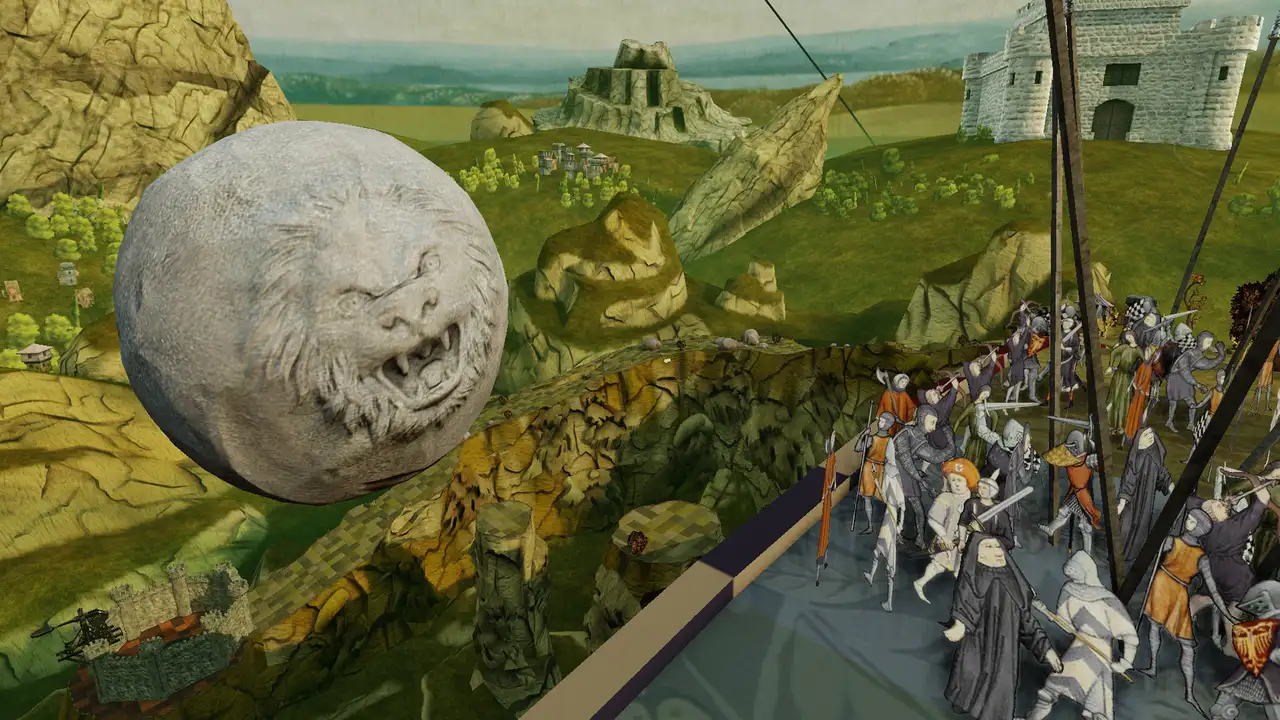
Friction exists but is localised. One giant stone boss, fought in a late chapter, is the game’s clear failure: weak points on a constantly moving part, auto lock-on fighting the player, and almost no punish windows make it the worst encounter by a distance. The secret Erlang duel arrives overloaded, with a heavy shield that demands long chi buildup and faint-style delayed attacks that infuriate, though a later attempt proves it fairer than first impressions suggested. The Pagoda Realm’s max-health-draining curse is opaque, with no clear indication of cause or cure, and Yin Tiger and Yellow Long stand as exhausting difficulty spikes respected more than enjoyed.
Presentation quirks add minor friction. Motion blur defaults to strong and hides under the display menu rather than graphics settings, invisible walls are inconsistently placed, and some boss-arena downs cannot be retried without fast-travel loops, while a couple of long stretches lack shrines entirely. Weapons cannot be re-crafted once made, the final chapter’s enemies spawn mid-air and ambush repeatedly, and the journeys chart, while a helpful fill-in exploration tracker, only partially compensates. The game also runs heavy on mid-range hardware, though it stayed stable throughout.
Overall, this is a phenomenal, spectacle-driven journey whose endless original bosses, punchy sound design and zero-punishment deaths make it a genuine genre highlight, and its overwhelmingly positive reputation is fully earned. One badly designed boss, Erlang’s bloated defence and some opaque status mechanics are real blemishes, but they are localised against consistent, repeated excellence. The poems, the rotating art-style films and the sheer scale of the roster make it unlike anything else in the field, and the best thing its genre has produced in years.