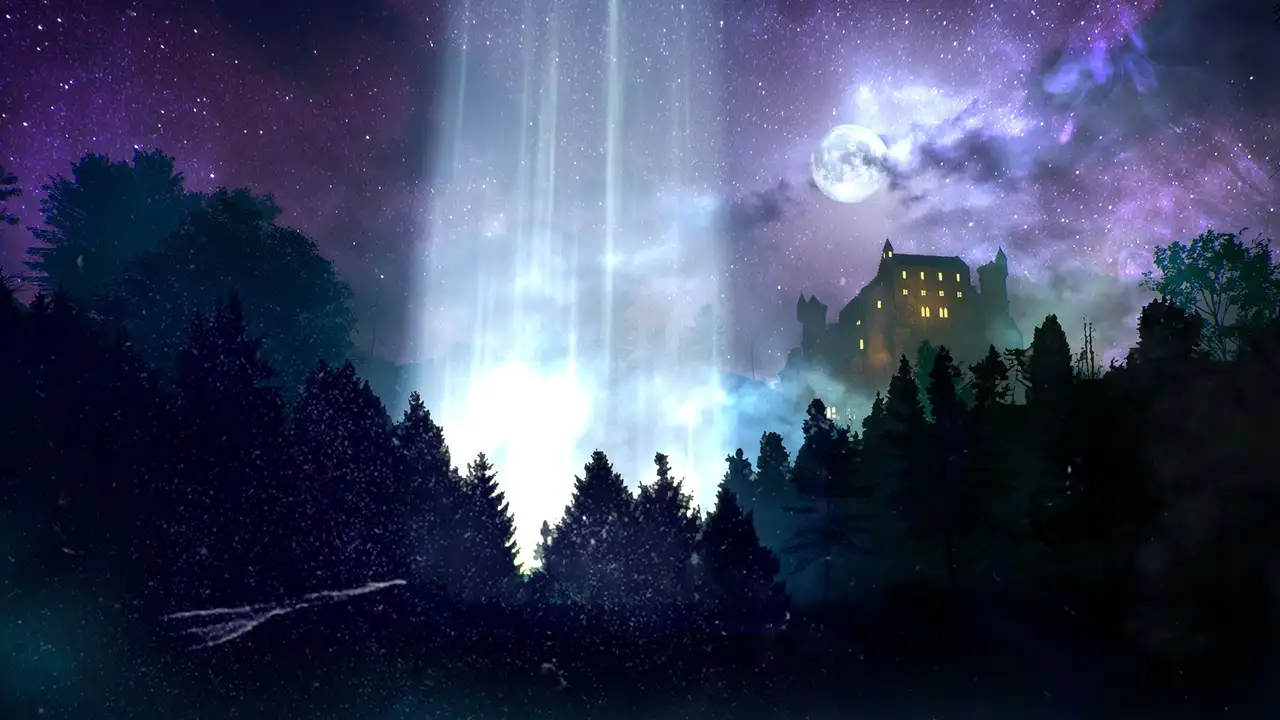
A stressed receptionist sharing a flat with her sister chases a pendant-stealing spirit through her apartment door and lands in Chouta, the spirit world’s bus-stop town. What follows is a night-long odyssey through bath houses, mines, a cursed theatre, sewers and the Road to Nowhere, chasing reunion and a way home. The tone blends Ghibli-ish yo-kai whimsy with genuinely dark backstories, and the Red Witch theatre sequence gives the whole thing a proper horror beat.
Character writing carries the game: every yo-kai gets a tragic backstory, from a decapitation by a sword-dealing father to a starvation that explains a bottomless appetite. The jokes sit on real grief, and the ensemble’s sorrowful afterlives are the entire appeal. The sisters’ relationship gives the small story real weight, moving from dinner-table banter through a genuinely bitter mid-game blow-up that lands harder than anything the spirit world throws at the pair.
The soundtrack is far better than the genre demands, praised unprompted throughout, with songs that lodge in the head after a single hearing. It carries the whimsy and the sorrow in equal measure, and it is the second pillar of a game whose first is its writing. The vending-machine save points are charming, branded with a fitting name for a bus-stop world, even if their necessity is close to nil given the stakes.
Quest design is pure fetch-and-barter chains: sushi for speakers, seaweed for a rod, a burger for bait, a fixed boom box, a bun thief to catch, mine tickets and bath-house chemistry puzzles. The structure is identified and embraced anyway, since the trade chains are the walking-and-talking vehicle for the character work, and the cast’s audacity (a unicorn tattoo here, running debts there) keeps even the errands colourful. Light environmental puzzles (cable-order TV, mirror passages, tuning-fork locks) round out a handful of genuine puzzle beats.
Interaction opacity is the main friction: doors and stairs need manual interaction, shops refuse to sell multiples, and one late cuckoo-clock puzzle defies even retrospection. Dialogue blips are obnoxiously loud on every single line, an odd sonic misstep in a game with such a strong score. There is no fail state, nothing can kill, yet the game’s frequent freezes create a dread the design never earns, the only tension in a tensionless package and the one flaw that feels like an accident rather than a choice.
Tanto spends most of the game as a nuisance before his death and farewell gift retroactively redeem him, the arc that best encapsulates the game’s trick of hiding sentiment beneath annoyance. A temple statue scene deepens the witch’s lore in the back half, and the bath-house showdown gives the night a proper climax. The post-credits epilogue stitches the whole night into a wider web, revealing the protagonist’s lineage to an earlier game in the same universe and seeding the next entry, transforming a pleasant one-night adventure into a piece of a connected saga. It is a developer’s shared world built with remarkable economy.
Overall, a small, warm, sorrowful adventure that earns affection precisely calibrated to its modest scale: a single evening of walk-and-talk yo-kai storytelling with tragic ensemble writing, a catchy soundtrack and a universe-linking reveal that rewards anyone who has played its siblings. Pure item-barter questing, opaque interactions and loud dialogue blips are the honest costs, and none of them sink the night.