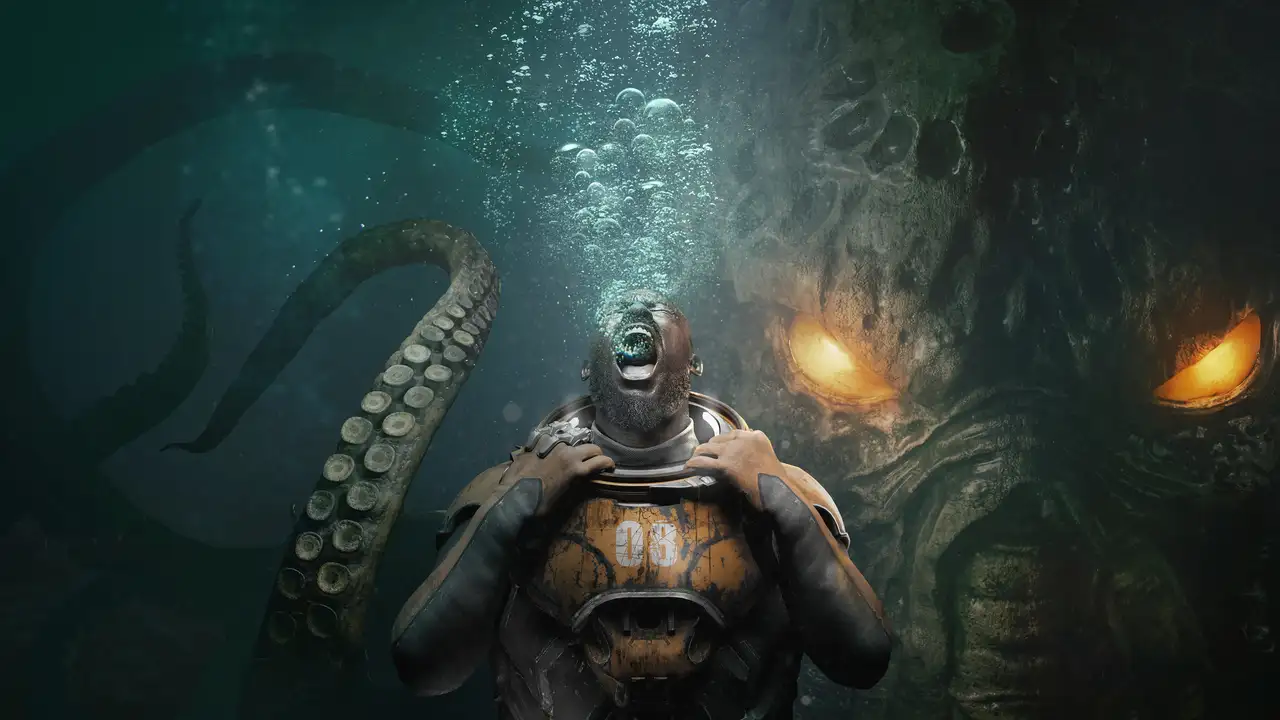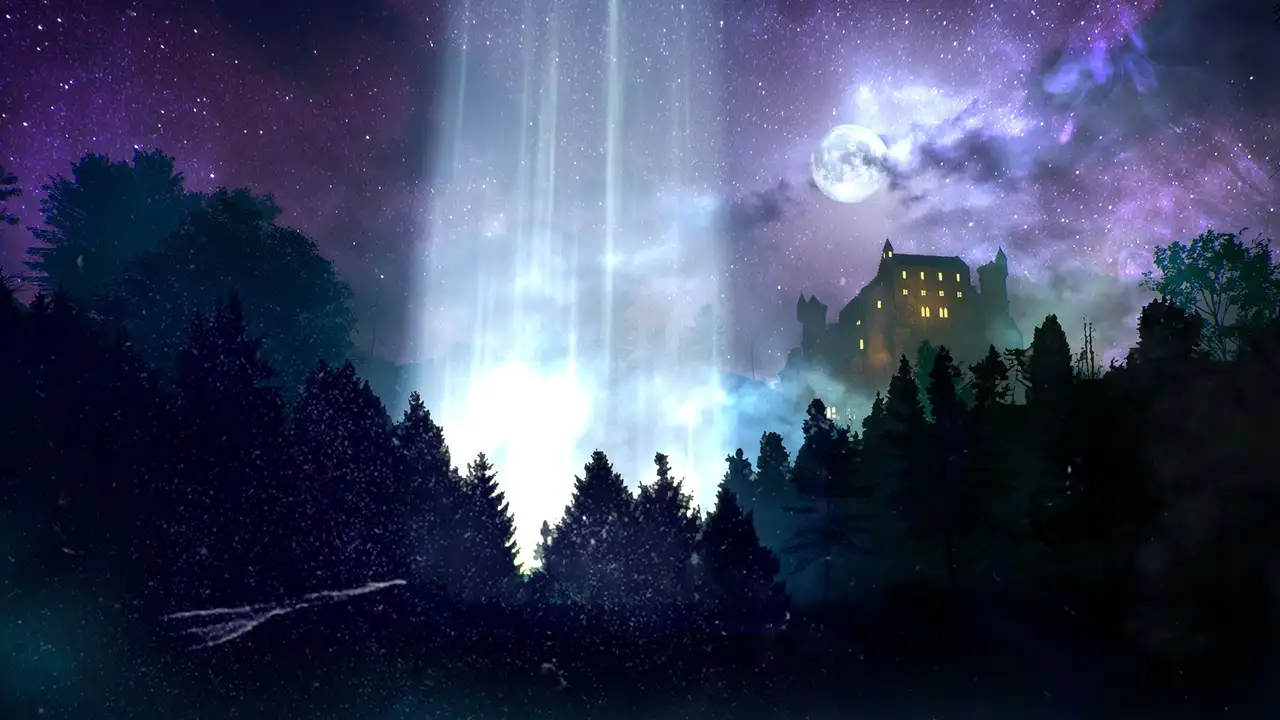
A near-future survival story after ESA’s Hope 01 crash-lands on Pesphanany, following astrobiologist Arian and injured officer Thomas as each fights toward the planet’s mysterious source. The split is deliberate genre construction rather than gimmick: her chapters own climbing, storms and verticality, while his own documents, lore and oxygen management inside an abandoned corporate base. Few survival games divide two protagonists so cleanly by verb, and fewer commit to facial animation of this quality at indie scale. The scenes where characters tear up rank among the most convincing in the medium, and they are the most impressive thing here.
The EM scanner turns magnetism into a puzzle language, letting magnetic lines in the landscape be reshaped into platforms and solutions. It is the mechanical high point, discovered mid-game and immediately delightful, and the frequency puzzles give the planet’s geology an interactive logic that climbing alone never provides. The scanner cannot interact with every magnetic field, and those limits become the puzzle design’s boundaries rather than its failures. Environmental problem-solving stays legible throughout.
New Horizon base carries the narrative high point through corporate email chains, the Macallen cover-up, poisonings and sabotage, all read as found documents. The board memos escalating against a background of planetary immune response give the company a coherent villain argument, and the planet itself becomes a character with one. New planet, same old story is the thesis, delivered through institutional archaeology rather than cutscenes. Every document rewards reading, and the epistolary layer is the campaign’s sharpest writing.
The Nemesis, a blind collective that hunts by sound, is decoded organically through its behaviour rather than tutorialised, and distraction crystals give its sections a proper stealth vocabulary. Discrete stealth passages rather than domination is exactly the right call for this game’s pacing. Late gauntlets, though, expose detection sensitivity that feels arbitrary around terrain collision, and getting stuck on geometry mid-sneak causes repeated falls. The frustration lands at the mechanics rather than the creature, whose design remains the stealth highlight.
The sprint barely functions: entering sprint mode moves marginally quicker than walking, a running joke across both protagonists. A crouch button introduced late would have solved earlier ice sections and is then never used again, a strange teaching order that withholds a tool until after it is needed. Neither flaw breaks the experience, but both suggest controls tuned after the level design was locked. The storm sequence, meanwhile, is the mechanical low point, with direction-finding under pressure that obscures the path forward more than the weather intends.
Music that consistently lands is hard to describe except by pointing elsewhere, evoking yarn-craft folk at some moments and gothic orchestral swells at others. Wreck-section tension opens the game with a genre question the story spends its runtime answering, and the guided, cinematic shape suits a story-first experience. Roughly one sitting covers the campaign, and the pacing justifies that compression. The tragedy that closes the dual timeline is earned by the structure itself, with every Thomas chapter quietly accumulating meaning before the reveal recontextualises them.
Overall, the facial animation, the alternating-protagonist structure and the EM scanner’s magnetic puzzle language make this a strong recommendation for story-first sci-fi, despite detection-sensitive stealth gauntlets, terrain snagging, a near-useless sprint and a crouch button introduced too late. The corporate email archaeology and the blind, sound-hunting Nemesis are the standout layers, and the dual-timeline tragedy lands its emotional weight. Presentation carries it, and the story justifies the carrying.