A neon corporate dystopia played entirely for comedy hides a surprisingly earnest science-fiction core: a bumbling agent’s farewell-day mission spirals into anomalies, a shattered Time Stone and a time loop. The hooded man’s city-destruction motive gives the chaos a through-line, and the corporate-dystopia register keeps every gag anchored to something with actual stakes. Pop-culture reference comedy abounds, from Kratos signs to Splinter Cell goggles to a Johnny Bravo warden, and the portraits sliding into frame for every character introduction are a treat every single time.
The soundtrack is a highlight within minutes and stays one to the credits, a consistently badass score that carries every chapter’s energy. Checkpoints sit in every room, each full-heal on clear, an accessibility-first design that keeps the focus on surviving one room at a time rather than dreading a retry gauntlet. It is a deliberate, generous choice, and it makes the whole campaign forgiving without ever feeling trivial.
Combat expands steadily in the character-action mould: combos, dodge-cancels that keep the meter alive, parries on everything except red-flagged attacks, execution finishers, and a gadget roster that grows from a business-card boomerang to an anomaly bat to a giant fist. Style points reward the flashy route, and every discovery lands with genuine delight. The shopping economy of upgrades and anomaly powers feeds the expansion, and the money-and-emotion dialogue choices matter more than their casual surface suggests.
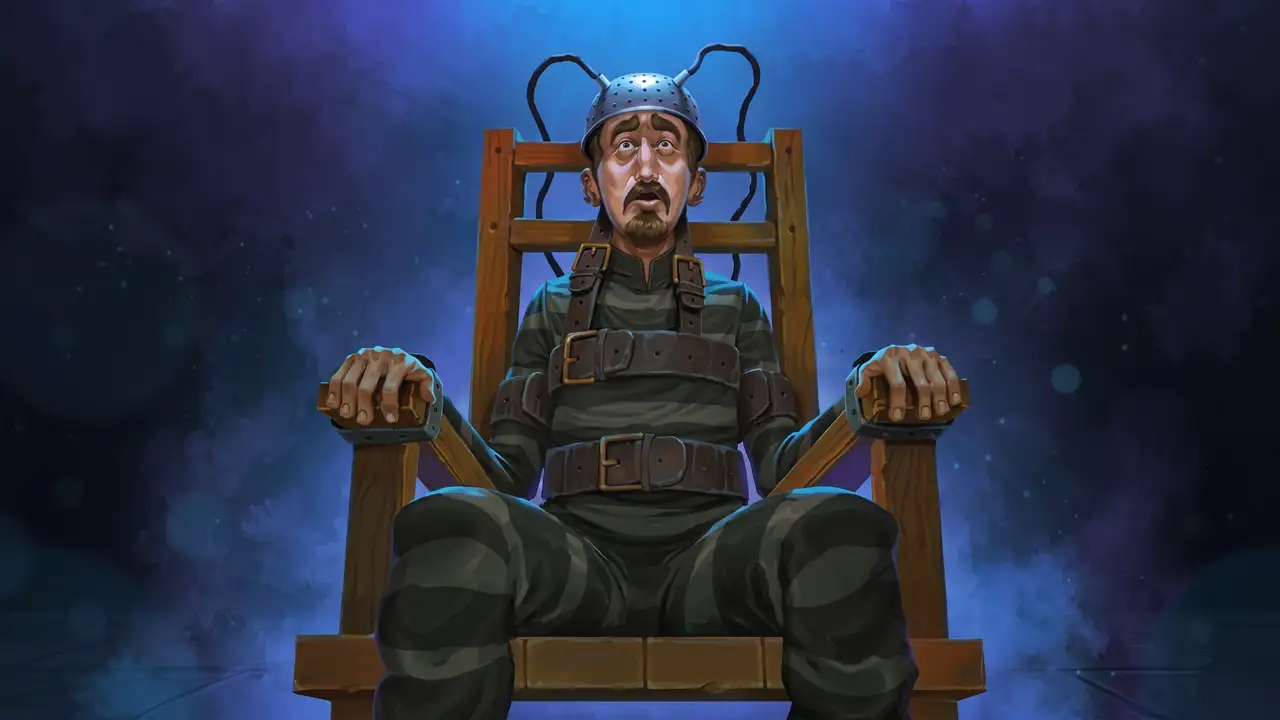
Structural variety is the real signature: a subway chase, a dance-bar whodunit, a Zeppelin siege, a space-bureau raid, a clone-prison disguise stealth chapter and a finale of pure chaos, each practically a different genre wrapped around the same combat engine. The time-loop midgame replays earlier areas with variations, and every failed loop-escape attempt fails for a logical in-fiction reason, puzzle content rather than arbitrary gates. The disguise chapter’s pivot is a genuine surprise, and the wrestler’s arena dogma gives the bar chapter its comic spine alongside the impostor Federation running gag.
The shotgun enemies are the single most repeated complaint: unparryable attacks with oppressive range that sour three separate chapters, the bar, the Zeppelin and the prison alike. Boss quality is uneven, with the Alpha Defender’s constant enemy spawns undercutting a setpiece that otherwise charms. Late-game ability bloat leaves the move list outgrowing muscle memory, and the prison stealth gauntlet plus elevator sections stack systems faster than they can be parsed under pressure. Difficulty spikes in the prison and final gauntlets even as checkpoints keep them forgiving, and the finale’s chaos is best survived with a pared-down kit rather than the full arsenal.
The comedy never winks at the expense of systems: joke answers and yellow-text dialogue choices genuinely shape outcomes, and the writing commits as hard to its gags as its combat commits to its style meter. The money-and-emotion economy reads as incidental on the surface but the good-answer-versus-dick-answer split is always legible, a small system that trusts the player. The whole thing lands as a confident, cohesive whole despite its genre-hopping. New Game Plus replays carry extra value for anyone who clicks with the loop.
Overall, a stylish, genre-hopping character-action brawler whose soundtrack, combat expansion and structural variety make it easy to love, held back by unparryable shotgun enemies, uneven boss spawns and late-game input bloat. Every chapter is a fresh idea executed with confidence, and the time loop actually uses its failure states as puzzle content, a rare and welcome commitment.