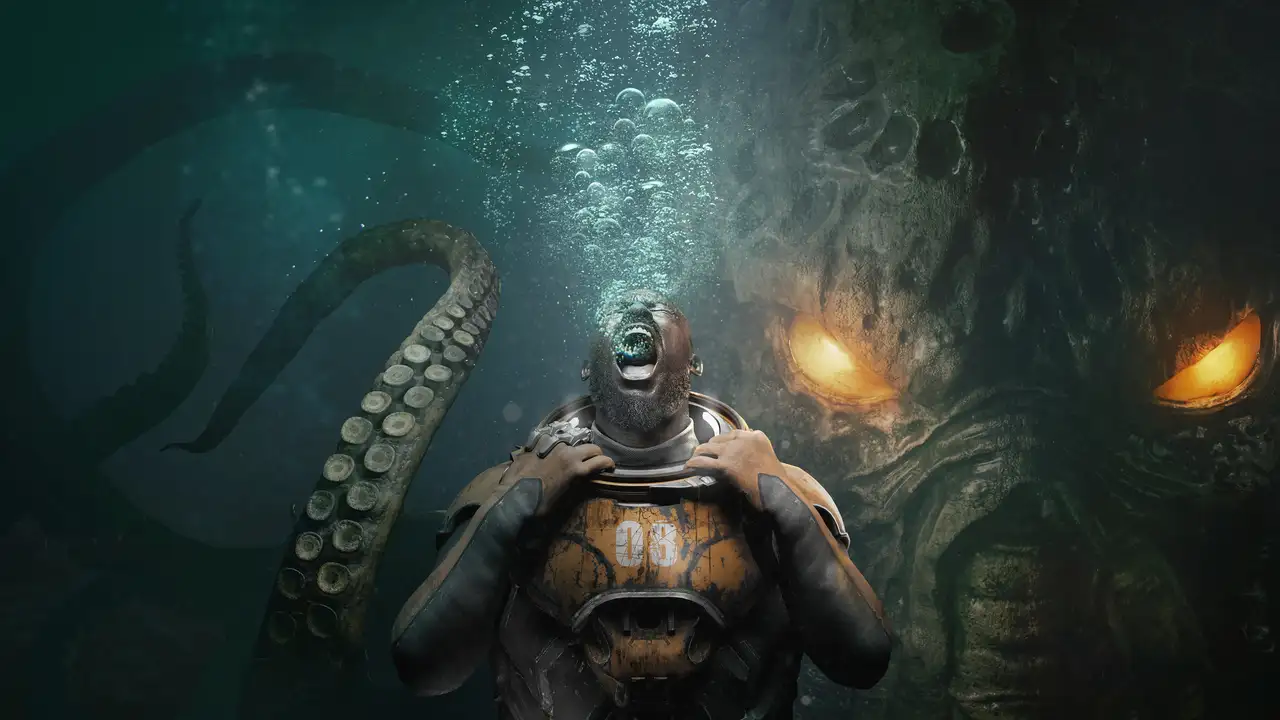
A young German officer’s war bleeds into a haunted Berlin townhouse, and the horror that follows is grief given shape rather than a threat to be survived. Ad Infinitum plays its First World War trauma from the German side, a perspective almost no horror title dares, and builds its dread from a family disintegrating under the conflict: a mother conducting séances to reclaim a son who is not her son, a father engineering chemical weapons beneath the paint factory, a brother returning from the front unrecognisable. The trench chapters interleave as the protagonist’s own experience of gas and hunger, and the interplay between the two registers sustains the mystery from the prologue’s obituary discovery to the final act.
Environmental storytelling carries the narrative, and the document work is exceptional. Letters, diaries, case files and colonial records (including an extermination order and its grotesque physical evidence) furnish every room, and the presentation treats each with archival care: wax-cylinder audio that crackles and cuts out, handwriting that matches its author, and a family archive coherent enough to be read as a single tragic novel. The detail extends to collectible dog tags and bracelets bearing the names mentioned in the letters, so the paperwork and the mementoes corroborate one another.
The three-act structure is the design’s masterstroke. Each chapter descends into one relative’s torment, each anchored by its own monster, and the scheme rewards decoding: despair for the mother’s séances, corruption for the father’s basement laboratory, pain for the brother’s mutilation. No act explains its theme outright, and the pattern slots together at the credits with the click of a well-set puzzle. Splitting the tragedy three ways also keeps the locations distinct (a spiritualist parlour, an industrial workshop, a military hospital) and gives each creature a psychological warrant rather than a generic scare function.
The creatures themselves are genuinely upsetting. The Hunger entities are lanky, twitching and eyeless, their proportions wrong in ways that unsettle on every appearance, and the hospital’s prosthetic patients push the cruelty further than the creature design of most peers. Crucially, the stealth that frames these encounters is fair: a single grab per encounter can be shaken off rather than proving instantly fatal, tin-can alarms and sirens lure the blind, sound-sensitive hunters away from paths, and dugouts and lockers provide honest hiding places. Tension without cheap death is a rarer achievement than it should be.
Pacing wobbles in the trench interludes. Tutorials arrive earlier than they are needed, alarm systems stand in stretches with no enemies to alert, and the factory plumbing demands backtracking that outstays its welcome. The boss encounters fare better conceptually than technically: each hides a binary choice flagged by a warning that actions will have consequences, but scripted camera takes, gate catapults and invisible hazards (the father’s gas fight worst among them) test patience without quite breaking it. The mannequin sequences irritate similarly.
Presentation is the persistent grievance. The game is relentlessly dark, and no brightness calibration is offered before a new game begins, leaving gamma adjustments to be made mid-run throughout; collectible hunting in no man’s land and the final night section occasionally becomes an obstacle rather than a challenge. The wind-up torch is worse than useless, dying within seconds and comparing unfavourably to its obvious lineage, and small interface frictions compound the problem: letter-reading auto-stands the player at awkward moments, ladder interactions launch the player to the bottom, and helmet-hidden collectibles are nearly invisible against the gloom.
Overall, this is a distinctive, document-driven tragedy that keeps its monsters as seasoning and its family drama as the meal, and the three-member chapter structure decodes like a well-set puzzle at the credits. The gamma fight, the dying torch and the boss jank are real irritants, but the archive-quality document work, the fair stealth and the creatures’ psychological warrant make it a horror whose identity no peer shares.