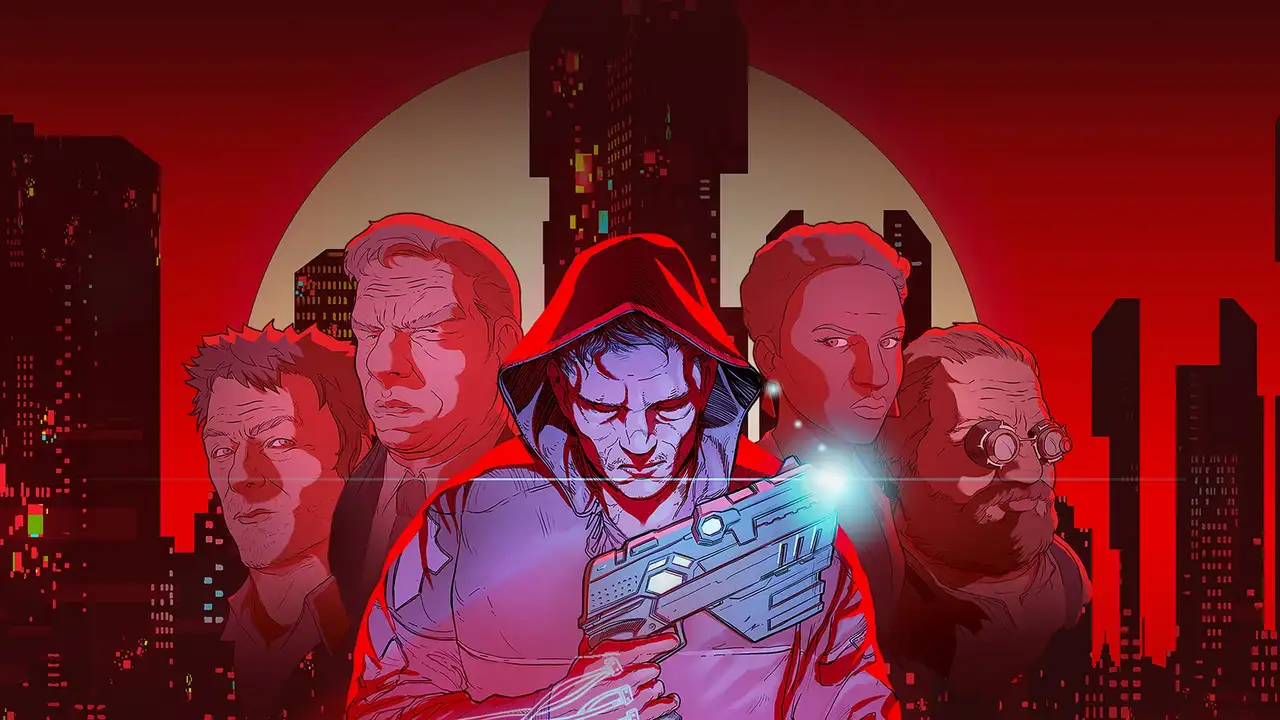
FORECLOSED imagines a cyberpunk dystopia where debt consumes identity itself, with protagonist Evan Kapnos stripped of implant, blockchain access and legal personhood after an employer’s bankruptcy, and racing the auction clock to reach the court. The premise is sharp satire of debt-as-identity, with blockchain deals, implant firmware and credit forming systems that are also the plot. Presentation does the heavy lifting: in-engine comic panels and narration deliver the story with genuine style, occasionally opaque in meaning but consistently handsome. The cel-shaded comic-book art style earns effusive praise from opening minutes to closing verdict, and it is the game’s defining quality. Movement starts sluggish before upgrades arrive, and early deaths can be hard to parse, a rough on-ramp the toolkit soon smooths over.
Progression revolves around implants that learn from experience, building an evolving toolkit of hacking, telekinesis, implant-overheating and gun upgrades purchased through an XP grid of perks. Telekinesis is the standout, lifting shielded enemies for unloading and converting dangerous encounters into trivialities, with telekinetic homing bullets extending the loop. The loadout carries a three-weapon cap, and the powers loop of lifting, slamming and shooting becomes the combat’s best expression once it clicks. Pacing alternates combat arenas with one-off puzzle minigames, including camera hacking and blockchain node-syncing, which break the rhythm pleasantly even when their comic-panel instructions resist interpretation.
Drone stealth sections are the worst part of the game by a distance. Drone line-of-sight is unclear, forcing guesswork about what can actually spot the protagonist, camera-pan restarts compound the frustration, and the mandatory stretches feel undercooked next to everything around them. Checkpoints are the only mercy, softening restarts that would otherwise be unbearable. Combat balance cuts the other way, with enemies vastly out-toughening the protagonist while arenas repeatedly lack cover, three bullets enough to drop health against foes that absorb far more. The friction is real, yet the telekinesis combo redeems fights that would otherwise be pure nuisance.
No shoulder-swap on an isometric shooter is a recurring irritation across the campaign. The fixed perspective lets enemies shoot from off-screen, deaths arrive without a readable cause, and the absence of a camera option to reframe the angle makes every firefight a negotiation with the screen’s edge. It is possibly the single worst control decision in the game, and it interacts badly with the frail health pool, turning moderate encounters into cheap deaths. XP economy oddities pile on, with huge meaningless numbers, seemingly resetting or re-granting progress, and a final upgrade only unlocked out of curiosity in post-game replay.
The finale presents a choice between killing the receiver and escaping the city, and the game tests conviction by making it feel weightless. Dialogue branches prove illusory, with every conversation converging on the same outcome regardless of selection, a design choice that undermines the narrative’s otherwise committed satire. The ending twist lands well enough to reward replay, and the closing hours justify the set-up even as the branching illusions dent trust. A comic-panel climax delivers the story’s sharpest line about suspicious transactions with style intact.
The whole campaign runs about three hours, and value depends entirely on price and appetite for presentation over content. The style earns that trade better than the mechanics do, with the art carrying stretches the combat and stealth cannot. As a tight, stylish romp the flaws are easier to forgive; at full price the balance shifts. The recommendation lands positive but qualified, leaning on the presentation that never falters.
Overall, FORECLOSED is a stylish cyberpunk action shooter whose comic-panel presentation, identity-debt satire and telekinetic implant combat deliver a memorable three hours, held back by cover-starved arenas, unclear drone stealth and a camera that refuses to cooperate. The art style carries the experience further than the mechanics alone would manage, and the package is easy to recommend at the right price. Presentation-first design with real friction underneath is the honest summary.