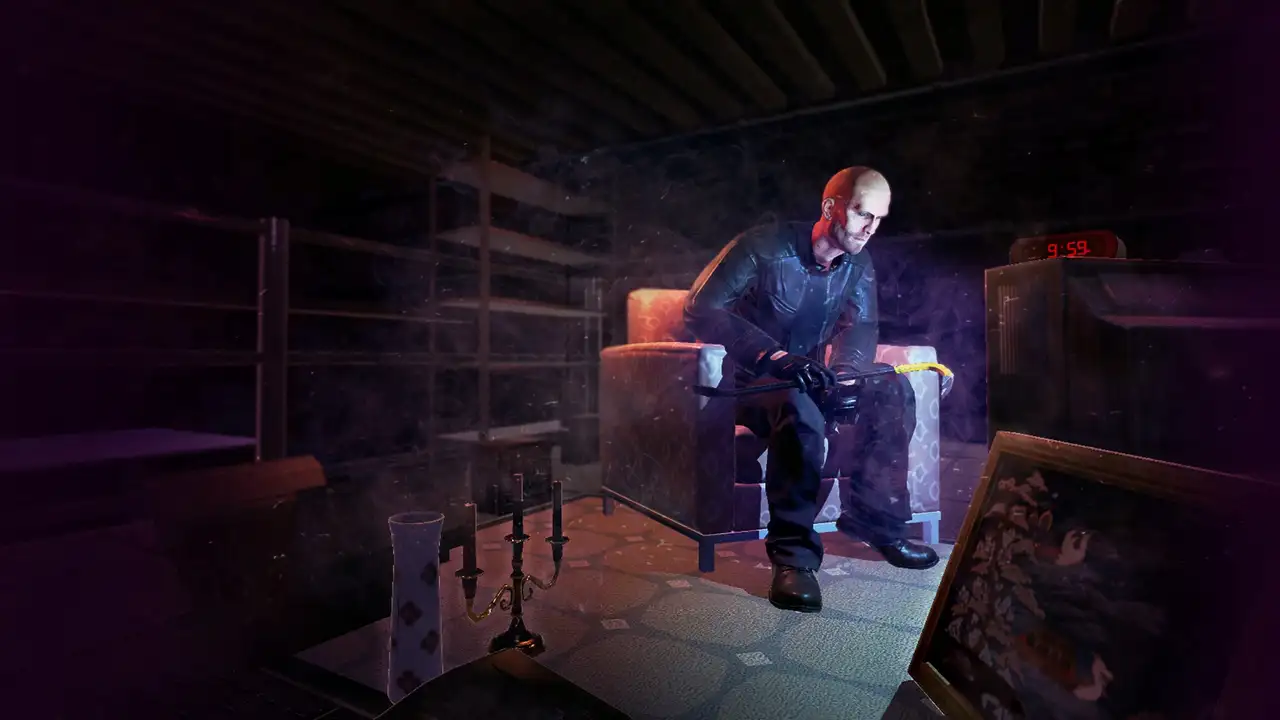
A neighbourhood-burglary fantasy framed by a thin crime storyline, and the fun is entirely systemic. Thief Simulator hands over a burglar’s toolkit and three escalating districts, then lets the loop of casing houses, learning routines, stealing and fencing carry the campaign. The suburban-night atmosphere lands immediately: sneaking past sleeping tenants, torchlight in dark bedrooms, and knock-off furniture brands sold with knowing silliness. The narrative exists only to string the districts together, and the game never pretends otherwise. What surprises is how far one simple fantasy stretches before it runs out of inventions.
The core loop is trivially simple at minute one and compulsively fun for dozens of hours. Scope a house, learn or buy tenant routines, pick an entry among windows, lattices, gutters or the glass-knife, grab loot within the bag and vehicle weight budget, then fence at the pawn shop or the in-game auction site. Spending on skills and gadgets keeps the loop fresh: night vision, the hacking PDA, the car signal cloner and micro cameras for mailbox surveillance each open new approaches. The escalating progression from bungalows to guarded fortresses to industrial warehouses repeatedly surprises with moving parts nobody expected.
Emergent comedy is the campaign’s best material. Cupboards are overpowered, hiding inside while police wander past close enough to touch. The doorbell lure trick sends a tenant outside and straight into an empty house, and parking on grass dodges the tow truck with equal absurdity. TV-throwing physics turn interior decorating into a crime scene, and tenants later watch the television that was stolen from them. These unscripted moments give the sandbox its stories, and the systems invite them deliberately.
The car-dismantling minigame is satisfying to learn and tedious to repeat. The domino-effect disassembly, removing parts in sequence until a vehicle strips to its chassis, works as a puzzle the first three or four times, then collapses under bad camera control that fights every angle. Jewellery dismantling and safecracking by sound fare better, with the audio-led safes among the campaign’s more tactile systems. The van and hideout economy ties the logistics together, and the black van upgrade is a genuine step change in capacity.
Burglary detection is opaque and sometimes nonsensical. Alarms trip for reasons that never become legible, and tenants react to intruders they cannot plausibly have seen, with detection logic that disagrees with its own rules. The opacity grinds because stealth games live or die on readable cause and effect, and this one withholds the read. Guard and tenant AI glitches compound the problem in the late game: tenants frozen inside walls while still able to see, and guards walking through doors they should open.
Progressive instability marks the platform build. Crashes and stutters increase the longer sessions run, though saves land forgivingly close to every failure, and no progress is ever truly lost. The criticism is real but cushioned, and the game’s willingness to hand back its state after every crash keeps the frustration from compounding. New Game Plus unlocks on completion, extending a loop that by then has already given far more than expected.
The campaign runs roughly eighteen hours to finish essentially everything, including full auction-site completion, far longer than the simple loop advertises. Money and experience both lose value by the end, and the completionist habit continues mostly out of inertia, but the weight-budget heist logistics keep even the late sweeps interesting. The client storyline resolves with a betrayal and a mansion finale that ends in detonation, serviceable bookends for a sandbox that never needed them.
Overall, this is a janky but genuinely addictive thief sandbox whose fun far outstrips its technical polish, with an endlessly extensible burglary loop of routines, gadgets, weight-budget heists and emergent escapes. Broken AI, the dismantling camera, opaque alarm logic and escalating crashes are real costs, but eighteen voluntary hours of near-total completion tell the story better than the flaws do.