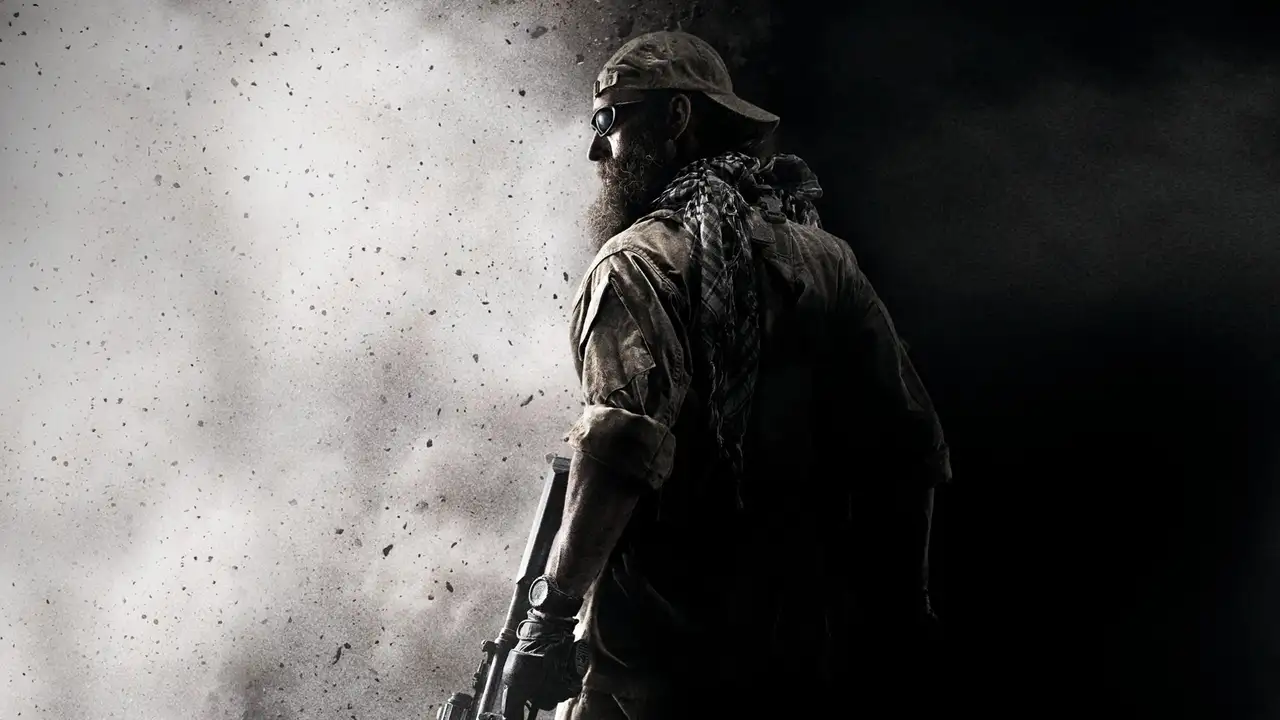
Afghanistan, 2002. Tier-one special operators and an Army Ranger platoon drive into the Shahikot valley, and the war around them is rendered with a restraint that deliberately bucks the era’s bombastic spectacle. Radio discipline, danger-close fire missions and a command structure whose general decides things from nine thousand miles away supply the texture; there are no roaring set-piece crescendos, just the low hum of authentic-feeling comms. The result plays like a documentary that happens to hand over a rifle.
The multi-perspective structure carries the campaign: three separate teams, each with its own cast and rhythm, interleaved across the valley push. Sniping and thermal-optics segments are the standouts, from a ridge observation post to a night stealth infiltration where finding the target without realising thermal support exists turns a careful mission into an exercise in squinting. An ATV insertion, a vehicle chase, AC-130 gunship runs and a helicopter minigun defence keep the segment variety high across the linear run.
Gunfighter, the helicopter mission, deserves its own paragraph for the wrong reasons. A Steam overlay interaction freezes the transition point solid under Proton, and diagnosing it demanded multiple full test playthroughs before disabling the overlay clears the path. Nothing else in the game comes close to that level of breakage, but a ten-minute mission consuming an evening of troubleshooting is the kind of wound a short campaign cannot easily absorb.
On the ground, the shooting holds up well. Audio does much of the heavy lifting: radio chatter, AK fire and the gunship’s dull cough all land with weight, and the PC version’s visuals comfortably outshine the console original. Combat is honest cover-based work with moderate difficulty; ambushes, grenade spam and the odd checkpoint sting, but the gunplay itself stays tight throughout, and pushing up a ridge alongside conventional troops while requests for fire support crackle overhead captures the intended texture of joint operations better than any briefing screen could.
Friction arrives in smaller doses elsewhere. Stealth sections are workable but inconsistent, with arbitrary AI detection, squadmates who refuse to crouch and scripted triggers that blow cover regardless of care taken. the dusty mountain village levels strangle visibility and disorient, endless-respawn waves undercut the grounded realism by throwing hundreds of enemies at scripted endpoints, and requesting ammo frequently meets refusal from NPCs who insist supplies are unnecessary while magazines run dry.
The campaign is strictly linear: nothing to explore, no collectibles, and a runtime hovering around three and a half hours, a length that was the talking point at release and remains the honest measure of the package. Grenades land in view constantly during the mountain night missions, odd physics moments bounce shots off invisible hitboxes, and none of it amounts to much on its own, but the accumulation of small coarse edges is noticeable in a package this brief. Requesting resupply becomes a recurring comedy of refusal, with nearby units insisting magazines are fine while the counter runs empty mid-firefight. The closing tribute sequence, delivered with a dedication voiceover, lands the restrained tone exactly right, and a quiet post-credits beat follows it without breaking register.
Overall, this remains a good, brief campaign whose grounded framing, varied mission types and strong audio atmosphere have aged better than its reputation suggests. The shooting is the strength, the multi-team structure gives the short runtime shape, and the finale earns its tension honestly. Disable the Steam overlay before boarding that helicopter and the recommendation is straightforward.