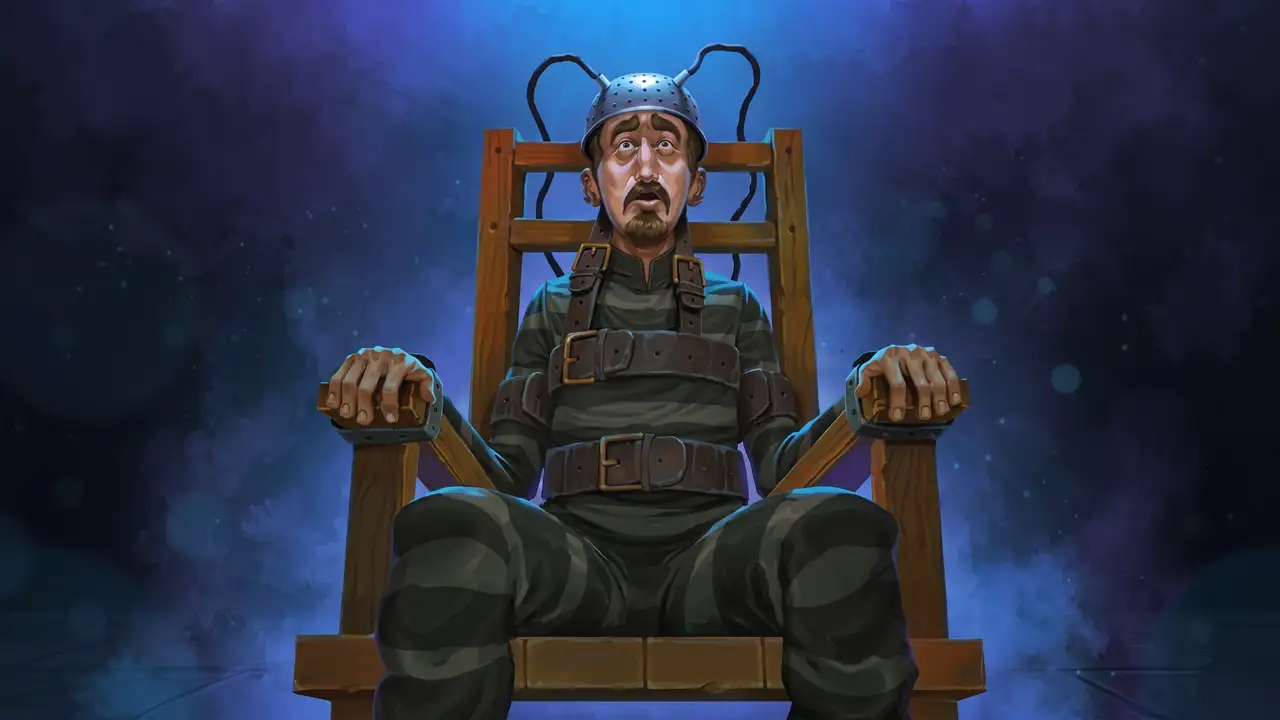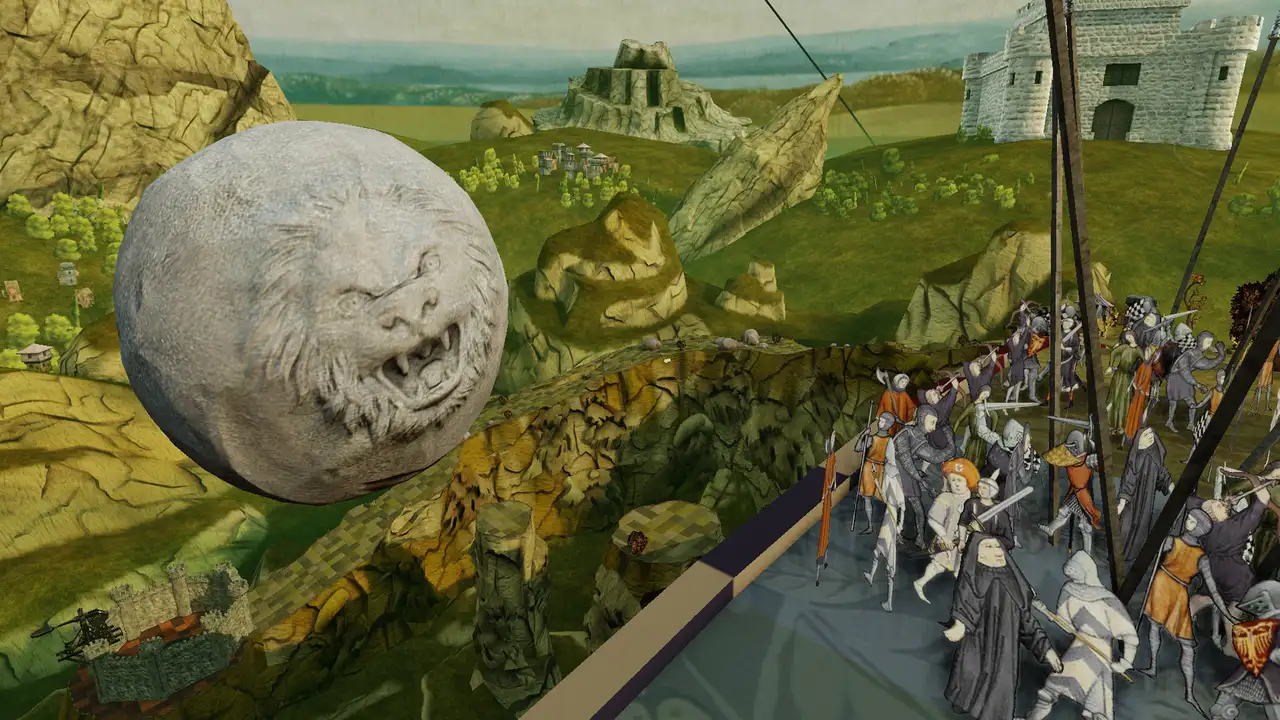
A paranormal investigation order sends a young medium into the Perimeter, a place that does not exist, to find her missing father and the truth behind a fear-worshipping family, an expedition that never came home and a boy called the Unhaunted One. The atmosphere is the star: blind blood zombies hunted by sound, sanity-draining spectres, ghosts tuned in by radio, and creeping dread across a mansion, graveyard, crystal cave and spiral castle. A time-loop revelation reframes the entire Perimeter as a repeating cycle, resolved with an ending that chooses existence over sacrifice. Brazilian-folklore flavour gives the horror a texture few investigations attempt.
The out-of-the-box, fourth-wall-breaking puzzles are the campaign’s highlight, explicitly in the tradition of the best meta-fiction puzzle games. Setting the game’s brightness to zero reveals a hidden code, muting all audio except sound effects exposes a melody, and keypad codes hide inside pictures. The tricks demand manipulating the game’s own settings menus, and the delight they generate is the reason to persist through the friction. Clock-time ciphers and a gravity padlock puzzle round out the variety, though the latter’s solution feels arbitrary rather than deduced.
The character-swapping structure enables clever interlocking puzzles across the four open areas, with each investigator’s abilities gating different solutions. The mansion, Graveyard of Melodies, Crystal Cave and Spiral Castle can be tackled in flexible order, and each area’s finale is gated behind an item found elsewhere, a neat soft-lock-avoidance structure. The presentation carries the experience throughout: a 3D and pixel-art hybrid that looks genuinely handsome, backed by solid voice acting across a huge cast. Cursed items with hidden interactions and a dog whose hugs restore sanity round out the systems.
Combat blends beat-em-up flurries with a pistol, stun-and-execute takedowns on blind enemies, and stealth against stalkers. Goliath, the cave hunter that sees through the crystals, is a highlight of pure survival dread. Difficulty is moderate, with the gameplay and combat rarely threatening, and the two boss fights supply nearly all of the friction. The graveyard boss’s cat phase is opaque and frustrating, with no tell for the bark-and-meow mechanic, and the finale force-quits the game on death while denying healing from psychological attacks. Both encounters are the campaign’s worst-designed stretches.
Controls niggle throughout, with stealth rules that never fully clarify and combat inputs that fight the player early on. The sprawling open-ended perimeter produces frequent confusion and backtracking across large semi-open maps. One voice performance is recorded with muffled audio quality that stands out against the otherwise strong cast. None of these flaws breaks the experience, but together they dull an edge the puzzles sharpen. The investigation structure deserves tighter grounding around its edges.
The ending, in which the child born inside the loop chooses existence on his own terms and the medium reunites with her father, lands as a genuine emotional payoff. The revelation that the ooze repeats time rather than freezing it reframes every earlier horror as a stage in a cycle, and the loops themselves wear slightly by the end without souring the conclusion. The final emotional beat justifies the journey. Few horror stories resolve with warmth, and this one earns it.
Overall, the fourth-wall puzzles, the handsome hybrid presentation and the genuinely creepy investigation structure carry a campaign whose boss encounters and control looseness leave visible scratches. The graveyard fight’s inscrutable phase, the finale’s force-quit on death and persistent backtracking are real deductions. What the design attempts in atmosphere and puzzle invention, it achieves completely, and the recommendation stands on those strengths.