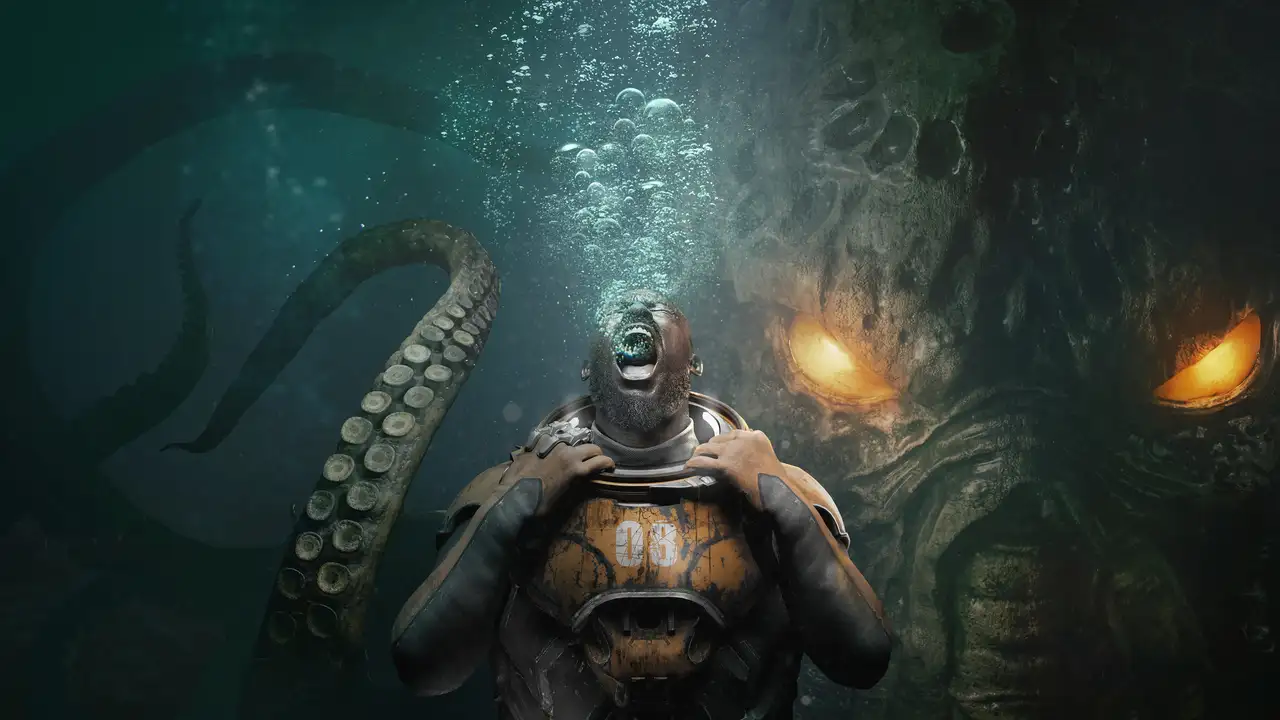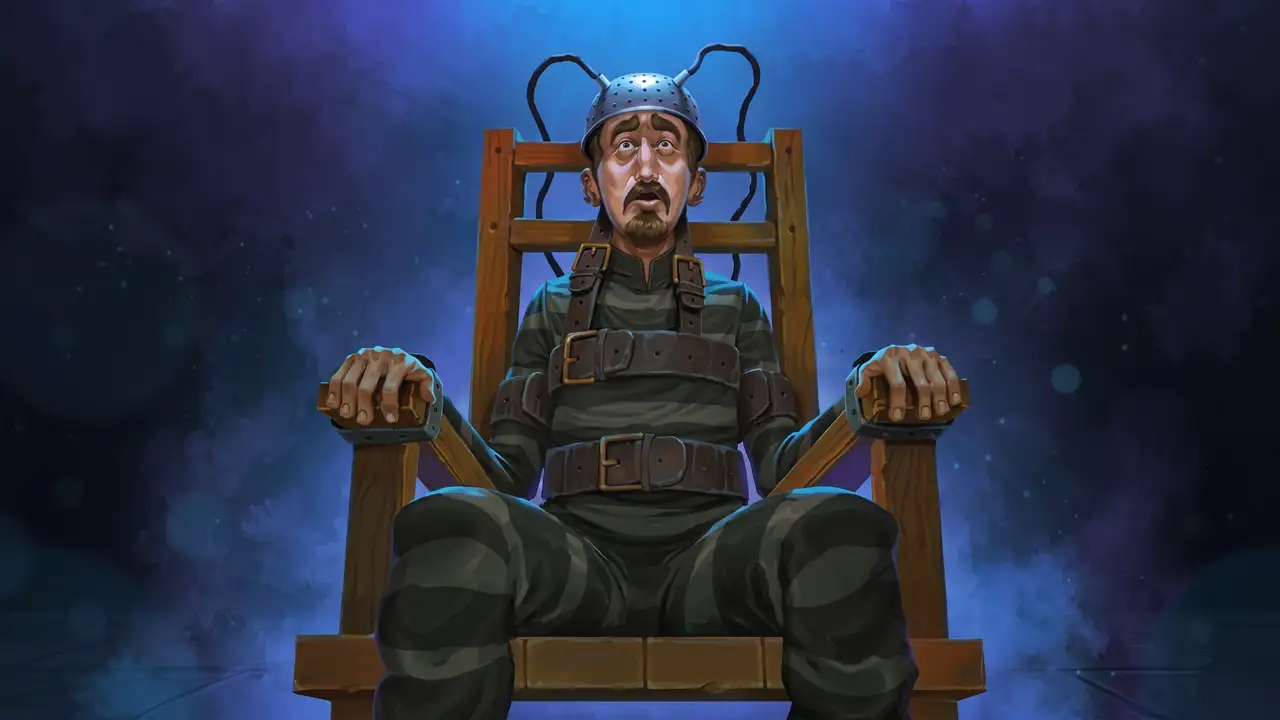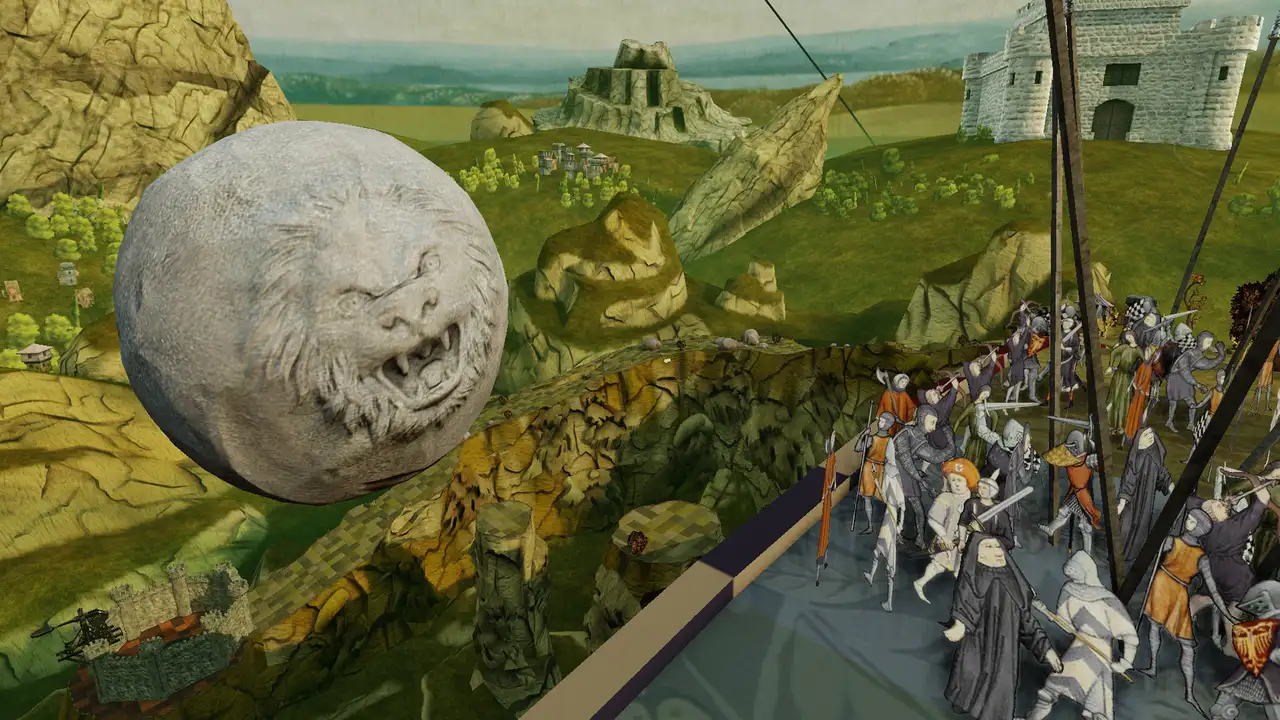
Tormentosa is a grim, Spanish-flavoured island locked under an eternal storm where a sun god and a sea deity war through dolls, statues and zealots. The twitchy-doll enemies move in ways that keep the edge on throughout, and the art direction is Bioshock-Infinite-adjacent in the best sense. Flamenco-flavoured worldbuilding and a sun-versus-sea religious mythos give the island an identity few debuts attempt. The central hook reframes the whole survival-horror economy: health is literally the ammunition, every bullet a piece of the body spending it. Offence and survivability become one constant juggle, and it works.
Varied, clever environmental puzzles run across all three districts, each one different from the last. The witch’s cottage trial, the clock-theatre puzzle, the domino vault, the mine conveyor’s follow-thy-meat challenge and the scale-balance trials all stand out, and a blood-rain finale with unlimited harpoon ammo closes the campaign in style. Per-district key items (bolt cutters, wrench, ship’s wheel) structure the backtracking in classic fashion. Roughly ten hours covers a thorough completionist run on Penitent difficulty. Puzzle design is the debut’s sharpest craft.
The structure is modelled openly on Resident Evil 2, with red/blue map completion, safe rooms with saves, a hub hideout and a merchant witch whose skill trees are fed by crow relics. The map-completion design then works against itself: absorbing every animal carcass counts toward one hundred per cent, and point-of-no-return transitions lock those maps permanently incomplete. Discovering this after a one-way door is a genuine gut-punch for anyone clearing methodically. Completionist design welded to permanent locks is the game’s worst contradiction, and it needs warning labels rather than redesign.
Dolores, the chaser stalking the districts, is atmospheric and imposing but ultimately toothless, unable to enter any building, which converts dread into comic relief. Weapon balance shares the problem: the pistol is cheap and dominant while every other gun costs a fortune in blood, collapsing the arsenal to one answer. Parry timing is awkward and so rarely needed that it can be forgotten entirely. Quirks pile up around the edges: invisible mines in the Ram District, near-useless knife durability, untoggleable yellow paint and boats slowed by weapon-speed stats. None is fatal; each is a fix rather than a foundation.
Aesthetically, the game is genuinely beautiful, with unsettling doll choreography and gorgeous lighting doing most of the atmospheric work. Despite the horror branding, genuine fright never quite materialises, and the tension reads more as unease than terror. The finale fight temporarily dents the mood with a rough encounter design. The melancholy closing monologue lands the sombre tone the campaign builds toward. As a first game from a studio with only this to its name, the ambition is remarkable.
The hub hideout and merchant witch give the Resident Evil 2 skeleton a personality of its own. Skill trees fed by crow relics reward exploration with combat upgrades rather than mere inventory space, and the safe rooms carry the series’ trademark tension without ever quite tipping into dread. Key items such as bolt cutters, the wrench and the ship’s wheel gate each district’s re-openable loops, so a detour to fetch a tool rarely feels wasted. The Penitent difficulty setting keeps resource pressure high enough that the blood-as-ammo economy bites throughout. The scaffolding around the puzzles is as thoughtfully assembled as the puzzles themselves.
Overall, the blood-as-ammo economy, the puzzle variety across three districts and the gorgeous, unsettling art make this a striking debut whose flaws are fixes rather than foundations. One-way doors sabotaging map completion, pistol-dominant balance and a toothless chaser are the real irritants, and the horror branding oversells the scares. A couple of quirks aside, this is really cool, and the recommendation stands on craft and identity alone.